
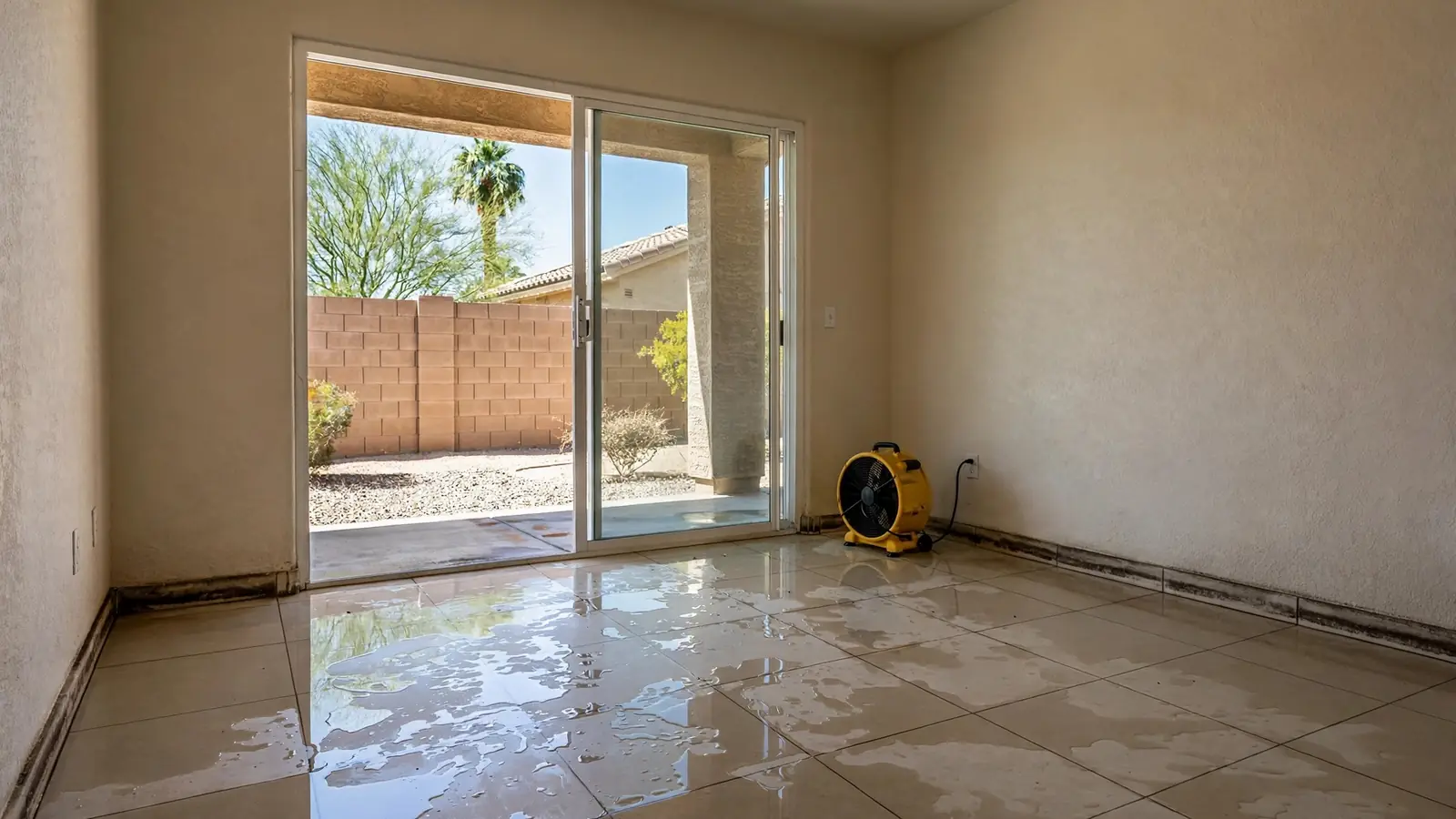
Key facts: Firefighting Water Damage
- Water used to fight a fire soaks into building materials and can lead to mould growth if they are not dried promptly.
- The U.S. EPA advises drying water-damaged areas and items within 24 to 48 hours to help prevent mould growth.
- Firefighting water is mixed with soot and debris, so it is dirtier than clean supply-line water.
- Ceilings that absorbed water can sag and collapse; stay out from under a bulging or stained ceiling.
- The IICRC S500 standard covers professional water damage restoration practice.
The hidden half of fire damage
Where the firefighting water goes
Fire crews use water because it works. It cools burning materials, smothers flames and protects neighbouring rooms and houses. But every gallon that does not turn to steam stays in the building. It runs down walls, collects on floors, drips through ceilings, and wicks upward into drywall and baseboards. In a two-storey house, water from the upper floor travels down through the ceiling and into the rooms below.
The result is that many fire-damaged homes have more square footage affected by water than by flames. A kitchen fire may burn one wall of cabinets, while the water used to put it out soaks the kitchen floor, the adjoining dining room carpet, the lower cabinets and the drywall along the hallway. Insulation in the ceiling and walls can be saturated even when the surface looks only damp.
Firefighting water is also not clean. It picks up soot, ash and debris as it moves, which stains materials and adds to odor. Wet soot is harder to clean than dry soot. For this reason a fire restoration plan almost always deals with water first: until materials are dry, soot and smoke cleaning cannot be finished properly.
Fire sprinklers, where present, also release water. They use far less than hose lines and usually limit the damage, but a sprinkler head that operated still leaves a wet area that must be dried.
Warning signs
Signs water is still trapped in your home
Bulging or sagging ceiling
Water collecting above drywall makes it heavy. A ceiling that dips or has a bubble may fall. Stay out from under it.
Soft or swelling baseboards
Baseboards and the bottom of door frames swell when they wick water from wet floors.
Tide lines on drywall
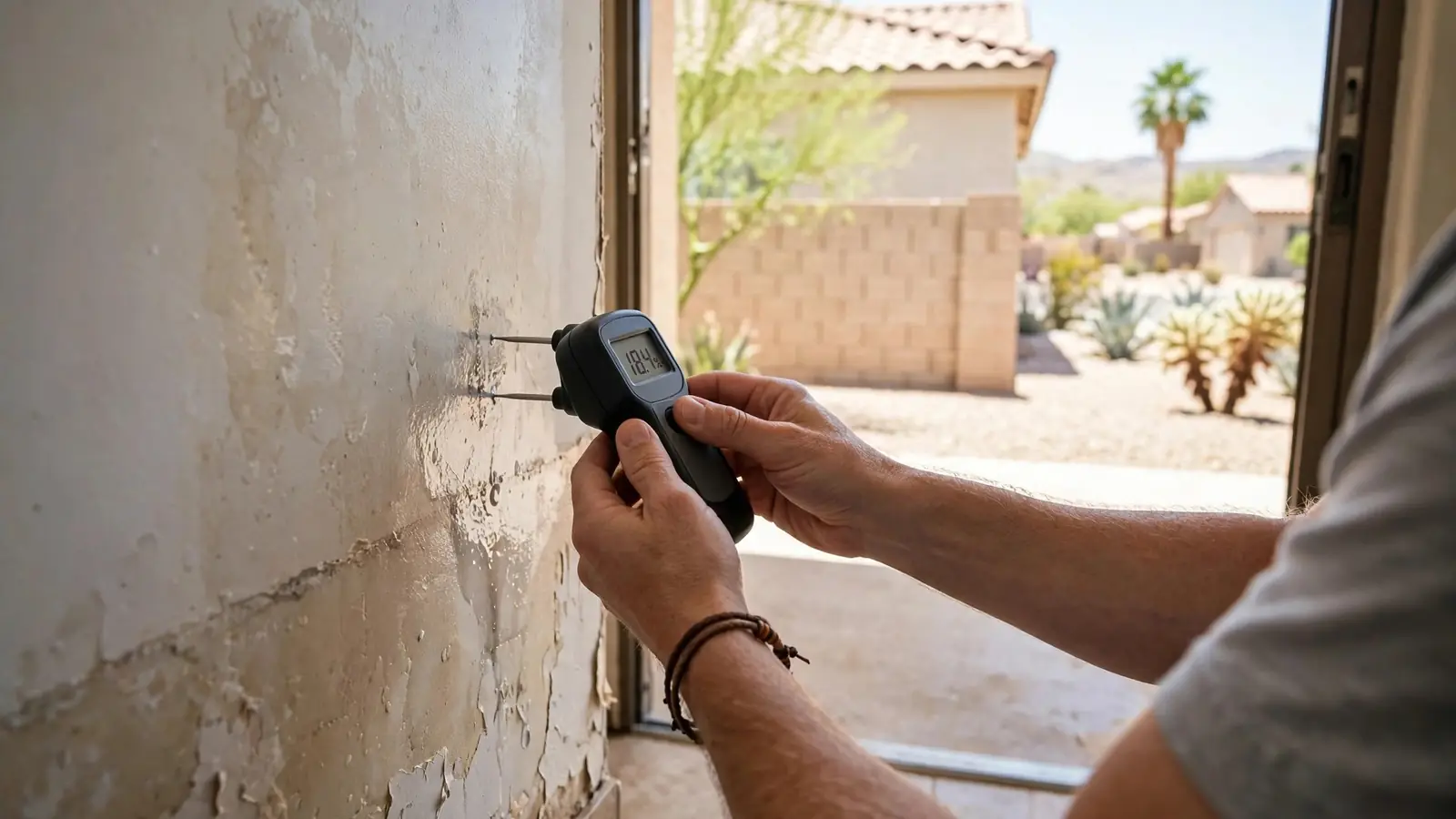
A brown line partway up a wall shows how far water wicked into the drywall.
Squishy carpet away from the fire
Water runs along the floor and under walls, soaking carpet and pad in rooms the fire never reached.
Musty smell after a few days
Mould can start growing on wet materials, especially in warm conditions. A musty smell is a sign it may have begun.
Peeling paint or loose tiles
Moisture behind paint and tile breaks their bond to the surface.
Why it causes damage
What happens if fire water is left to dry on its own
Building materials are not designed to stay wet. Drywall loses strength and can crumble. Particleboard and MDF, common in cabinets and furniture, swell and fall apart. Wood subfloors can warp and cup flooring above them. Insulation compresses and stops insulating. Metal fasteners and electrical boxes start to rust.
Mould is the bigger concern. Mould spores are everywhere, and they need only moisture, food and suitable temperature to grow. Drywall paper, wood and dust are all food. The U.S. Environmental Protection Agency recommends drying water-damaged materials within 24 to 48 hours to help prevent growth. [1] A closed-up, hot Phoenix house after a fire, with the power off and humid air from the firefighting water, provides very good conditions for mould.
Even though Phoenix air is usually dry, it does not dry a house fast enough on its own. Water inside wall cavities, under cabinets and under flooring is shielded from outside air. Without targeted drying equipment, these spaces can stay wet for weeks.
Measuring
How wet areas are found and mapped
- 1
Visual inspection
Stains, swelling, tide lines and standing water show the obvious areas.
- 2
Moisture meter readings
Pin and pinless meters measure moisture in drywall, wood and flooring and find wet areas that look dry.
- 3
Thermal imaging
Infrared cameras show cooler, wet areas behind walls and ceilings as a guide for meter checks.
- 4
Baseline readings
Dry materials in unaffected rooms give a reference so technicians know what dry looks like for that house.
- 5
Moisture map
Readings are recorded on a sketch of the home and repeated daily to track drying progress.
Diagnosis
Water clues and what they mean after a fire
| What you see | What it usually means | Typical action |
|---|---|---|
| Standing water on floors | Recent heavy hose use | Extraction with pumps and vacuums |
| Sagging ceiling | Water pooled on drywall above | Controlled removal of wet ceiling |
| Brown tide line on wall | Water wicked up from the floor | Cut drywall above the line, dry cavity |
| Swollen cabinet bases | Particleboard absorbed water | Remove and replace cabinet boxes |
| Wet carpet two rooms away | Water travelled under walls | Lift carpet, remove pad, dry subfloor |
| Musty odor | Possible mould growth | Inspection and remediation if found |
The process
Drying a house after a fire, step by step
The first step is extraction. Truck-mounted or portable extraction units pull standing water out of carpet and off hard floors. Removing liquid water is far faster than evaporating it, so this step does a lot of the work. Wet debris, ash and soaked contents are removed at the same time.
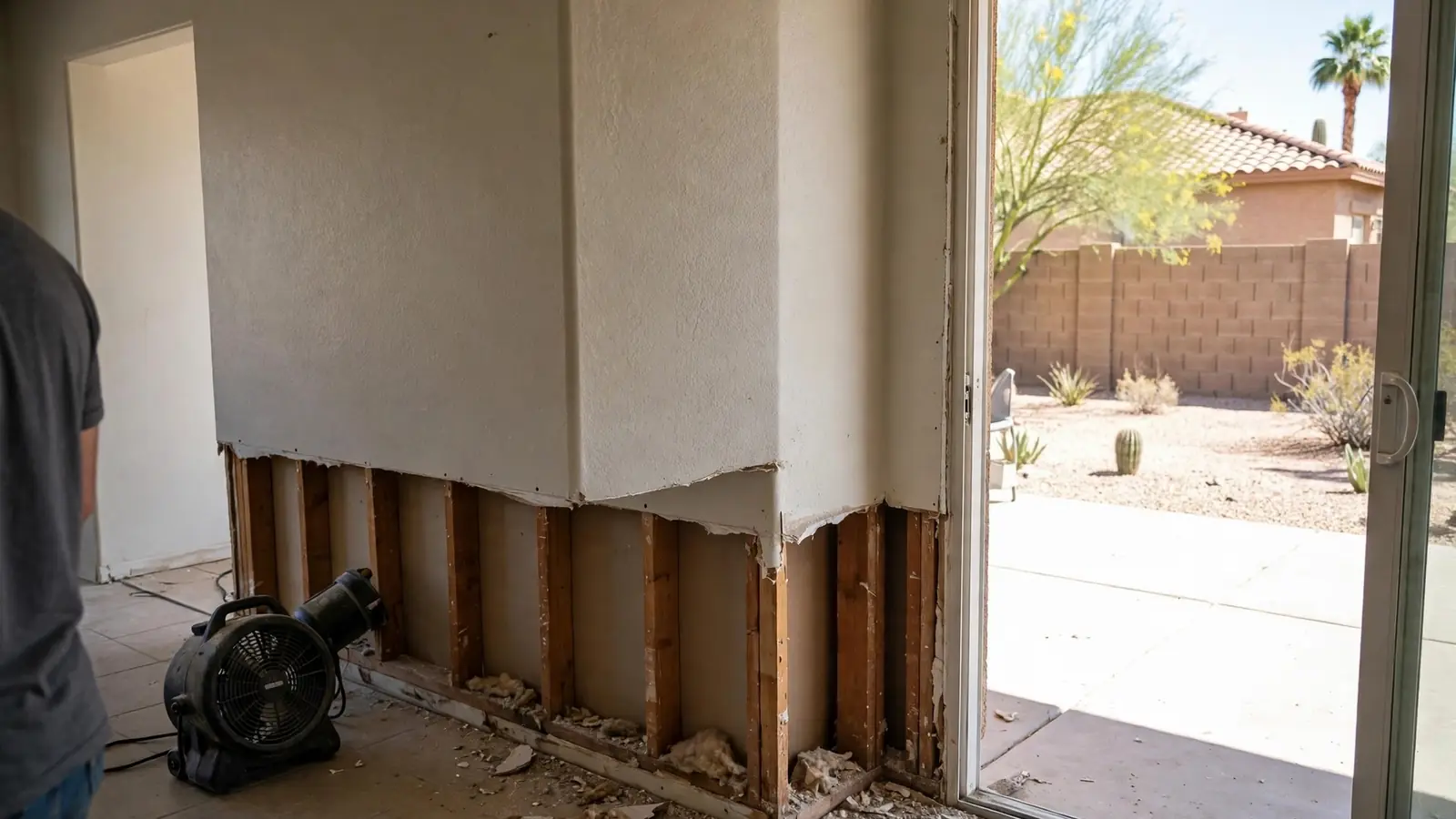
Next comes removing what cannot be dried in place. Carpet pad is usually discarded. Drywall that is soaked or has wet insulation behind it is cut away above the wet line, often a flood cut a foot or two above the floor. Wet ceiling drywall and insulation are removed. Swollen particleboard cabinets and baseboards come out. This opens up cavities so air can reach the framing.
Then the drying setup goes in. Air movers push air across wet surfaces, dehumidifiers pull moisture out of that air, and in some cases specialty equipment forces dry air into wall cavities or under cabinets. In Phoenix, the dry outdoor air can be used to help in some conditions, but technicians balance this against heat, dust and smoke odor. During monsoon season, outdoor humidity can rise and closed-system drying with dehumidifiers is usually preferred.
Drying is monitored daily. Technicians re-measure moisture, move equipment as areas dry, and record readings. When materials reach the dry baseline, the equipment comes out and the job moves on to soot cleaning, smoke deodorisation and rebuilding.
Materials
How common wet materials are treated
| Material | Usually | Why |
|---|---|---|
| Carpet pad | Removed | Holds water and contaminants; simple to replace |
| Carpet | Sometimes dried, often replaced | Depends on soot contamination and time wet |
| Drywall, lightly damp | Dried in place | Can recover if dried quickly |
| Drywall, soaked | Cut out | Loses strength; cavity behind needs drying |
| Insulation | Removed | Compresses and holds water and odor |
| Solid wood framing | Dried in place | Recovers well once dried |
| Particleboard cabinets | Usually replaced | Swells and breaks down when wet |
| Tile and stone floors | Dried; grout checked | Water can sit beneath tiles |
Do it yourself?
Safe first steps with firefighting water
Make sure power to wet areas is off before you go near standing water. The fire department or utility may have already disconnected it. Do not use household electrical appliances to dry wet rooms until an electrician has cleared the circuits.
If it is safe, you can mop small amounts of standing water, move undamaged belongings to a dry area, prop up furniture legs on foil or blocks, and open cabinet doors so they can breathe. Photograph everything wet before moving it. Keep out of rooms with sagging ceilings.
- Confirm power is off in wet areas
- Photograph before moving things
- Move dry belongings out
- Stay away from sagging ceilings
- Wear gloves; the water is dirty
The visit
What a drying crew does on day one
A drying crew's first visit is usually the busiest. Expect them to inspect the home, take moisture readings and photographs, extract standing water, remove wet materials and set up equipment. They will explain where equipment needs to run and ask that it stays on, because turning it off slows drying.
Drying equipment uses electricity and makes noise. If power is off in the house, the contractor may bring a generator or arrange temporary power. Ask how many days they expect drying to take and how often they will return to check readings.
Keep a copy of the moisture logs. They show your insurer that the home was dried to standard, which matters if questions about mould arise later.
Phoenix specifics
Drying a fire-damaged house in Phoenix
Phoenix's dry climate helps drying in some ways and hurts it in others. For much of the year, outside air is very dry, which can speed evaporation once wet materials are opened up. But extreme heat inside a closed house speeds mould growth on materials that stay wet, and the heat makes it unpleasant and sometimes unsafe to work without cooling.
Monsoon season, roughly mid-June through September, brings higher humidity and sudden storms. [4] Drying during monsoon usually relies on dehumidifiers in a closed space, and any roof openings from the fire need tarping before a storm hits. A burned roof that is not covered can let in more water than the fire department used.
Many Phoenix homes are built on concrete slabs with carpet or tile directly on top. Water under tile on a slab can take a long time to dry and may need specialised drying mats. Homes with block walls behave differently from wood-framed walls: block absorbs water and dries slowly but does not rot.
Prevention
Reducing water damage when there is a fire
- Consider fire sprinklers in a remodelResidential sprinklers control fires with far less water than hose lines.
- Keep a fire extinguisher handyA small fire put out early needs no fire hose at all.
- Know where your water shutoff isIf fire damages plumbing, shutting off the main stops a second source of water.
- Keep roofs maintainedA sound roof is easier to tarp quickly and less likely to leak after fire damage.
Dry or tear out
How restorers decide what wet material stays
Restorers weigh three things: how wet the material is, how long it has been wet, and what was in the water. Lightly damp drywall that is dried within a day or two can often stay. Soaked drywall, drywall with wet insulation behind it, and anything with visible mould is usually removed. Particleboard almost never survives. Solid wood and concrete are dried rather than replaced.
Because firefighting water is mixed with soot, porous materials it soaked are more likely to be removed than they would be after a clean pipe leak. A contractor should explain each decision and document removed material with photos and moisture readings.
Related problems
Damage that travels with firefighting water
Wet soot stains
Soot that got wet is harder to clean and needs the right methods.
Read moreMusty smoke odor
Damp materials hold odor and must be dried for deodorising to work.
Read moreRoof and window openings
Openings must be covered before monsoon rain adds more water.
Read moreIs the house safe?
Wet ceilings and electrical systems are key safety checks.
Read more
Water categories
Why fire hose water counts as contaminated
Water restoration professionals classify water by how contaminated it is. Clean water from a broken supply line is the least concerning. Water that has picked up contaminants is treated more cautiously, and the most heavily contaminated water, such as sewage, requires the most protective handling. Firefighting water does not fit neatly into the clean category: by the time it settles on your floors it has passed through burning materials, picked up soot, ash and chemical residues, and run across dirty surfaces.
This matters for decisions about porous materials. Carpet, pad, drywall and insulation soaked with contaminated water are more likely to be removed rather than dried in place, because cleaning contaminants out of them is difficult. It also matters for personal protection: anyone handling wet debris should wear gloves and boots and wash afterwards.
If the fire also damaged plumbing, water may have continued to flow after the fire was out. Turning off the main water supply, once it is safe to do so, prevents that second source from adding to the damage.
Contents
Rescuing wet belongings after a fire
Wet belongings need attention quickly. Furniture sitting in water wicks it up into legs and frames; lifting it onto blocks or moving it to a dry area helps. Rugs should be lifted and dried or sent for cleaning. Wet clothing and linens should not be left in piles, where they start to smell and can grow mould within days in warm conditions.
Paper is the most time-sensitive. Wet photographs, documents and books can stick together and grow mould. Archivists and conservators commonly recommend freezing wet paper items if they cannot be dried right away, which buys time until they can be dried properly. Ask the contractor about document drying if important papers got wet.
Electronics that were wet should not be switched on. Water combined with soot can short circuits and corrode connections. Unplug them if it is safe to do so and set them aside for inspection.
Drying checklist
Signs the drying job was done properly
- Moisture readings at dry standardFinal readings in affected materials match the dry reference readings taken in unaffected areas.
- No musty smellA musty odor after drying suggests a wet area was missed or mould started.
- Cavities opened where neededWalls with wet insulation were opened rather than dried only from the surface.
- Written drying logDaily readings and equipment placement were recorded and shared with you.
- No new stains or swellingBaseboards, cabinets and flooring have not developed new stains or swelling after equipment left.
Two-storey homes
Firefighting water in two-storey Phoenix homes
Newer neighborhoods across Phoenix have many two-storey homes, where a fire upstairs sends water down through the floor system into the rooms below. The ceiling of the lower floor often holds water above it, between the joists, and can bulge or collapse. The insulation and wiring in that floor cavity are soaked even if the upstairs floor looks merely damp.
Drying a floor cavity usually means removing sections of the lower ceiling to let air reach the space, then running air movers and dehumidifiers until the joists, subfloor and remaining drywall read dry. Ceiling fans, recessed lights and smoke alarms in that ceiling need inspection before they are used again. If you see a bulge in a ceiling below a fire area, keep everyone out from under it and mention it at the start of your call.
Questions to ask
What to ask a drying contractor on your call
When you call, ask how the contractor measures moisture and how often they will check readings. Ask whether they expect to remove drywall or flooring, and why. Ask how they will dry under tile or cabinets, and whether they will need temporary power if the electricity is off.
It is also reasonable to ask how they handle contaminated water and wet debris, how they will share the drying log with you, and what they do if mould is found. These questions show you understand the process and help you compare advice.
FAQ
Questions about fire hose water damage
How much water do firefighters use on a house fire?
It varies widely with the size of the fire and how it was attacked. Even a small room fire can leave enough water to soak floors and walls in several rooms.
How quickly does mould grow after a fire?
The EPA advises drying materials within 24 to 48 hours to help prevent mould. In a hot, closed house, growth can begin quickly.
Can wet drywall be saved?
Lightly damp drywall dried quickly often can. Soaked drywall or drywall with wet insulation behind it is usually cut out.
Why are they cutting my walls open?
To remove wet material and let air reach the framing and cavity inside, which otherwise stays wet for weeks.
Can I use my own fans?
Only once the electrical system is cleared as safe. Household fans help a little but do not replace dehumidifiers and air movers.
Is firefighting water dangerous?
It carries soot, ash and debris. Wear gloves and boots, and wash skin that contacts it.
How long does drying take?
Often several days, depending on materials and conditions. Daily moisture readings show when materials reach dry.
Does insurance treat fire water as fire damage?
Water used to put out a covered fire is generally considered part of the fire loss, but check your policy and talk with your adjuster.
Will my tile floor need to come up?
Not always. Water can sit under tile and in grout on a slab, and specialised drying may be enough. If tiles are loose or readings stay high, some may need lifting.
Can mould grow inside walls I cannot see?
Yes. That is why contractors take readings in wall cavities and open them when insulation is wet. Drying from the surface alone can leave the inside damp.