
Key facts: Ahwatukee
- Ahwatukee Foothills is an urban village of Phoenix on the south side of South Mountain, separated from most of the city by the mountain.
- Much of Ahwatukee was developed from the 1970s through the 2000s as master-planned communities with homeowners associations.
- Many Ahwatukee homes back directly onto South Mountain Park and Preserve or other open desert.
- Brush fires on desert slopes can send smoke and ash into nearby homes even without flames reaching them.
- The covered ZIP codes for Ahwatukee on this site are 85044, 85045 and 85048.
Covered area
Ahwatukee ZIP codes covered by this line
Calls from these Ahwatukee Foothills ZIP codes can be connected to an independent restoration contractor serving the area.
- 85044Eastern and central Ahwatukee, including older neighborhoods near Interstate 10 and the original Ahwatukee development area.
- 85045Western Ahwatukee hillside neighborhoods closest to the South Mountain Preserve and the Loop 202 corridor.
- 85048Southern and south-central Ahwatukee, including communities around the golf courses and toward the southern desert edge.
About Ahwatukee
What makes Ahwatukee homes distinctive
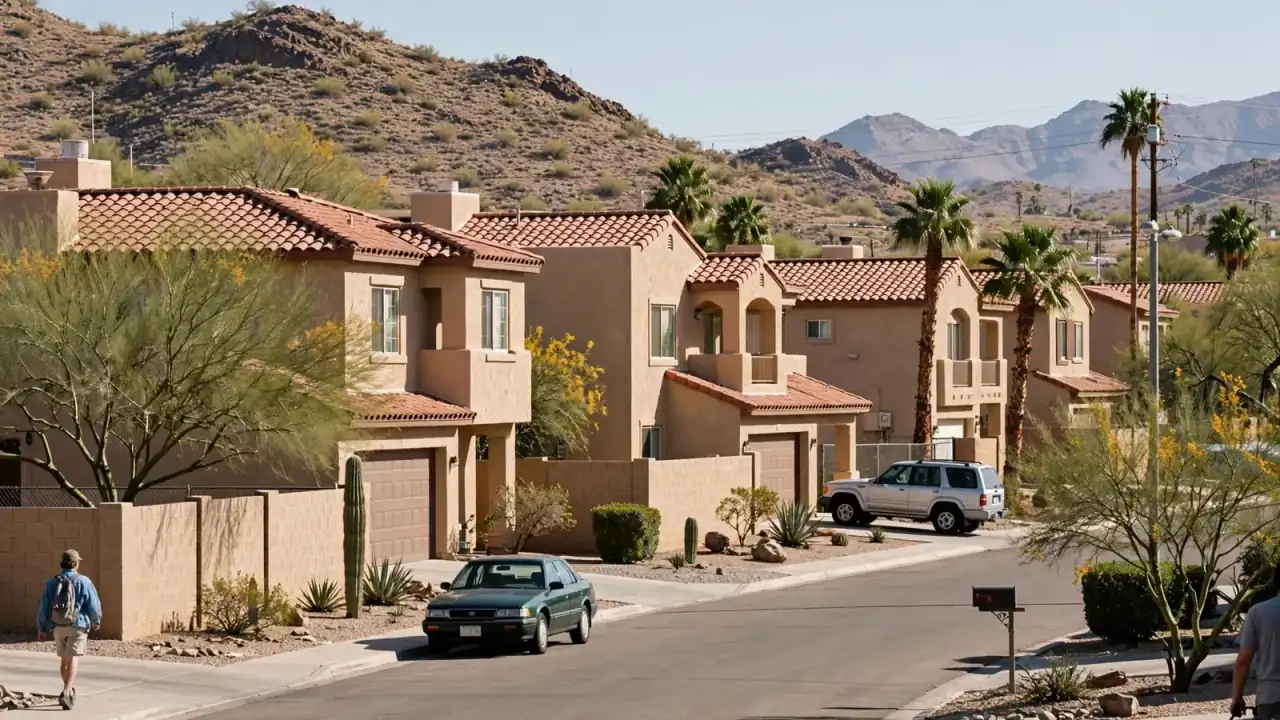
Ahwatukee Foothills is part of the City of Phoenix but feels like its own town. South Mountain separates it from central Phoenix, and for years the only main routes in were along Interstate 10 on the east; the Loop 202 South Mountain Freeway now runs along the west side. Development began in the 1970s and accelerated through the 1980s and 1990s, producing a long band of master-planned neighborhoods with curving streets, community parks, golf courses and shared walls.
Housing is dominated by stucco over wood frame with concrete tile roofs, built by large production builders. Single-storey and two-storey plans sit side by side, many with attached two- or three-car garages, vaulted great rooms and loft spaces. Newer custom and semi-custom homes climb the hillsides toward the preserve. Nearly every neighborhood has a homeowners association, and many have a master association above that.
What sets Ahwatukee apart for fire restoration is its edge. A large number of homes back directly onto South Mountain Park and Preserve or other open desert. That exposes them to brush fire smoke and ash, wildlife entering through openings, and dust from undeveloped land, alongside the ordinary risks of kitchen, garage and electrical fires.
Construction
Ahwatukee construction details that matter after a fire
Two-storey frame homes
Upstairs fires send firefighting water down through floor cavities into rooms below.
Vaulted great rooms
Tall ceilings collect smoke high up, where residue is hard to reach and clean.
Concrete tile roofs (Ahwatukee)
Heavy, brittle tiles need careful handling when tarping a fire opening.
Attached garages (Ahwatukee)
Shared walls and attic space let garage fire smoke reach kitchens, laundries and bedrooms.
Back walls on the preserve
Homes that face open desert take the brunt of brush fire smoke, ash and embers.
Builder-grade ductwork
Flexible ducts in the attic hold smoke odor and are often replaced after heavy exposure.
Preserve edge
Brush fire smoke on the Ahwatukee preserve edge
Desert brush fires are a regular part of life near the Phoenix mountain preserves. Dry grasses, especially after wet winters produce extra growth, can carry fire quickly across slopes. Even when firefighters keep flames well away from homes, smoke and fine ash drift downwind into neighborhoods along the edge.
Smoke from outside enters a home through open windows and doors, attic vents, gaps around the garage door and through any cooling system that pulls in outside air. Fine ash settles on patios, pools, outdoor furniture and window sills, and can be tracked inside. Homes directly against the preserve are most exposed, but smoke can travel well into the interior of Ahwatukee depending on wind.
Exterior smoke usually causes lighter damage than an interior fire. Cleanup typically focuses on replacing HVAC filters, cleaning ducts if smoke was drawn in, laundering fabrics, cleaning window sills and exterior surfaces, and treating odor in soft furnishings. If embers landed on a roof or in a yard, check for scorch marks and any damage to roof underlayment visible from the attic.
What you might see
Ahwatukee fire damage clues and what they mean
| What you notice | Likely reason | What to ask |
|---|---|---|
| Ash on back patio and pool | Brush fire smoke from the preserve | Should filters and ducts be checked? |
| Bulging ceiling downstairs | Firefighting water from an upstairs fire | Can the ceiling be opened to dry the cavity? |
| Soot high on great room walls | Smoke collecting under vaulted ceiling | How will the high areas be reached? |
| Smell in laundry and kitchen | Garage fire smoke through the house door | Is the shared wall cavity affected? |
| Cracked roof tiles near opening | Heat or foot traffic during firefighting | How will the tarp be fastened on tile? |
| Smoke smell when AC runs | Contaminated flexible ducts | Will the ducts be cleaned or replaced? |
Two storeys
Upstairs fires and water in Ahwatukee two-storey plans
Many Ahwatukee homes have bedrooms upstairs and the kitchen and living areas below. A fire upstairs, often electrical or in a bedroom, is fought with water that soaks through the upper floor into the cavity between the floors and then into the ceiling below. Downstairs ceilings can sag under the weight. Recessed lights and ceiling fans in that ceiling may fill with water.
Drying these homes usually means opening sections of the downstairs ceiling so air can reach the floor joists and subfloor, then running dehumidifiers and air movers until readings reach dry. Insulation in the floor cavity is typically removed. Carpet and pad upstairs often come out as well. Electrical fixtures in the wet ceiling need checking before use.
Smoke behaves differently too. In a two-storey home with an open stairwell and loft, smoke from a downstairs fire rises quickly to the upper floor, where bedrooms can be heavily affected even if the fire never climbed the stairs.
Assessment
What a contractor should check in an Ahwatukee home
- 1
Every floor, every room
Smoke rises to the upper floor; water falls to the lower one. Both levels need inspection.
- 2
The attic (Ahwatukee)
Insulation and flexible ducts in the attic commonly hold smoke and odor.
- 3
The garage-house connection
If the fire involved the garage, the shared wall, door and attic space need checking.
- 4
The roof (Ahwatukee)
Tile condition around any opening, and whether the roof deck is sound enough to fasten a tarp.
- 5
The back yard and pool area
Ash and debris from a preserve fire, and scorching on fences, walls and patio covers.
- 6
HVAC and filters
Whether smoke was drawn into the system from inside or outside.
Restoration
How restoration usually runs in Ahwatukee
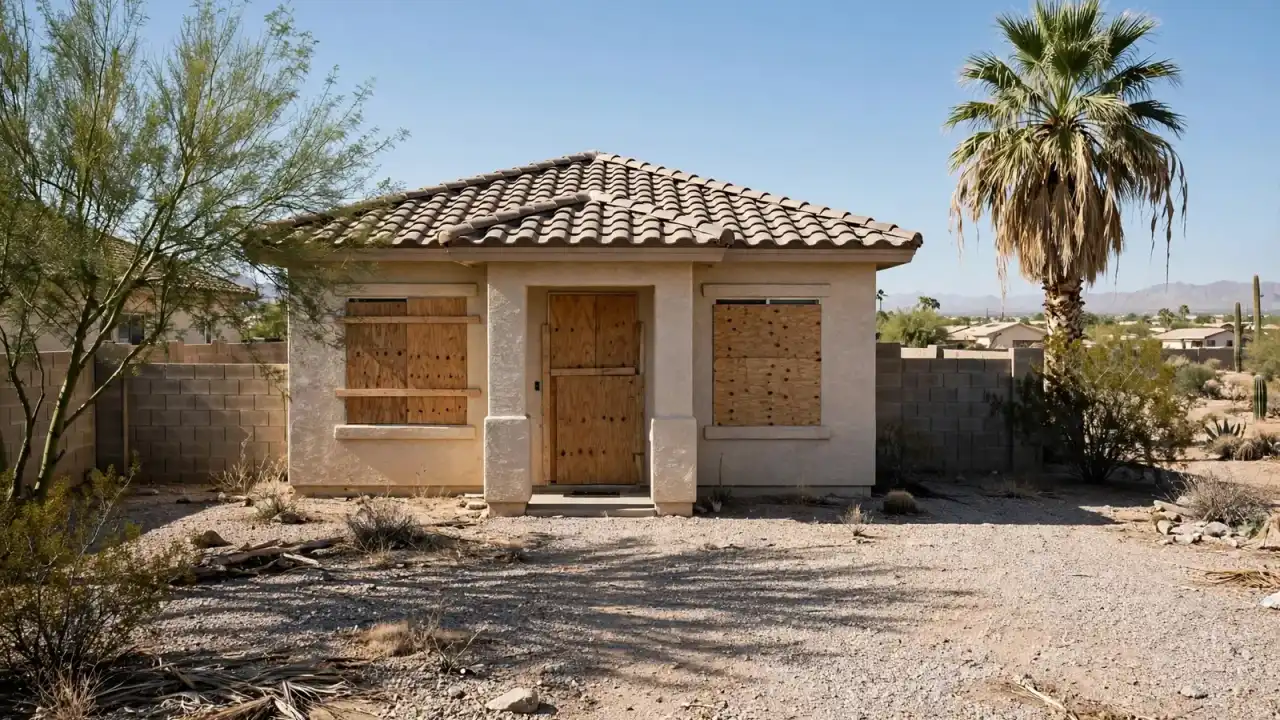
The sequence is the same as anywhere: secure, dry, clean, deodorise, repair. In Ahwatukee, securing often involves a tile roof. Crews typically remove tiles around the opening, fasten the tarp and battens to the deck, and protect the surrounding tiles from further breakage. Windows on stucco homes are boarded with methods that avoid cracking the stucco.
Drying focuses on two-storey water paths, slab floors under tile or carpet, and cabinets. Cleaning concentrates on high ceilings, lofts and stairwells, where smoke gathers. Odor work starts with the attic and ducts. Because so many Ahwatukee homes were built with similar materials, contractors familiar with the area usually know what to expect behind the walls, which can speed decisions.
Rebuilding requires City of Phoenix permits for structural, electrical and other regulated work. Exterior repairs need to match the community's approved colours and materials, so expect HOA involvement once repairs reach the outside of the house.
HOAs
Working with your Ahwatukee HOA after a fire
Ahwatukee's associations typically regulate exterior appearance, including paint colours, roof tiles, fencing and visible equipment. After a fire, a boarded window or tarped roof is a temporary necessity, but it is wise to notify the HOA early, explain what happened, and share an expected timeline. Most associations accommodate emergency measures but may ask for updates.
When exterior rebuilding begins, the HOA may need to approve materials and colours. Replacement roof tiles may need to match the community's approved profile and colour; some older tile lines are discontinued, which can lead to discussions about matching. Getting HOA approval in parallel with insurance approval saves time.
- Notify the HOA early
- Share board-up and tarp timeline
- Ask about approved exterior materials
- Seek approval in parallel with insurance
Climate
Ahwatukee heat, monsoon and dust
Ahwatukee shares Phoenix's extreme summer heat, and a house without power after a fire can get very hot quickly. Heat softens residue and drives smoke odor out of attic insulation, so smell often returns on hot afternoons until the attic is dealt with.
During monsoon season, storms can bring strong winds and heavy rain off South Mountain. Water and debris can run down slopes toward homes on the preserve edge. A tarped roof should be checked after every storm. Dust storms can also coat the inside of a house that has open or poorly sealed windows, adding grit to soot.
Prevention
Lowering fire risk on the Ahwatukee desert edge
- Keep a clear zone behind back wallsRemove dry grass, dead brush and stacked materials near walls that face open desert, within HOA and preserve rules.
- Screen attic vents (Ahwatukee)Fine mesh on vents helps keep embers out of the attic.
- Store garage flammables carefullyFuel, paint and chemicals should be stored away from heat sources and in proper containers.
- Test alarms on both floorsTwo-storey homes need working alarms on each level and in each bedroom.
- Know how to close the house quicklyDuring a nearby brush fire, closing up quickly limits smoke inside.
Garages
Garage fires in Ahwatukee neighborhoods
Attached garages in Ahwatukee often hold vehicles, golf carts, refrigerators, workbenches, pool supplies and storage. Garage fires can start from electrical faults, charging equipment, appliances or stored chemicals, and they burn hot with heavy, oily smoke. Because the garage shares at least one wall and often an attic with the house, smoke and heat quickly affect the kitchen, laundry room or bedrooms above a bonus-room garage.
After a garage fire, contractors typically check the fire-rated wall and door between garage and house, the attic space above both, and every room adjoining the garage. Items stored in the garage often need to be removed and sorted before cleaning can begin. Damaged golf carts, batteries and chemicals should be handled carefully and not moved until the fire department and contractor say it is safe.
Services
Restoration services Ahwatukee homeowners ask about
Roof tarping on tile
Covering fire openings on concrete tile roofs before monsoon storms.
Read moreDrying two-storey homes (Ahwatukee)
Opening and drying floor cavities after upstairs firefighting.
Read moreSmoke from outside (Ahwatukee)
Cleaning filters, ducts and fabrics after preserve brush fire smoke.
Read moreAttic odor (Ahwatukee)
Removing smoke-filled insulation and treating ducts.
Read more
Great rooms
Cleaning smoke from tall Ahwatukee great rooms
Vaulted ceilings and two-storey family rooms were popular with Ahwatukee builders from the late 1980s onward. They make a home feel open, but after a fire they act like a chimney. Smoke rises into the peak of the ceiling and spreads along it, leaving the heaviest residue in the highest, least reachable part of the room. Plant shelves, ledges above entries and the tops of tall windows collect soot and dust together.
Cleaning these spaces safely needs scaffolding or tall ladders with stabilisers, and often more time than a standard room. Ceiling fans hung from tall ceilings need to be cleaned or replaced. Textured high ceilings are especially hard to clean evenly, and some owners choose to seal and repaint rather than attempt a full clean of a heavily textured surface.
Because residue in the ceiling peak keeps releasing odor as the room warms, high areas should be cleaned and sealed before the lower walls are finished. Otherwise particles and smell drift down onto freshly cleaned surfaces.
Pools and yards
Ahwatukee yards, pools and patio covers after a fire
Many Ahwatukee homes have pools, covered patios and landscaped back yards against block walls. After a house fire or a nearby brush fire, ash and debris settle in the pool, on patio furniture and across the yard. Pool water with heavy ash needs filtering and chemical balancing; pool service companies can advise on clearing it. Run the filter and empty skimmer baskets often while ash is present.
Wood or aluminium patio covers attached to the house can be damaged by heat from a fire inside and may need inspection before anyone sits under them. Block walls facing a brush fire may show soot staining but are usually structurally fine; cleaning with appropriate methods restores their appearance.
Outdoor furniture cushions absorb smoke like indoor upholstery. They can often be cleaned, though heavily smoked foam may need replacing.
Week one
The first week after a fire in an Ahwatukee house
- 1
Day 1 (Ahwatukee)
Fire department release, HOA and insurer notified, windows boarded, tile roof opening tarped, photos taken.
- 2
Day 1-2 (Ahwatukee)
Water extracted, wet ceiling sections downstairs opened, carpet pad removed, drying equipment running.
- 3
Day 2-3 (Ahwatukee)
Contents sorted on both floors; items to be cleaned packed out and listed.
- 4
Day 3-5 (Ahwatukee)
Daily moisture readings; attic and ducts inspected; pool and yard cleared of ash.
- 5
End of week (Ahwatukee)
Cleaning, odor and repair scope agreed with the contractor and insurer; HOA informed of next steps.
On your call
Questions to ask about your Ahwatukee home
- How will you reach and clean the high ceilings?Ask about scaffolding, ladders and whether high areas will be sealed before lower walls are finished.
- How do you tarp a concrete tile roof?Careful tile handling reduces added leaks and breakage.
- Will you open the downstairs ceiling to dry it?If an upstairs fire was fought with water, drying the floor cavity is usually necessary.
- How will you handle smoke from outside?For preserve fires, ask about filters, ducts, fabrics and the attic.
- Can you provide photos for my HOA?Photos of temporary work help keep the association informed.
Electrical fires
Electrical and appliance fires in Ahwatukee's ageing homes
A large part of Ahwatukee's housing is now thirty to fifty years old. Components installed when these homes were built, such as original water heaters, garage door openers, exhaust fans, ceiling fans and light fixtures, are reaching the end of their service lives. Ageing appliances and loose or overloaded connections are common sources of residential fires everywhere, and older Ahwatukee homes are no exception.
Electrical fires often start inside walls, attics or appliances and may smoulder before they are noticed, producing heavy, acrid smoke from burning plastic insulation. They can leave more widespread smoke damage than their small burned area suggests. After an electrical fire, an electrician should inspect the affected circuits and the panel before power is restored to those areas, and the restoration contractor should check the wall cavities and attic along the circuit path for smoke.
Many Ahwatukee owners have added solar panels, electric vehicle chargers, pool equipment and upgraded air conditioning over the years. If any of this equipment was involved in or near a fire, mention it on your call so the contractor and electrician can plan accordingly.
FAQ
Ahwatukee fire restoration questions
Does this line cover Ahwatukee?
Yes. Calls from ZIP codes 85044, 85045 and 85048 can be connected to an independent restoration contractor serving Ahwatukee Foothills.
Smoke from a mountain fire got into my house. What should I do?
Close up the house, replace HVAC filters, run a HEPA air cleaner and clean surfaces with ash. If odor lingers, ducts, fabrics and the attic may need professional cleaning.
Why is my downstairs ceiling sagging after an upstairs fire?
Firefighting water collects in the cavity between floors. Keep people out from under it; it usually needs to be opened and dried.
Does my HOA need to approve the board-up?
Emergency board-up and tarping are usually accepted, but notify your HOA promptly. Exterior rebuilding typically needs HOA approval for materials and colours.
Can my roof tiles be reused?
Undamaged tiles are often removed, stored and reinstalled. Cracked tiles need replacement, ideally matching the existing profile and colour.
Why does the smell come back in the afternoon in Ahwatukee?
Attic heat releases odor from smoky insulation and wood. The attic is often the remaining source.
Is ash from a brush fire harmful?
Ash and fine particles can irritate skin, eyes and lungs. Wear gloves and an N95 respirator when cleaning it up, and avoid making it airborne.
Do I need permits to rebuild in Ahwatukee?
Ahwatukee is in the City of Phoenix, so regulated repair work needs City of Phoenix permits, handled by your rebuilding contractor.
My solar panels were above the fire. Is that a problem?
Solar equipment can remain energised in daylight. Tell the fire department and contractor, and have a qualified solar or electrical technician inspect it before roof work.
Can ash in my pool damage the equipment?
Heavy ash can clog filters and affect water chemistry. Clean skimmers and filters often and ask a pool service for advice.
Should I keep windows open to air out smoke smell?
Only when outdoor air is clean and cool, typically early morning. During a nearby brush fire or a dust storm, keep the house closed and filter the air instead.