
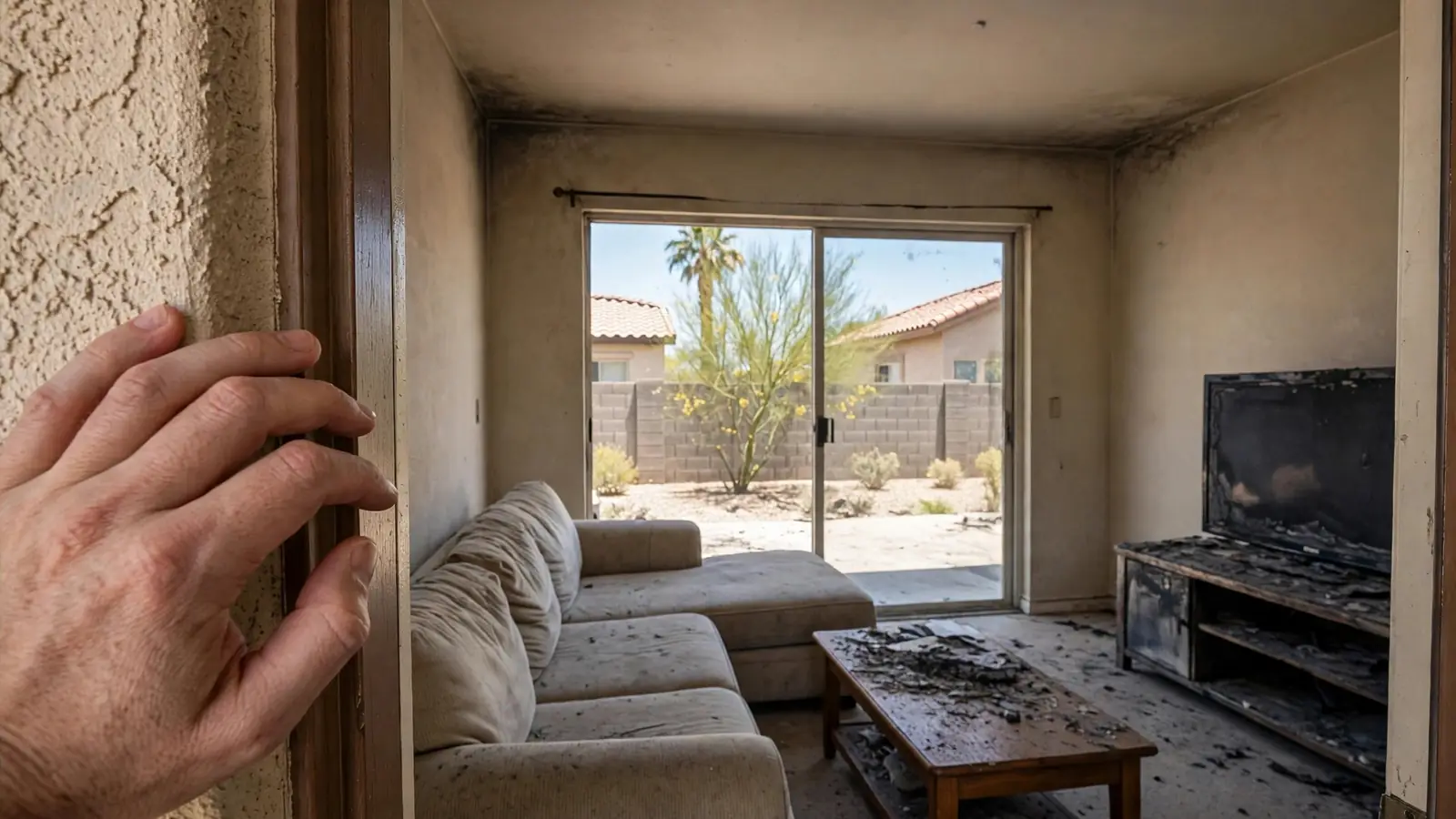
Key facts: What to do after a house fire
- Do not re-enter a fire-damaged home until the fire department says it is safe.
- Contact your insurance company as soon as possible to start the claim.
- Photograph damage before anything is moved or cleaned.
- Food, medicines and cosmetics exposed to heat, smoke or soot should be thrown away.
- Securing openings and drying water quickly prevent the damage from growing.
Start here
The first hour: people before property
Once everyone is out and the fire department is on scene, your priorities are simple: account for everyone, get medical help for anyone hurt or affected by smoke, and stay out of the house. Fire crews will tell you when, and whether, the building can be entered. Fires can rekindle, floors and ceilings can be weakened, and utilities may be damaged in ways you cannot see.
If you need a place to stay, the American Red Cross helps families after home fires with immediate needs such as shelter, food and clothing. Let a friend or relative know where you are. Keep your phone charged; your insurer and contractors will need to reach you, and you will be taking a lot of photographs.
Day one
Checklist for the first 24 hours
- 1
Get the all-clear
Ask the fire department whether the house is safe to enter and which areas to avoid. Ask for the incident or report number.
- 2
Call your insurer
Report the fire, get a claim number and ask what they need from you. Ask whether your policy covers temporary housing.
- 3
Photograph everything
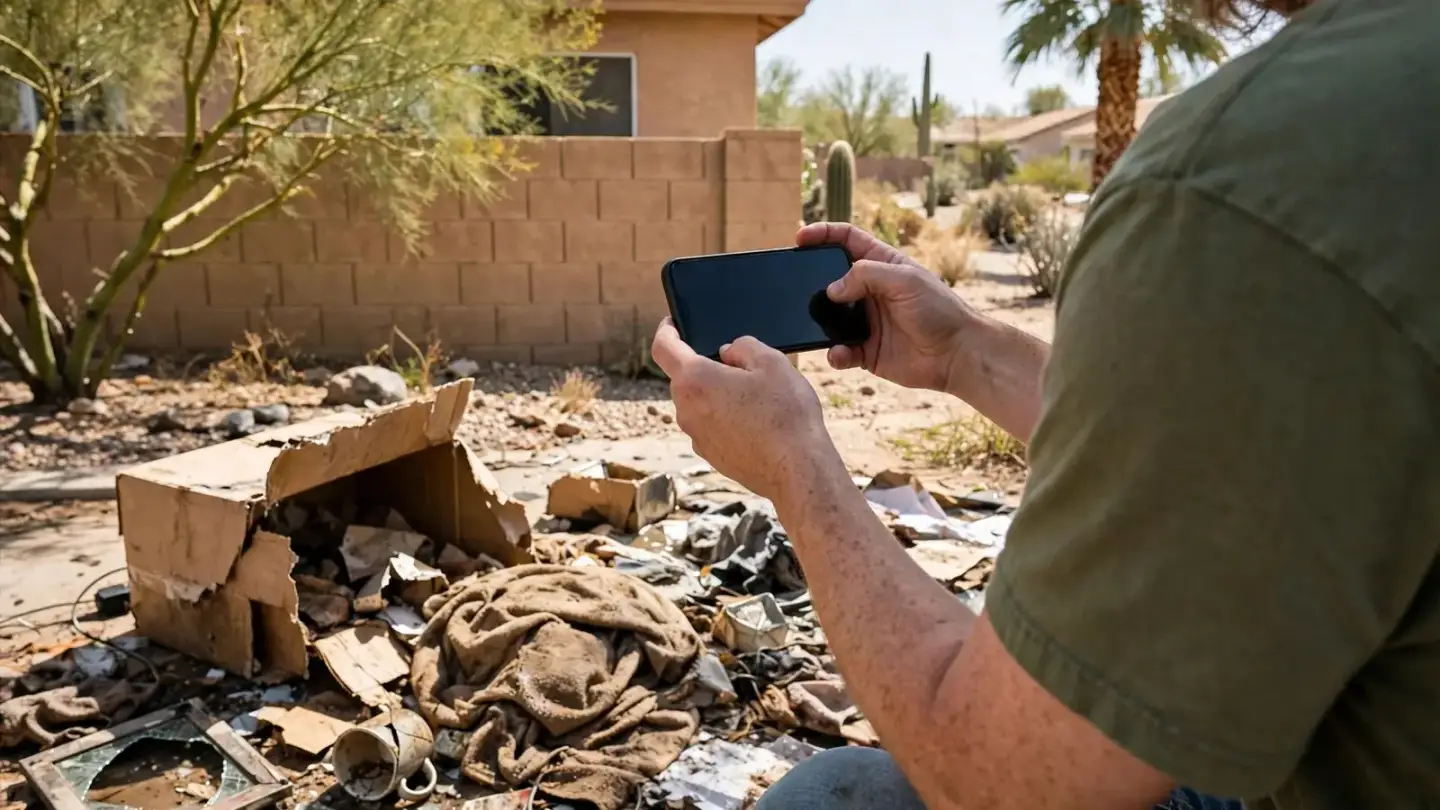
Before anything is moved, photograph and video every room, the outside of the house and damaged belongings.
- 4
Secure the property
Broken windows, forced doors and roof openings should be covered to keep out weather and intruders.
- 5
Check utilities
Do not turn on power, gas or water that the fire department or utility shut off. Let qualified people restore them.
- 6
Retrieve essentials if safe
Medicines, documents, glasses, phone chargers and a change of clothes, only if the fire department says you may enter.
The first week
Days two to seven: stopping further damage
Water from firefighting is the most urgent hidden problem. The U.S. Environmental Protection Agency advises drying water-damaged materials within 24 to 48 hours to help prevent mould, and a closed-up Phoenix house in warm weather is a good environment for mould. [3] Wet carpet pad, soaked drywall and insulation usually need to be removed and the structure dried with dehumidifiers and air movers.
Leave the heating and cooling system off until it has been checked. If smoke reached the ducts, running the system spreads residue to every room. Replace the filter once you are allowed inside.
Begin sorting belongings with your contractor and adjuster. Throw out food, medicine and cosmetics exposed to heat, smoke or soot. Set aside items you believe can be cleaned and list everything you discard. Keep receipts for any expenses, such as hotel stays, meals and clothing, because many policies reimburse additional living expenses.
Timeline
What usually happens when
| Timeframe | Main tasks |
|---|---|
| First hours | Safety, fire department release, temporary housing |
| Day 1 | Insurance claim, photographs, board-up and tarping |
| Days 1-3 | Water extraction, removal of wet materials, drying set-up |
| Week 1 | Drying monitored, contents sorted, adjuster inspection |
| Weeks 1-3 | Soot and smoke cleaning, odor treatment, duct cleaning |
| After cleaning | Sealing, painting, repairs and rebuilding |
Phoenix notes
Phoenix-specific points to remember
If the fire happens during monsoon season, roughly mid-June through September, cover roof openings before afternoon storms. [4] The National Weather Service Phoenix office posts storm outlooks that can help you plan. If the fire happens in summer, be aware that a house without power heats up fast, which can affect pets left behind, medicines, and how quickly residue sets.
If you live in a community with a homeowners association, let the HOA know about the fire. Some have rules about how long board-up or tarps can stay visible. If you rent, tell your landlord immediately; the structure is usually their responsibility, while your belongings may be covered by renters insurance.
When you speak with contractors, ask whether they hold an Arizona Registrar of Contractors licence for the repair and rebuilding work you need. [5] You can look up a licence on the Registrar's website.
Paperwork
Documents and accounts to deal with after a fire
Fires often destroy or damage important papers. Make a list of what needs replacing: identification, passports, birth certificates, Social Security cards, vehicle titles, insurance policies and medical records. The issuing agencies have replacement processes; start with the ones you need most urgently.
Let your mortgage lender know about the fire, because insurance payments for the dwelling are often issued jointly to you and the lender. Tell your utility companies, and arrange for mail to be held or forwarded if you cannot stay at home. Keep everything related to the fire, including receipts, letters and photos, in one folder or online location.
Looking after yourself
Coping with the stress of a house fire
A fire is a frightening event, and the weeks afterwards are full of decisions and paperwork. It is normal to feel exhausted, anxious or overwhelmed. Lean on friends and family for practical help such as storing belongings, driving children or keeping track of calls. Disaster relief organisations, including the American Red Cross, offer emotional support as well as practical help after home fires. Taking care of yourself makes it easier to deal with insurers and contractors clearly.
Renters
If you rent your Phoenix home
Renters should notify the landlord or property manager immediately. The building is usually the owner's responsibility, while your belongings and extra living expenses may be covered by renters insurance if you have it. Photograph your own belongings and keep receipts just as a homeowner would.
FAQ
Questions about the first days after a fire
How soon can I go back into my house after a fire?
Only when the fire department says it is safe. Depending on damage, that could be the same day or not at all until repairs are made.
Should I clean up before the adjuster visits?
Take steps to prevent further damage, such as board-up and drying, but document everything first and avoid discarding items before they are recorded.
Can I stay in the house while it is restored?
Sometimes, if damage is limited. Smoke residue and cleaning work can affect health, so many families stay elsewhere for part of the process.
What should I take from the house?
If allowed in: medicines, identification, insurance papers, glasses, phones and chargers, and a few changes of clothes.