
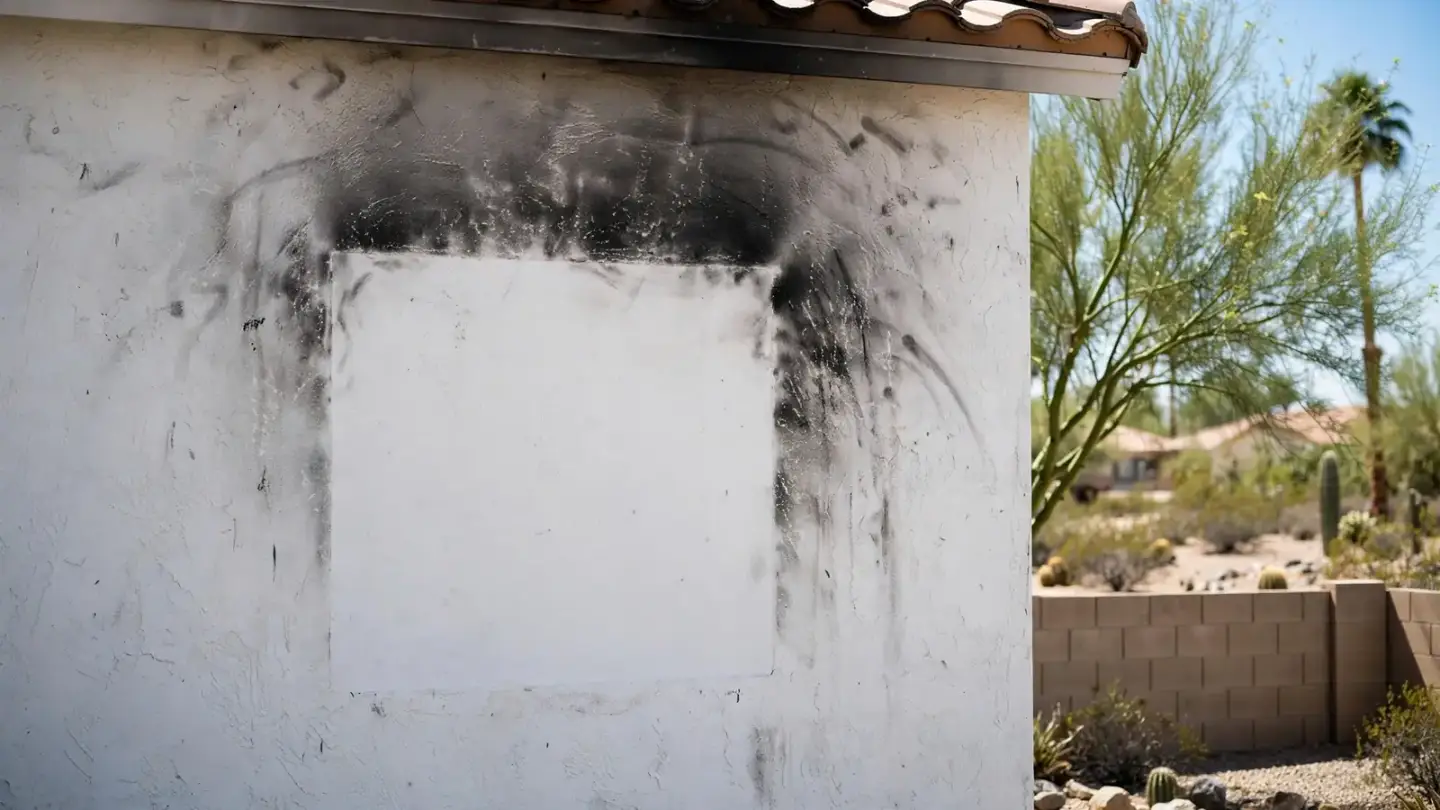
Key facts: Soot on walls and ceilings
- Soot is fine carbon residue from incomplete burning; it settles on cooler surfaces and along air paths.
- Soot on walls without a fire can come from candles, fireplaces or a malfunctioning fuel-burning appliance.
- A fuel-burning appliance producing soot may also produce carbon monoxide and should be inspected.
- Dry soot should be lifted with dry methods before any wet cleaning.
- Painting over soot without cleaning and sealing usually lets stains bleed through.
Causes
Where soot on walls comes from
After a fire, soot on walls and ceilings is expected. It follows the path of hot smoke, so it is heaviest high on walls, across ceilings, above doorways and around vents. You may see a clean shape where a picture frame hung, because the frame protected the wall behind it.
Without a fire, soot can still appear. Scented candles, especially those with large or flickering flames, release soot that collects above where they burn. Wood-burning fireplaces that draft poorly push smoke into the room. Gas furnaces, water heaters and stoves that are out of adjustment can produce soot, and the U.S. Consumer Product Safety Commission notes that soot around a fuel-burning appliance can be a warning sign of a carbon monoxide problem. If you see soot near a gas appliance, stop using it and have it inspected.
Patterns
Reading the pattern of the marks
Lines tracing ceiling joists
Called ghosting. Particles settle on cooler strips over framing where insulation is thinner.
Dark bands above doors
Smoke or warm air flowed through the gap at the top of the door.
Black streaks at carpet edges
Filtration soiling: air pulled under walls leaves residue in the carpet like a filter.
Marks above a candle spot
Regular candle use leaves a dark patch on the wall or ceiling above.
Soot around a gas appliance
A sign of incomplete combustion; have the appliance checked for carbon monoxide.
Even grey film everywhere
Smoke from a fire spread through the HVAC system.
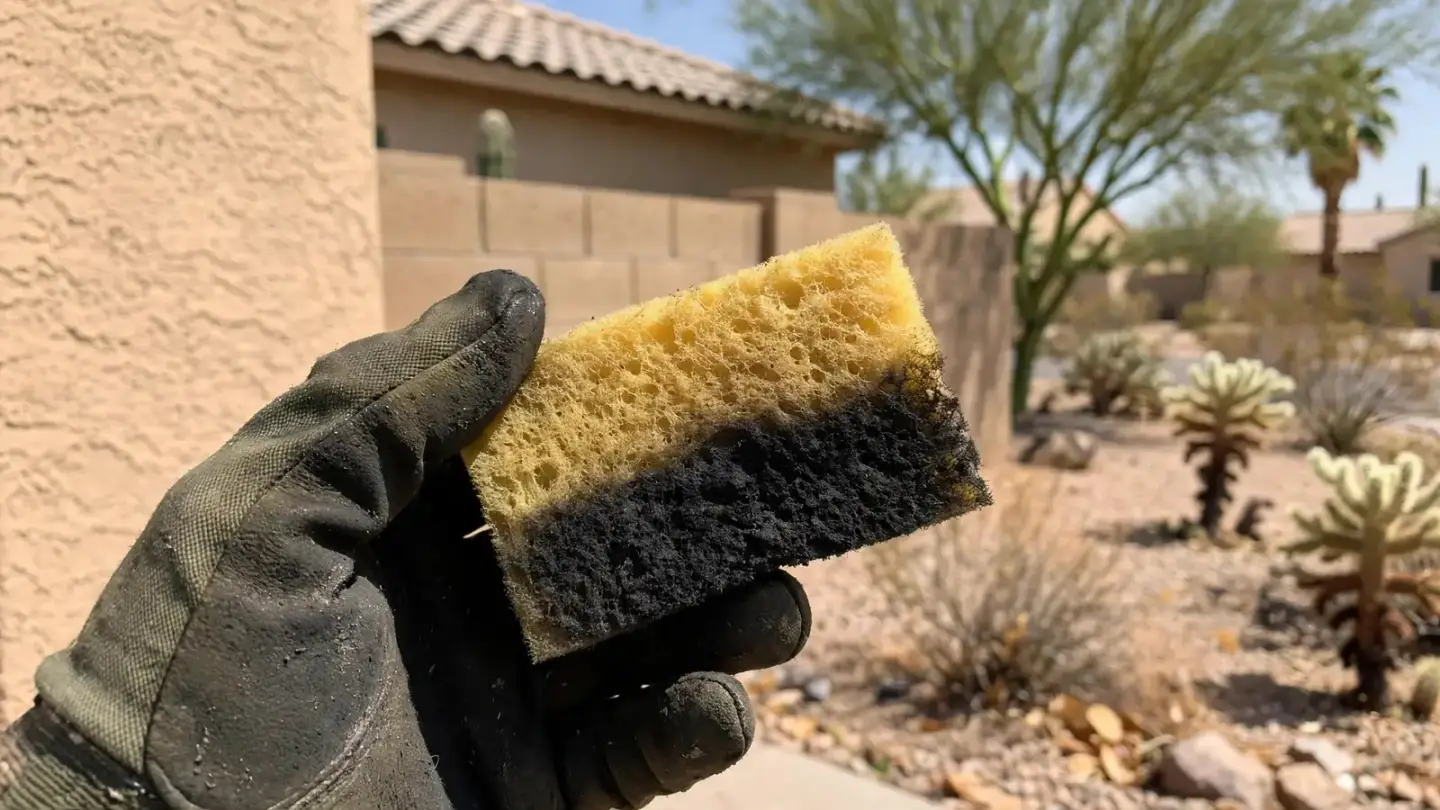
Small areas
Cleaning a small patch of light soot
For a small area of light, dry soot, such as above a candle. For fire soot over large areas, use a professional.
- 1
Protect yourself
Wear gloves and an N95 respirator, and open a window if outdoor air is clean.
- 2
Vacuum loose soot
Use a vacuum with a HEPA filter and a brush attachment held just off the surface.
- 3
Use a dry sponge
Wipe with a dry chemical sponge in straight, overlapping strokes. Turn or cut away the dirty face often.
- 4
Then wash if needed
Only after the dry pass, wash remaining residue with a mild degreasing cleaner and rinse.
- 5
Seal before painting
If a shadow remains, use a stain-blocking primer before repainting.
Mistakes
Common cleaning mistakes and their effects
| Mistake | What happens |
|---|---|
| Wiping with a wet cloth first | Soot smears and soaks into paint |
| Using a regular vacuum | Fine particles blow back into the room |
| Pressing hard with the sponge | Residue is ground into texture |
| Painting straight over soot | Stain and odor bleed through |
| Ignoring soot near a gas appliance | A carbon monoxide hazard may go unnoticed |
Phoenix homes
Textured ceilings and older Phoenix houses
Many Phoenix homes have knock-down or popcorn ceiling textures. Soot settles into the texture and is hard to remove without damaging it. Popcorn ceilings in homes built before the 1980s may contain asbestos, which the U.S. EPA says should not be disturbed without testing. If you have soot on an older textured ceiling, have it tested before cleaning or scraping.
Desert dust is another local factor. Fine dust settling with soot creates a gritty layer that scratches paint when wiped, so thorough HEPA vacuuming first matters more here.
Appliances
Soot from gas appliances needs a safety check
If soot appears around a gas furnace, water heater, range or fireplace without any fire, treat it as a warning. Soot is a by-product of incomplete combustion, and the same conditions can produce carbon monoxide, an odorless gas that can cause illness and death. Stop using the appliance, ventilate, make sure your carbon monoxide alarms work, and have a qualified technician inspect it.
Common causes include a dirty or misadjusted burner, a blocked flue or vent, or a lack of combustion air because the appliance is in a closet that has been sealed up. Once the appliance is repaired, the soot can be cleaned using the methods in this guide.
Painting
Repainting after soot without stains bleeding through
Painting is often the last step after soot cleaning, and it is where many DIY jobs go wrong. Ordinary latex paint does not block stains or odor; soot shadows and smoke smell come through within weeks. The surface needs to be clean, dry and dull, then primed with a stain-blocking primer suited to smoke, commonly a shellac-based product.
Ceilings are the most demanding surface because soot collects there most heavily and light falls across them at an angle that shows every shadow. On textured ceilings, primer has to reach into every recess. If you see yellow or grey patches through fresh paint, the primer coat was too thin or residue remained, and the area needs cleaning and priming again.
Contents
Soot on furniture, cabinets and fixtures
Walls and ceilings are not the only surfaces soot reaches. Wood furniture and cabinets with a lacquer or varnish finish can usually be cleaned with a mild cleaner and soft cloth after loose soot is vacuumed, but acidic residue can cloud a finish if it sits for long. Chrome, brass and nickel fixtures can pit or tarnish and should be cleaned early. Unsealed wood, such as the inside of drawers, absorbs soot and odor and may need sealing. For anything valuable or antique, ask a professional before cleaning it yourself.
Calling for help
When soot is too much to clean yourself
Small patches of light, dry soot can be a weekend job. After a fire, though, soot usually covers several rooms and mixes with oily residue, water and odor. Large areas, oily or smeared soot, textured or older ceilings, and soot that keeps reappearing are all signs to bring in professionals, who have HEPA equipment, respiratory protection and the right cleaners.
FAQ
Soot stain questions
Why are there black lines on my ceiling?
Usually ghosting: fine particles settle on cooler strips over ceiling framing. [3] After a fire it is soot; without a fire it can come from candles or appliances.
Can I use bleach on soot?
Bleach does not dissolve soot and wet cleaning first tends to smear it. Use dry methods first, then a degreasing cleaner.
Is soot from candles dangerous?
It adds fine particles to indoor air. Trim wicks and reduce candle use if you see buildup.
When should I call a professional?
For fire soot, large areas, oily residue, textured ceilings or anything near a gas appliance.