
Key facts: Encanto
- Encanto is a central Phoenix area that includes several designated historic districts with homes from the 1920s through the 1940s.
- Exterior changes to properties in Phoenix historic districts generally require review by the City of Phoenix Historic Preservation Office.
- Homes built before 1978 may contain lead-based paint; disturbing it requires lead-safe work practices under EPA rules.
- Older homes may have original or outdated wiring that should be inspected after heat or water exposure.
- The covered ZIP codes for Encanto and nearby central Phoenix historic neighborhoods on this site are 85007, 85013 and 85015.
Covered area
Encanto-area ZIP codes covered by this line
Calls from these central Phoenix ZIP codes can be connected to an independent restoration contractor serving the area.
- 85007Neighborhoods south and west of Encanto Park and toward downtown, including several older districts.
- 85013Encanto-Palmcroft, Palmcroft and neighborhoods north of Encanto Park toward Midtown.
- 85015Neighborhoods west of Encanto toward 19th Avenue and beyond, with homes from the 1940s and 1950s.
About Encanto
Central Phoenix's historic neighborhoods
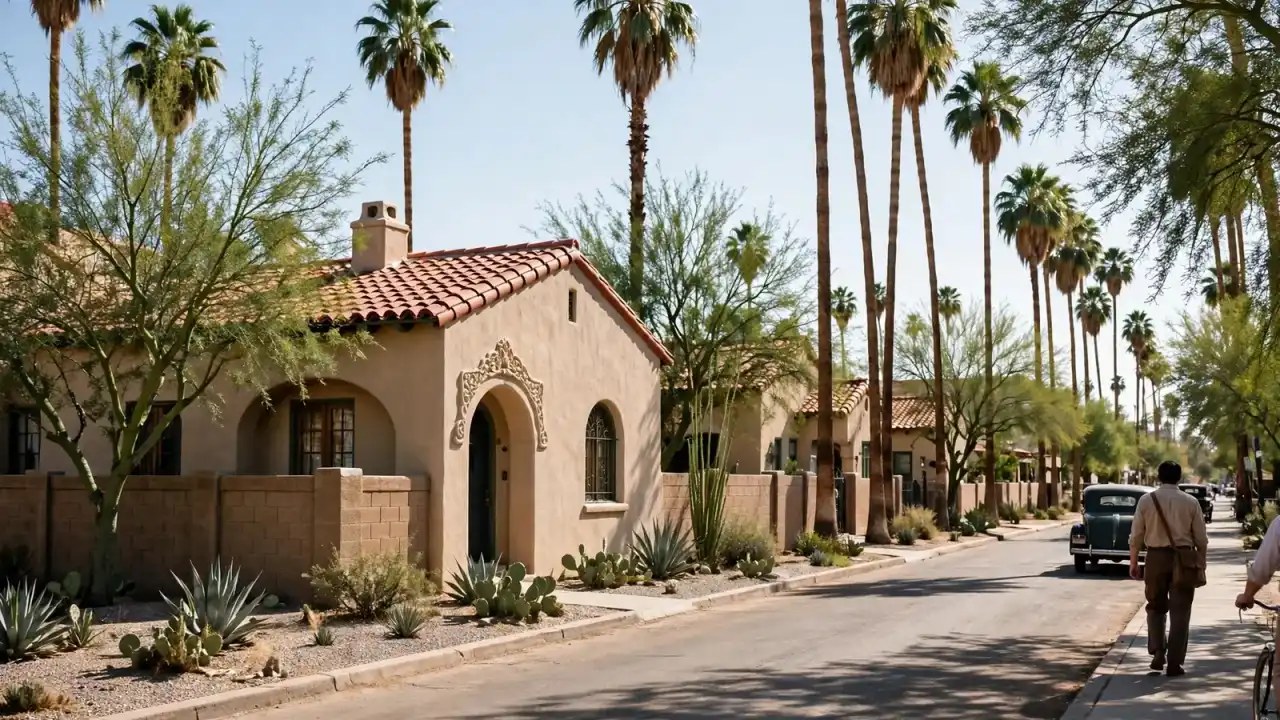
Encanto Park opened in the 1930s, and the neighborhoods around it were among the first fashionable residential areas outside Phoenix's original townsite. Encanto-Palmcroft, Palmcroft, Willo, Fairview Place and other nearby districts are known for their curving streets, mature trees and a mix of architectural styles: Spanish Colonial Revival, Monterey, Tudor Revival, Pueblo Revival and modest bungalows and early ranch houses.
Many of these neighborhoods are designated historic districts. The City of Phoenix Historic Preservation Office reviews exterior changes to properties within them, with the aim of protecting the character that makes the area special. [1]
Homes here were built with methods and materials quite different from modern tract houses: plaster over wood lath or masonry, solid wood floors, wood windows, brick, clay tile roofs and decorative details. Many have been updated over the decades, but original materials often remain behind newer surfaces. All of this affects how a fire spreads, how a house is cleaned and how it can be rebuilt.
Construction
Encanto construction details that affect restoration
Plaster and lath walls
Plaster is hard and fire resistant but porous; lath behind it creates cavities where smoke and water collect.
Solid wood floors
Oak and pine floors absorb water and smoke but can often be sanded and refinished.
Original wood windows and doors
Historic windows may be repairable rather than replaced, which matters for preservation review.
Older wiring
Some homes may still have older wiring systems that need an electrician's inspection after a fire.
Lead paint
Paint in homes built before 1978 may contain lead; disturbing it calls for lead-safe practices. [3]
Clay tile and flat roofs
Spanish revival homes often combine tile roofs with flat parapet sections that need different coverings.
Plaster
Smoke and water in Encanto's plaster walls
Plaster is one of the advantages of an older home in a fire. It is hard, dense and resists flame better than modern drywall. Plaster walls often survive fires that would destroy drywall. But plaster is also porous. Smoke residue sinks into its surface, and smoke and water both travel through the cavities behind it, especially where plaster sits on wood lath.
Cleaning plaster begins with dry methods, then careful wet cleaning suited to the paint finish. Where plaster is stained but sound, sealing with a stain-blocking primer and repainting often restores it. Cracked or loose plaster can usually be repaired by skilled plasterers. Replacing historic plaster with drywall is possible but changes the character of the house and may matter for preservation.
Water is a bigger threat to plaster than smoke. Plaster soaked by firefighting water can loosen from its lath and fall, and the wood lath can swell and rot if not dried. Moisture readings and careful drying are essential, and ceilings that sag or bulge should be treated as a hazard.
What you might see
Encanto fire damage clues and causes
| What you notice | Likely reason | What to ask |
|---|---|---|
| Stained but intact plaster | Smoke residue in porous plaster | Can it be cleaned, sealed and repainted? |
| Sagging plaster ceiling | Water loosened plaster from lath | Is it safe, and can it be repaired? |
| Cupped wood floors | Firefighting water soaked into boards | Can the floor be dried and refinished? |
| Smoke in wall cavities far from the fire | Smoke traveled through lath cavities | Will cavities be checked? |
| Peeling old paint after the fire | Heat and water on older paint layers | Will lead-safe practices be used? |
| Damaged original windows | Heat cracked glass or charred frames | Can windows be repaired rather than replaced? |
Preservation
Historic preservation review for Encanto repairs
If your home is in a designated historic district, exterior work that changes the appearance of the property generally needs review by the City of Phoenix Historic Preservation Office. This includes many types of repairs after a fire: replacing windows and doors, changing roof materials, altering stucco or brick, and rebuilding damaged sections.
Emergency measures such as boarding windows and tarping roofs are temporary and do not change the historic fabric, but it is still good practice to let the office know about the fire. When it comes to permanent repairs, preservation staff can advise on what is required and may help find solutions that keep the home's character while meeting modern codes.
Contact the Historic Preservation Office early, ideally while the insurance scope is being prepared. Repairs that respect historic materials, such as repairing wood windows rather than replacing them with vinyl, may need to be reflected in the insurance estimate.
Wood floors
Restoring solid wood floors in Encanto houses
Many Encanto homes have original solid oak or pine floors, sometimes hidden under carpet added later. Wood floors soaked by firefighting water swell and cup. If dried promptly and carefully, many can be saved. Drying uses dehumidifiers and sometimes specialised floor drying mats that pull moisture from the boards and subfloor.
Once dry, cupped floors often flatten partially; remaining unevenness and smoke staining can be removed by sanding and refinishing. Boards that are charred, rotted or badly split are replaced with matching wood where possible. Rushing to sand before the floor is fully dry can cause new cupping later.
If carpet was laid over original wood, removing wet carpet and pad may reveal floors worth restoring. Mention this to the contractor.
Assessment
What a contractor should check in an Encanto home
- 1
Electrical
Have an electrician inspect older wiring before restoring power to affected areas.
- 2
Lead and asbestos
Identify suspect materials and test before disturbing them.
- 3
Plaster and lath
Check for loose or sagging plaster and moisture in lath cavities.
- 4
Wood floors and subfloor
Take moisture readings and assess cupping and charring.
- 5
Roof sections
Clay tile, flat parapet roofs and any later additions each need their own covering.
- 6
Historic features
Note windows, doors, trim and other original elements to protect or repair.
Restoration
How restoration usually runs in an Encanto house
Securing a historic home calls for care. Boards can be fastened in ways that avoid damaging original window frames and masonry. Clay tile roofs are tarped by removing and storing tiles around the opening, and flat roof sections behind parapets need sealed coverings so water does not pond.
Drying focuses on plaster, lath cavities and wood floors. Cleaning uses methods suited to plaster, old paint and wood, with lead-safe practices where needed. Odor work includes cavities and any attic space.
Rebuilding involves City of Phoenix permits and, for exterior changes in historic districts, preservation review. Skilled trades such as plasterers, wood window restorers and tile roofers may be needed. Discuss early with your contractor whether they have experience with older homes or work with specialists who do.
Windows
Repairing original windows in Encanto homes
Original wood and steel windows are part of what makes Encanto's houses distinctive, and preservation guidance generally favours repair over replacement. After a fire, windows may have cracked glass, charred sashes, soot in the frames or swollen wood from firefighting water.
Many can be repaired: glass replaced, sashes repaired or rebuilt, frames cleaned and repainted with lead-safe methods. Steel casement windows common in revival-style homes can be cleaned of soot and repainted. Board-up should protect these windows rather than fasten through them where possible.
- Board without damaging frames
- Assess repair before replacement
- Use lead-safe practices on old paint
- Consult preservation staff on changes
Climate
Heat, monsoon and mature trees in Encanto
Older homes often have less insulation, and central Phoenix's urban heat is intense in summer. A historic home without cooling after a fire gets very hot, which drives smoke odor out of plaster and wood. Temporary housing is often needed in summer.
Encanto's mature trees shade streets beautifully, but they overhang many roofs. During monsoon storms, branches can fall on a fire-weakened roof or tear tarps. Check trees near damaged roof sections and consider trimming branches over the opening.
Prevention
Reducing fire risk in a historic Encanto home
- Have the wiring evaluatedAn electrician familiar with older homes can identify outdated or overloaded circuits.
- Maintain older heating equipmentGas wall heaters and floor furnaces should be serviced regularly.
- Inspect chimneysOlder chimneys may have deteriorated liners.
- Keep trees trimmed backBranches touching roofs can carry fire and damage roofs in storms.
- Install modern smoke alarmsOlder homes may lack alarms in every bedroom; add them.
Week one
The first week after a fire in an Encanto home
- 1
Day 1 (Encanto)
Fire department release, insurer notified, windows and roof secured with care for historic materials, photos taken.
- 2
Day 1-2 (Encanto)
Electrician inspects; water extracted; wood floors and plaster drying started.
- 3
Day 2-3 (Encanto)
Lead and asbestos testing; contents and heirlooms packed out with a list.
- 4
Day 3-5 (Encanto)
Drying monitored; plaster and floors assessed for repair.
- 5
End of week (Encanto)
Scope agreed; Historic Preservation Office contacted about exterior repairs.
On your call
Questions to ask about your Encanto home
- Do you work on historic homes?Experience with plaster, wood windows and preservation review helps.
- Are you lead-safe certified?Required for many jobs disturbing paint in pre-1978 homes.
- Can my plaster be repaired?Ask whether they will try to save plaster before replacing it.
- Can the wood floors be saved?Ask about drying methods and refinishing.
- Will you coordinate with preservation staff?Exterior repairs may need review.
Services
Restoration services Encanto homeowners ask about
Soot on plaster
Cleaning and sealing porous historic plaster.
Read moreDrying wood floors and lath
Careful drying of older materials.
Read moreOdor in old houses
Treating smoke smell in cavities and wood.
Read moreSecuring historic homes
Board-up and tarping that protect original features.
Read more
Heating
Wall heaters, floor furnaces and fireplaces in Encanto
Many older central Phoenix homes were heated with gas wall heaters, floor furnaces set into a grate in the hallway floor, or fireplaces. Some of these remain in use, sometimes alongside later central air systems. Older gas heaters that are dirty or poorly adjusted can produce soot and carbon monoxide, and anything stored too close to a wall heater or over a floor grate can ignite.
After a fire, gas appliances should be inspected by a qualified technician before use. If soot appeared around a heater with no fire, treat it as a warning sign of incomplete combustion and stop using it until it is checked. Carbon monoxide alarms are important in any home with gas appliances.
Fireplaces in revival-style homes are often decorative focal points with tile or plaster surrounds. Smoke and soot from a house fire, or from a chimney problem, may stain these surfaces; cleaning methods should suit the original materials.
Additions
Additions and updates to Encanto houses
Over eighty or more years, most Encanto homes have been altered: kitchens and bathrooms remodeled, rooms added at the back, garages converted, attics insulated, new wiring run alongside old, central air installed with ducts in attics or soffits. These changes mean that a single house may contain materials from several decades.
During restoration, contractors need to identify where original construction ends and later work begins. Smoke and water often collect at the junctions between old and new sections. Ductwork added later may run through spaces never designed for it and carry smoke throughout the home. Ask the contractor to trace these paths during assessment.
Clean or replace
What usually happens to historic Encanto materials
| Material | Usual outcome | Note |
|---|---|---|
| Sound plaster | Cleaned, sealed and repainted | Lead-safe methods on older paint |
| Loose plaster ceiling | Reattached or replastered | Hazard until secured |
| Solid wood floors | Dried, sanded and refinished | Replace only charred or rotted boards |
| Wood and steel windows | Repaired where possible | Preservation review for replacements |
| Clay roof tiles | Removed, stored and reused | Matching replacements may be needed |
| Original trim and doors | Cleaned and refinished | Often worth keeping |
Neighbors
Fires next door in close-set Encanto streets
Lots in some of the older central Phoenix districts are narrow, with houses close together and detached garages or guest quarters along alleys. A fire in a neighboring house or alley structure can crack windows on your house, scorch eaves and send smoke through gaps in older windows and doors, which are often less airtight than modern ones.
Check the side of your house facing a neighbor's fire, look for smoke in your attic or crawl spaces, and clean or replace filters. Document damage with photographs and contact your insurer.
Contents
Antiques, books and heirlooms in older Encanto homes
Historic homes often hold historic contents: antique furniture, old books, family papers, photographs and artwork. Smoke and water damage these in different ways, and some need conservators rather than general cleaners. Avoid wiping soot from paper, photographs or artwork; it smears.
Ask the contractor to photograph and list valuable items before pack-out, store them securely, and send irreplaceable pieces to appropriate specialists. Wet books and papers can be frozen to prevent mould until they can be dried properly.
Kitchens
Kitchen fires in Encanto's updated kitchens
Kitchens are the most frequently remodeled rooms in historic homes, so a kitchen fire in Encanto often involves modern cabinets and appliances set inside an old structure with plaster walls, wood floors and original windows. Smoke from the kitchen spreads into adjoining rooms with original finishes, and grease-laden residue from cooking fires clings to plaster and painted woodwork.
Cleaning has to suit both the new and the old: degreasers appropriate to modern cabinets, gentler methods for older painted trim and plaster, and lead-safe practices wherever old paint is disturbed. Range hoods in older homes may vent through roofs or walls not designed for them, and their ducts should be inspected after a kitchen fire.
If the kitchen needs rebuilding, interior work is generally not subject to historic preservation review, but anything that changes the exterior, such as a new window or vent, may be.
FAQ
Encanto fire restoration questions
Does this line cover Encanto?
Yes. Calls from ZIP codes 85007, 85013 and 85015 can be connected to an independent restoration contractor serving the area.
Can smoke-stained plaster be saved?
Often. Sound plaster can usually be cleaned, sealed and repainted. Loose or cracked plaster can be repaired by skilled plasterers.
Do I need approval to repair my house after a fire?
If you are in a designated historic district, exterior changes generally need review by the City of Phoenix Historic Preservation Office. Building permits are also required.
My wood floors are cupped. Are they ruined?
Not necessarily. Careful drying followed by sanding and refinishing can save many floors.
Is lead paint a concern?
In homes built before 1978, yes. Contractors disturbing painted surfaces should follow lead-safe work practices.
Should I worry about old wiring?
Have a licensed electrician inspect it before power is used in affected areas.
Can my original windows be repaired?
Many can. Ask for repair to be assessed before replacement, especially in historic districts.
Will my insurance pay for historic materials?
Coverage depends on your policy. Discuss historic materials and preservation requirements with your adjuster early.
Is my old gas wall heater safe after the fire?
Have it inspected by a qualified technician before use, and make sure carbon monoxide alarms are working.
What should I do with wet old books and papers?
Do not try to separate pages while wet. Freezing them prevents mould until they can be dried properly by a specialist.
Does preservation review cover interior repairs?
Review in Phoenix historic districts focuses on exterior changes. Interior work still needs building permits where required.
Can steel casement windows be cleaned after smoke?
Usually. Soot is cleaned from the frames, glass is replaced if cracked, and the steel is repainted using lead-safe methods where old paint is present.
Will a restored plaster wall look the same?
Skilled plasterers can match smooth and textured finishes closely. Patches are usually blended and the whole wall repainted for an even look.
Can my clay roof tiles be reused?
Undamaged tiles are usually removed, stored and reinstalled. Matching replacements may be needed for broken ones.
Can I stay nearby while my historic home is restored?
Many policies include additional living expenses. Keep receipts and check your policy wording.