
Key facts: Maryvale
- Maryvale is in west Phoenix and was developed by builder John F. Long beginning in the mid-1950s as a large planned community.
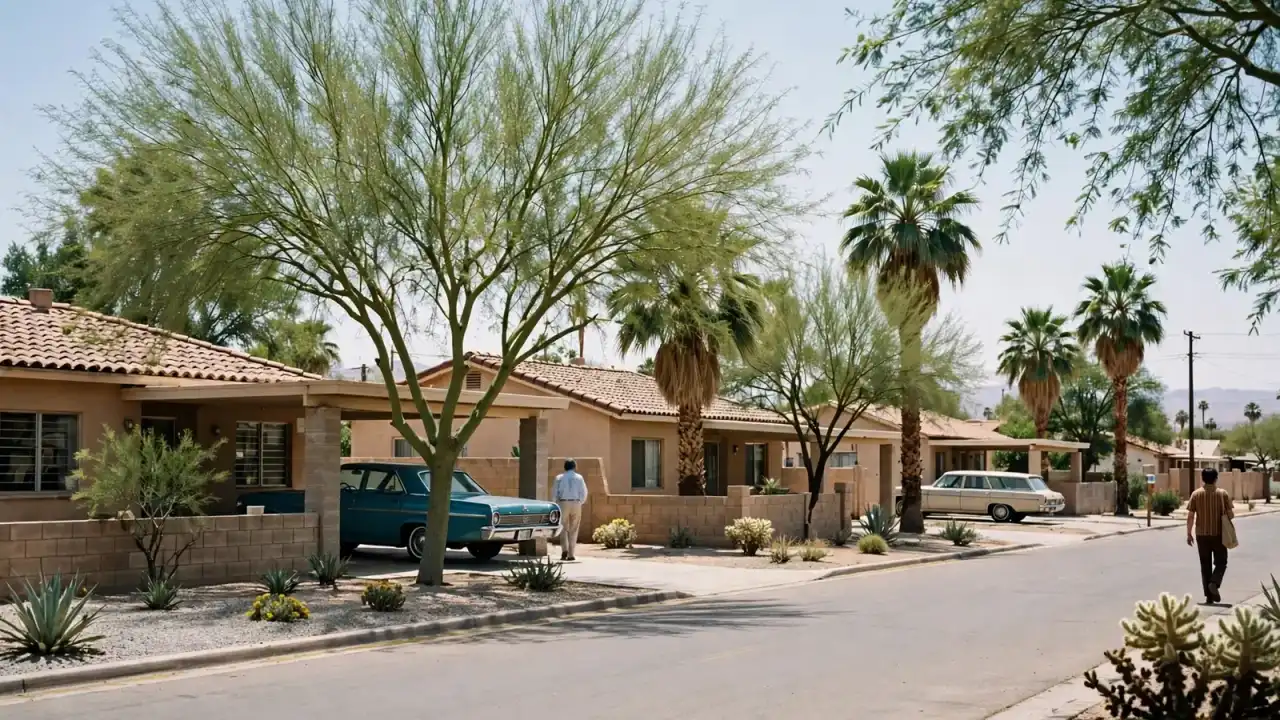
- Many Maryvale homes are single-storey houses with concrete block walls built in the 1950s through the 1970s.
- Older homes may have original electrical systems that should be inspected after exposure to heat, smoke or water.
- Materials in homes built before the 1980s may contain asbestos, which the U.S. EPA advises testing before disturbance.
- The covered ZIP codes for Maryvale on this site are 85031, 85033, 85035 and 85037.
Covered area
Maryvale ZIP codes covered by this line
Calls from these Maryvale ZIP codes can be connected to an independent restoration contractor serving the area.
- 85031Eastern Maryvale neighborhoods near the original mid-century developments.
- 85033Central Maryvale, including many of the first planned subdivisions.
- 85035Southern Maryvale toward the Interstate 10 corridor.
- 85037Western Maryvale neighborhoods toward the Agua Fria area.
About Maryvale
A planned community from the 1950s
Maryvale began in the mid-1950s when homebuilder John F. Long started building a large planned community on farmland west of central Phoenix, naming it after his wife, Mary. The idea was to offer families complete neighborhoods with schools, parks and shopping, built quickly and efficiently. Thousands of homes followed through the 1960s and 1970s.
Typical Maryvale houses are single-storey, built with concrete block walls, sometimes painted or stuccoed over, on a concrete slab. Roofs are low-pitched, often covered with asphalt shingles, built-up roofing or later replacements. Many homes originally had carports, which owners have since enclosed to make garages or extra rooms. Evaporative coolers on the roof were standard for decades and many homes still have them, sometimes alongside later refrigerated air systems.
These features age differently from modern stucco-over-frame houses, and they influence how a fire behaves and how a house is restored. A Maryvale home may also have decades of owner improvements, some permitted and some not, adding to the variety behind the walls.
Construction
Maryvale construction details that affect restoration
Concrete block walls
Block does not burn, but its porous surface absorbs soot and odor and needs specialised cleaning.
Low-slope roofs (Maryvale)
Shallow attic spaces are cramped, making inspection and insulation removal harder.
Original or older wiring
Wiring decades old, plus added circuits, needs an electrician's check after heat or water.
Converted carports
Enclosed carports may lack the fire separation a purpose-built garage has.
Evaporative coolers
Coolers move large volumes of air and can pull smoke in or push it through the house.
Older finishes
Textured ceilings, flooring and other materials from the era may contain asbestos and need testing.
Block walls
How smoke and soot affect Maryvale block walls
Concrete block is one of the more fire-resistant wall materials found in Phoenix houses. It does not burn, and block walls often survive a fire structurally even when everything around them is damaged. That is good news for rebuilding. But block is porous. Its rough surface and open pores absorb soot and smoke residue, and the inside of a block wall can carry odor.
Painted block cleans more easily than bare block, but heavy smoke can still stain the paint and bleed through new coats. Bare or lightly finished block may need methods such as specialised detergents, low-pressure washing with careful water control, or media blasting, followed by sealing. On interior walls, plaster or drywall applied over block, sometimes with furring strips, creates a small cavity where smoke can collect.
Water also behaves differently. Block absorbs water and dries slowly, but it does not rot or lose strength the way drywall does. Drying block walls can take longer, especially at the base where water pooled, and moisture readings help confirm when it is dry enough to seal and paint.
What you might see
Maryvale fire damage clues and causes
| What you notice | Likely reason | What to ask |
|---|---|---|
| Dark staining on painted block | Smoke residue in porous masonry | How will block be cleaned and sealed? |
| Smoke smell everywhere after cooler ran | Evaporative cooler pushed smoke through the house | Should the cooler pads and ducts be replaced? |
| Scorch marks at outlets far from the fire | Older wiring stressed by heat or water | Has an electrician checked the circuits? |
| Heavy smoke in the converted carport room | Little fire separation from the rest of the house | How far did smoke spread from that room? |
| Cracked old ceiling texture | Heat and water on mid-century finishes | Has the texture been tested for asbestos? |
| Leaks through the roof after the fire | Low-slope roofing damaged by heat | Can the roof be sealed or tarped quickly? |
Electrical
Older electrical systems in Maryvale houses
Many Maryvale homes were built when households used far less electricity. Over the decades, owners added air conditioning, larger appliances, extra rooms and electronics, sometimes on circuits and panels not designed for the load. Some homes have had their electrical systems upgraded; others still rely partly on original wiring.
Electrical faults are a common cause of house fires, and older systems are more vulnerable. After any fire, and especially one that started in a wall, outlet or appliance, a licensed electrician should inspect the panel and affected circuits before power is restored. Heat can damage insulation on wires inside walls without visible signs, and water from firefighting can create short circuits and corrosion.
If the electrician recommends upgrading parts of the system during repairs, it may be practical to do it while walls are already open for restoration. Ask your insurer how code-required upgrades are handled under your policy.
Coolers
Evaporative coolers and smoke in Maryvale homes
Evaporative coolers, often called swamp coolers, work by drawing outside air through wet pads and blowing it into the house, usually through ducts or a single large vent. They move a lot of air and rely on open windows or relief vents to let it out again. That airflow matters during and after a fire.
If a cooler was running during a fire inside the house, it may have spread smoke rapidly through every room it serves. If a fire happened outside, such as at a neighbor's house or in a nearby field, the cooler may have drawn smoke and ash directly into the home. Afterwards, cooler pads hold smoke odor and soot and should be replaced, and the cooler housing and ducts should be cleaned.
Homes with both a cooler and refrigerated air may have two separate duct paths to check. Mention on your call what cooling your home has and whether it was running when the fire happened.
Assessment
What a contractor should check in a Maryvale home
- 1
Electrical first
Arrange an electrician's inspection before power is used in affected areas.
- 2
Testing older materials
Sample ceilings, flooring and other suspect materials before demolition.
- 3
The roof and shallow attic
Check low-slope roofing for heat damage and the cramped attic for smoke in insulation.
- 4
Cooling systems
Inspect cooler pads, housing and ducts, plus any refrigerated air system.
- 5
Block walls
Test cleaning methods on block and check cavities behind interior finishes.
- 6
Additions and conversions
Look at converted carports and added rooms, which may be built differently.
Restoration
How restoration usually runs in a Maryvale home
Securing a Maryvale home after a fire usually means boarding windows and doors and covering any roof openings. Low-slope roofs are easier to work on than steep tile roofs but need tarps sealed at the edges so water does not pool underneath. Block walls offer solid fastening points for boards.
Drying focuses on slab floors, the base of block walls and any cabinets or flooring that took water. Cleaning involves careful methods for block, standard methods for drywall and plaster, and attention to the shallow attic. Odor treatment includes replacing cooler pads and cleaning ducts.
Rebuilding needs City of Phoenix permits, and older homes may need updates to meet current codes in areas being rebuilt, such as electrical, smoke alarms and sometimes structural elements. A rebuilding contractor licensed with the Arizona Registrar of Contractors should explain what is required.
Carports
Fires in converted Maryvale carports and add-on rooms
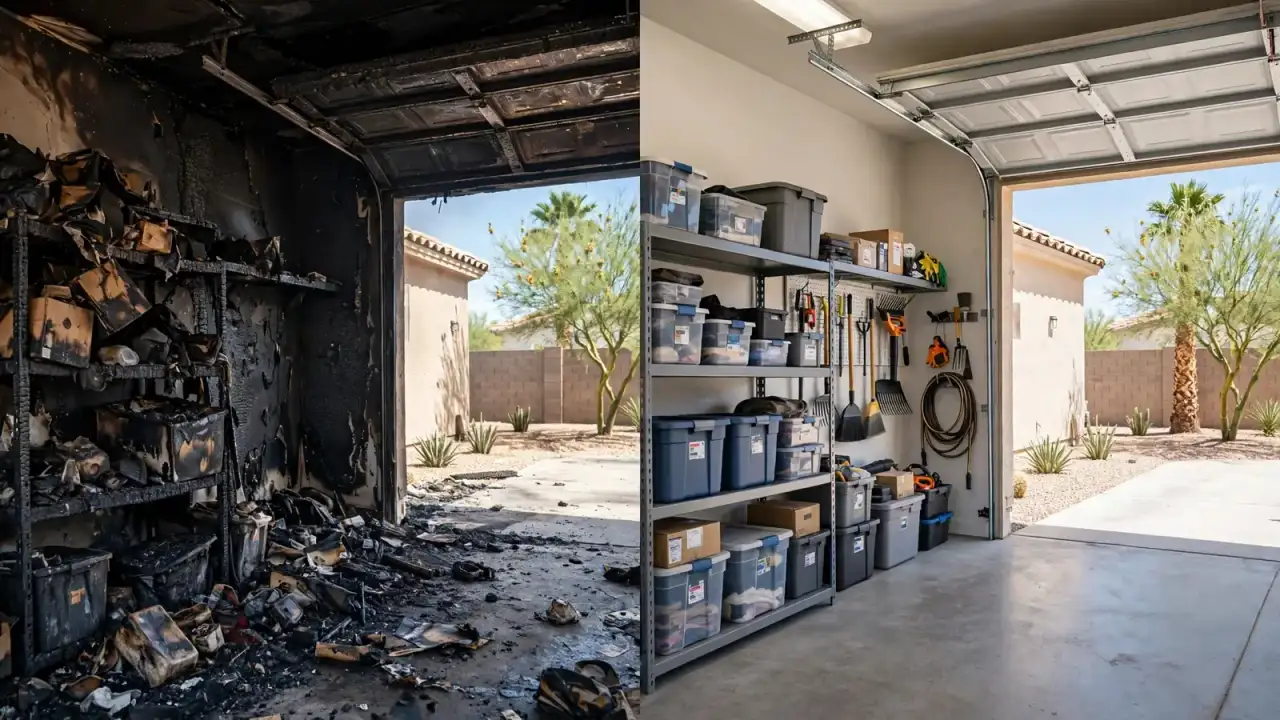
Enclosing a carport is one of the most common changes made to Maryvale homes. The result might be a garage, a laundry, a bedroom or a family room. Purpose-built attached garages have fire-resistant separation from the house, but a converted carport may not, depending on how and when it was enclosed.
If a fire starts in a converted carport, particularly one used as a garage with stored fuel, chemicals or vehicles, smoke and heat may spread more easily into the main house. The roof over the carport is often an extension of the house roof, so fire can reach the main attic. After such a fire, the contractor should check the junction between the conversion and the original house closely.
- Check the junction with the main house
- Inspect the shared roof and attic
- Look for missing fire separation
- Rebuild to current code with permits
Climate
Maryvale heat, monsoon and outside smoke
West Phoenix summers are intensely hot, and many Maryvale homes have less insulation than newer houses. A home without power after a fire heats up fast, which drives odor out of materials and makes the house unsafe for vulnerable family members. Temporary housing may be necessary until cooling is restored.
Monsoon storms can damage weakened roofs and push water through fire openings. Dust storms can coat the inside of a house with open windows. Smoke from nearby fires, including fires in vacant lots and brush along freeways and canals, can be drawn in by coolers and open windows.
Prevention
Reducing fire risk in a Maryvale home
- Have the electrical system evaluatedA licensed electrician can identify overloaded circuits and ageing components.
- Avoid extension cord overloadsOlder homes often have fewer outlets; avoid daisy-chaining cords and power strips.
- Maintain the coolerKeep cooler motors and wiring in good condition and pads clean.
- Store fuel outside living areasKeep gasoline and chemicals out of converted rooms and away from heat.
- Install alarms in every bedroomOlder homes may have few or outdated smoke alarms; add them to current recommendations.
Week one
The first week after a Maryvale house fire
- 1
Day 1 (Maryvale)
Fire department release, insurer notified, windows and doors boarded, roof covered, photos taken.
- 2
Day 1-2 (Maryvale)
Electrician inspects; water extracted; wet materials removed only after older materials are tested.
- 3
Day 2-3 (Maryvale)
Cooler pads replaced or removed; contents sorted and packed out.
- 4
Day 3-5 (Maryvale)
Drying monitored, block walls tested for cleaning methods, attic inspected.
- 5
End of week (Maryvale)
Cleaning, odor and rebuild scope agreed, including any code updates.
On your call
Questions to ask about your Maryvale home
- How will you clean block walls?Methods differ for painted and bare block; ask how they will test first.
- Will you test for asbestos before demolition?Testing protects your family and the crew in older homes.
- What about my evaporative cooler?Ask whether pads, housing and ducts will be cleaned or replaced.
- Do I need an electrician?In older homes, the answer after a fire is almost always yes.
- How will you handle my converted carport?Ask how they will assess the junction with the main house.
Services
Restoration services Maryvale homeowners ask about
Soot on block and plaster
Cleaning porous masonry and older finishes.
Read moreWhole-house smoke from coolers
Cleaning after smoke was pushed through every room.
Read moreOdor in older homes
Treating smell in shallow attics, block and cooler ducts.
Read moreSecuring low-slope roofs
Tarping and sealing low roofs after fire.
Read more
Kitchens
Kitchen fires in compact Maryvale homes
Maryvale's original homes were designed to be efficient, with compact kitchens, short hallways and modest room sizes. In a small house, smoke from a kitchen fire reaches every room quickly. Hallway ceilings, bedroom doors and closets close to the kitchen often show heavy residue even after a brief stovetop fire.
Many kitchens have been remodeled at least once, and some have original cabinets made of solid wood or plywood, which can take cleaning and refinishing better than modern particleboard. Older range hoods may vent through the roof or may not vent at all. After a kitchen fire, the hood, its duct and the ceiling around it should be checked, as grease and smoke collect there.
Because rooms are close together, it is worth asking the contractor to seal off the kitchen with plastic sheeting during cleaning so residue disturbed there does not drift into bedrooms already cleaned.
Roofs
Low-slope Maryvale roofs after a fire
Many Maryvale homes have low-slope roofs, either original or replaced over the years with asphalt shingle, built-up roofing, rolled roofing or sprayed foam. These roofs sit close to the ceiling below, with a shallow attic or none at all in some sections. Heat from an interior fire can damage the roof deck and covering quickly because there is little air space between them.
After a fire, a low-slope roof may leak through heat-damaged areas even where there is no visible hole. Water on a low-slope roof drains slowly and can pool on damaged sections. A tarp must be sealed and weighted or fastened so water runs off rather than collecting underneath.
Roof-mounted evaporative coolers add weight and penetrations. A fire below a cooler can weaken the roof structure supporting it. Have the roof and cooler supports checked before anyone works on or near the cooler.
Clean or replace
What usually happens to common Maryvale materials
| Material | Usual outcome | Note |
|---|---|---|
| Painted block walls | Cleaned, sealed and repainted | Porous, so sealing matters |
| Plaster over block | Cleaned and sealed; patched if damaged | Check cavities behind furring |
| Original solid wood cabinets | Often cleaned and refinished | Better candidates than particleboard |
| Old textured ceilings | Tested, then cleaned or removed | May contain asbestos |
| Cooler pads | Replaced | Hold smoke odor and soot |
| Shallow attic insulation | Usually replaced | Hard to clean in a cramped space |
Neighbors
When a fire next door affects a Maryvale home
Maryvale lots are close together, and houses often share block walls along property lines. A fire next door can crack windows facing it, scorch eaves and paint, and send smoke into a neighboring home, especially if that home's evaporative cooler was running. Embers can land on low roofs.
If a neighboring house burned, look at the side of your home facing the fire, check your attic and cooler for smoke and soot, and replace cooler pads and HVAC filters. Photograph any damage and contact your insurer; your own policy may cover smoke and heat damage from a neighbor's fire.
Renters and owners
Rentals and multi-generation homes in Maryvale
Many Maryvale homes are rentals, and many others house several generations of one family. After a fire in a rental, the tenant should notify the landlord or property manager right away. The owner's insurance usually covers the building, while tenants' belongings and extra living expenses depend on renters insurance. Both parties should photograph damage before cleanup.
In multi-generation households, older relatives and young children are among the people most affected by smoke and heat. Plan for them to stay elsewhere during cleaning and demolition, especially in summer if cooling is not working. Keep a list of medications and medical equipment that need replacing if they were exposed to heat or smoke.
FAQ
Maryvale fire restoration questions
Does this line cover Maryvale?
Yes. Calls from ZIP codes 85031, 85033, 85035 and 85037 can be connected to an independent restoration contractor serving Maryvale.
Can soot be cleaned off block walls?
Usually. Block is porous, so it needs suitable cleaning methods and often sealing before repainting.
My swamp cooler was running during the fire. What now?
It likely spread smoke through the house. Replace the pads, clean the cooler and ducts, and have rooms cleaned for smoke residue.
Should I worry about asbestos in Maryvale?
In homes from the 1950s to 1970s, some materials may contain it. Ask for testing before anything is disturbed.
Is my old wiring safe after the fire?
Have a licensed electrician inspect it before using power in affected areas.
Will I need to bring parts of my house up to code?
Areas being rebuilt generally must meet current codes. Ask your contractor and insurer how that is handled.
Why does my house smell worse when the cooler runs?
Smoke odor in the cooler pads, housing or ducts is blown into the house with the air.
Do I need permits to rebuild in Maryvale?
Yes, regulated repair work in Maryvale needs City of Phoenix permits.
I rent my Maryvale home. Who handles the restoration?
Usually the property owner arranges restoration of the building. Tell your landlord immediately and contact your renters insurer about your belongings and living expenses.
Can my original wood cabinets be saved?
Often. Solid wood and plywood cabinets usually clean and refinish better than particleboard, as long as they were not charred or soaked for long.
Is my roof cooler safe to use again?
Have the roof supports and cooler wiring checked first, then replace the pads and clean the housing and ducts before running it.