
Key facts: Odor Removal
- Smoke odor comes from residue and chemical compounds absorbed into porous materials, so it must be removed at the source.
- Air fresheners and scented products mask smoke odor briefly but do not remove it.
- Ozone generators can irritate the lungs; the U.S. EPA warns against using them in occupied spaces.
- Sealing primers are commonly used on cleaned surfaces to lock in residual odor before repainting.
- Heat increases the release of odor compounds, which is why smoke smell is often worse in the afternoon in Phoenix.
Where smell comes from
Why smoke smell outlasts the visible damage
What you smell after a fire is a cocktail of chemical compounds released as materials burned. Some of these compounds are carried on tiny particles, others are gases that soak directly into absorbent surfaces. When the fire is out and the air clears, much of the odor stays behind, bound into the materials of the house and its contents.
That is why a room can look spotless after cleaning and still smell. Wiping a wall removes residue from its surface, but odor that soaked into the paper face of drywall, the fibres of carpet, the foam in a couch or the batts of insulation in the attic is still there. Over time those materials release the compounds back into the air, and you smell smoke again.
Phoenix heat makes this pattern very noticeable. Many odor compounds release faster as temperature rises. A home that seems fine in the cool early morning can smell strongly by the late afternoon, especially in summer and in rooms with west-facing walls or attic spaces above them. Homeowners often report that the smell seems to come and go, which is a sign the source is still in the building.
Effective odor removal therefore works in layers: remove the residue, remove materials that hold too much odor to clean, neutralise what remains, and seal surfaces so any trace left in them cannot escape.
Signs
Clues that tell you where odor is hiding
Use your nose systematically. Smell close to surfaces, open cabinets and closets, and compare rooms.
Stronger smell near the floor
Carpet pad and subfloor can hold odor, especially if firefighting water soaked them.
Smell when the AC turns on
Odor in ducts, the air handler or the filter is pushed out every time the system starts.
Odor in cabinets and drawers
Unfinished wood inside cabinets absorbs smoke readily and is a common hidden source.
Afternoon smell from the ceiling
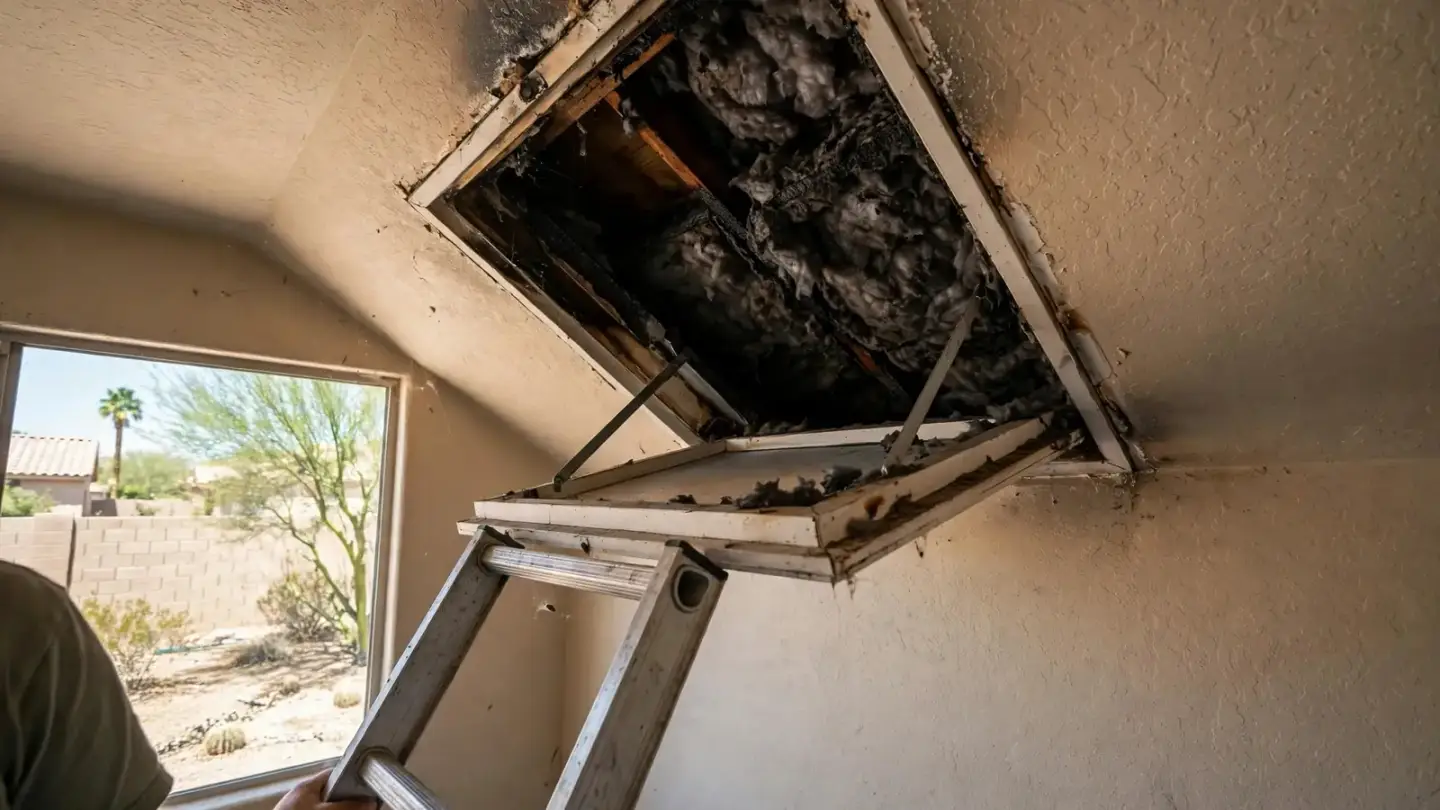
Smoke in attic insulation releases odor as the attic heats and it drifts down through light fixtures.
Musty smoke smell
A combination of smoke and damp suggests wet materials that were never fully dried.
Smell from soft furnishings
Cushions, mattresses and curtains act like sponges for smoke odor.
Why it fails
Why home odor fixes rarely work
The most common attempt is to cover the smell: candles, plug-in fresheners, scented sprays. These add a stronger fragrance on top of the smoke and wear off within hours. Some people also open the house up and run fans for days. Ventilation helps with odor in the air but does little for odor held inside materials.
Another common approach is the rental ozone machine. Ozone is a reactive gas that can break down some odor compounds, but it is also a lung irritant, and the U.S. Environmental Protection Agency warns that ozone generators sold as air cleaners can produce harmful levels indoors. [1] Ozone does not remove soot or residue, and it can damage rubber, some plastics and fabrics with heavy use. Professionals who use it do so in empty buildings with controls, and many now prefer other methods.
Painting over a smoky wall without cleaning and sealing it is the third common mistake. Standard paint is not designed to block odor, so the smell bleeds through within weeks, especially in heat.
Finding the source
How a contractor tracks down smoke odor
- 1
Room-by-room sniff test
A technician moves through the house with doors closed and open, noting which rooms and surfaces smell strongest.
- 2
Check hidden spaces
Inside cabinets, closets, behind appliances, under sinks and in the attic are all checked.
- 3
Run the HVAC briefly
If allowed, the system is run with a clean filter to see whether odor comes from the vents.
- 4
Look for moisture
Moisture meters find wet materials; wet smoky materials smell worse and may grow mould.
- 5
Rank the sources
Sources are ranked by strength so the strongest are dealt with first, often by removal.
Diagnosis
Odor patterns and their usual sources
| Pattern | Likely source | Typical fix |
|---|---|---|
| Smell every afternoon | Attic insulation, roof wood | Remove insulation, seal wood |
| Smell when AC starts | Ducts, air handler, filter | Clean ducts and coil, new filter |
| Smell strongest at floor level | Carpet pad, subfloor | Remove pad, clean and seal subfloor |
| Smell inside cabinets | Unfinished cabinet boxes | Clean and seal interiors |
| Smell in one bedroom only | Closet contents, mattress | Clean or replace soft items |
| Smoke plus musty smell | Wet materials from firefighting | Dry or remove wet materials |
The process
How professional odor removal is carried out
Odor removal starts with cleaning, because no deodoriser can work properly through a layer of residue. Every surface that smoke reached is cleaned using the methods appropriate to the residue. This alone removes a large share of the smell in lightly affected rooms.
Next, materials that hold too much odor to clean are removed. This often includes attic insulation over the fire area, carpet pad, and sometimes drywall that was heavily exposed. Removing a source is usually more effective than trying to treat it in place.
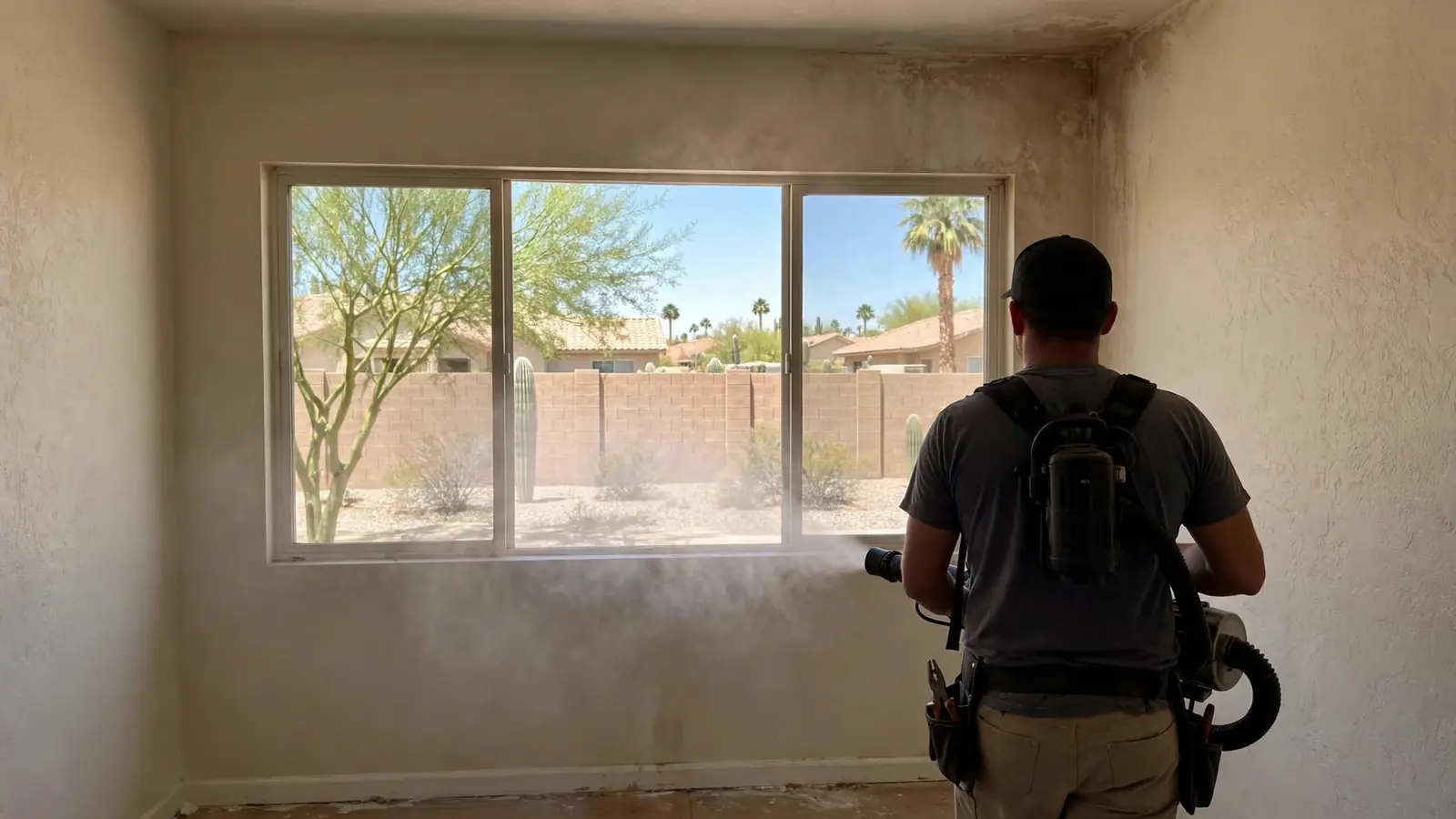
Then the remaining odor is neutralised. Contractors use several tools. Thermal fogging releases a fine deodorising mist that reaches the same pores smoke did. Hydroxyl generators produce reactive molecules that break down odor compounds and, unlike ozone, are generally used with people present. Activated carbon filters in air scrubbers absorb odor from the air. Which tools are used depends on the home and the contractor.
Finally, surfaces that may still hold traces are sealed. Specialty primers, often shellac-based, are applied to ceilings, walls, cabinet interiors, subfloors and exposed framing before repainting or reinstalling flooring. The ductwork is cleaned or, in some cases, replaced, and a new filter is installed.
Tools
Deodorising methods side by side
| Method | How it works | Considerations |
|---|---|---|
| Cleaning | Removes residue that releases odor | Always the first step |
| Source removal | Takes out materials holding odor | Most effective for insulation and pad |
| Thermal fogging | Deodorising mist penetrates pores | Home must be vacated during treatment |
| Hydroxyl generators | Reactive molecules break down odor | Slower; generally safe with occupants |
| Ozone treatment | Oxidising gas breaks down odor | Lung irritant; empty buildings only |
| Activated carbon filtration | Absorbs odor from the air | Helps air quality, not materials |
| Sealing primers | Locks odor into surfaces | Applied after cleaning, before paint |
Do it yourself?
Odor steps worth taking yourself
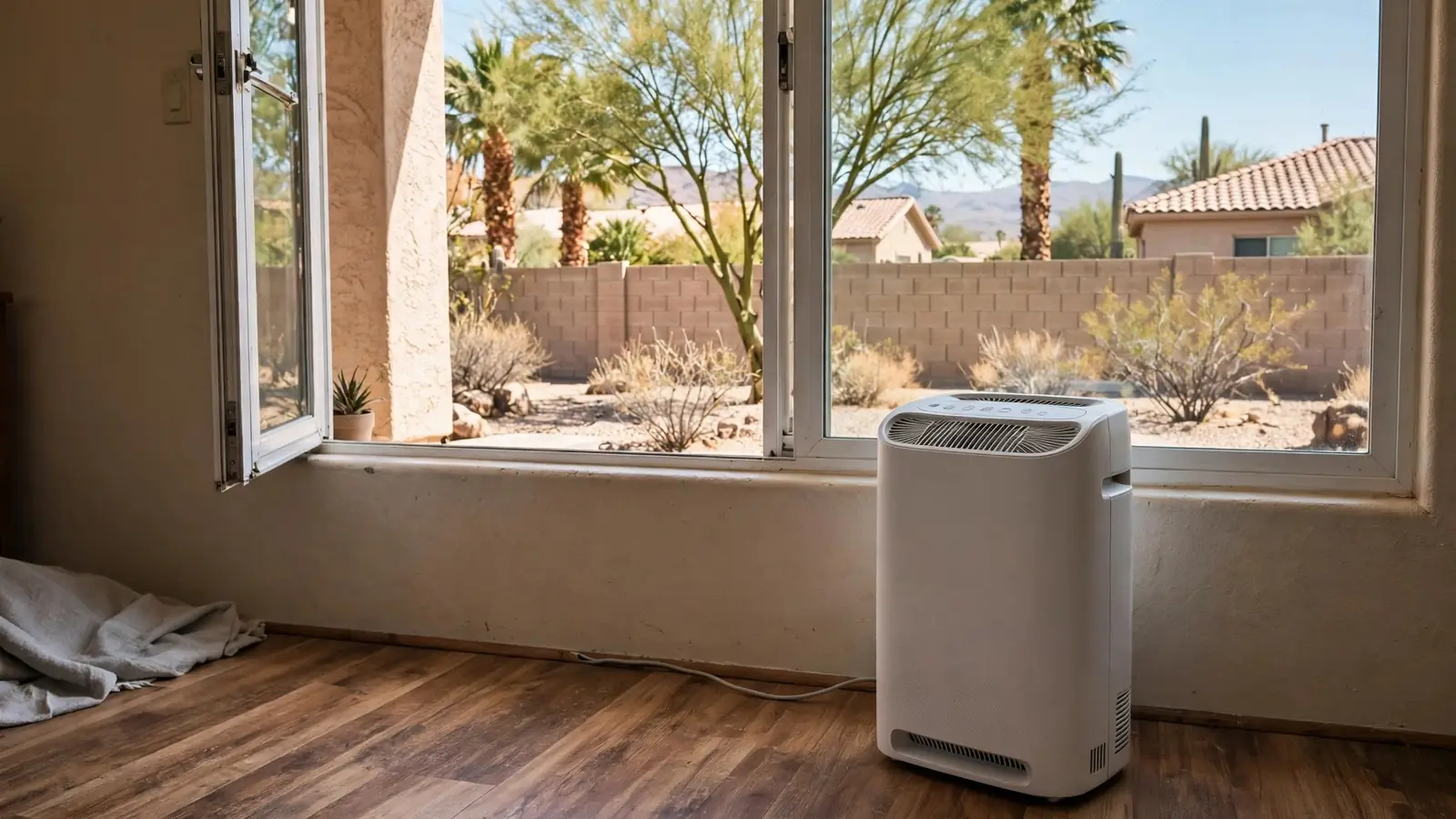
You can reduce smell in the short term. Remove obviously affected soft items such as cushions and bedding from the living space. Replace the HVAC filter and leave the system off until it has been checked. Run a portable air cleaner with a HEPA and carbon filter in the rooms you use. Ventilate when outdoor air is clean and cool, typically early morning in Phoenix summer.
Bowls of baking soda, vinegar or coffee grounds absorb small amounts of odor from the air but will not touch what is inside walls and insulation. Avoid renting ozone machines and avoid painting until the source is dealt with.
- Remove smoky soft items
- New filter, HVAC off
- HEPA plus carbon air cleaner
- Ventilate in cool morning hours
- No ozone, no paint yet
The visit
What an odor removal visit involves
Expect the contractor to spend time simply investigating. A thorough odor job starts with finding sources, and that means checking the attic, opening cabinets, lifting a corner of carpet and inspecting the air handler. They may ask when the smell is strongest and whether it changes when the air conditioning runs.
Some treatments require you to be out of the home. Thermal fogging and any ozone use need an empty house, including pets and plants. Ask the contractor how long you will need to stay away and how they will ventilate before you return.
Ask how success will be judged. A good benchmark in Phoenix is a closed house on a hot afternoon. If the home smells clean then, the source has been dealt with.
Phoenix specifics
Smoke odor and the Arizona heat
In Phoenix, attics regularly reach far higher temperatures than the living space during summer. Smoke absorbed into attic insulation, roof sheathing and trusses therefore releases odor strongly through the hottest part of the year. Light fixtures, attic hatches and gaps around ceiling penetrations let that odor drift into rooms below. Many odor complaints that persist months after a fire trace back to the attic.
Duct systems in Phoenix commonly run through those same hot attics. Flexible ducts with fibreglass insulation and a plastic outer layer can hold smoke odor and are sometimes replaced rather than cleaned after significant smoke exposure.
Monsoon season adds humidity from roughly mid-June to September. [3] Damp materials hold and release odor differently and, if not dried, can develop mould, which adds a musty note to smoke smell. Drying wet materials is part of odor control in a Phoenix fire restoration.
Prevention
Keeping the home smelling clean afterward
- Change filters more often for a whileFor a few months after a fire, more frequent filter changes catch residual particles.
- Watch for the afternoon smellIf smoke smell returns on hot afternoons, call the contractor back; a source may have been missed.
- Keep humidity in checkDuring monsoon season, keep the home cool and dry to prevent musty odor developing.
- Avoid smoking indoorsTobacco smoke builds up in the same materials and can be mistaken for lingering fire odor.
Treat or replace
When smelly materials have to go
Some materials respond to cleaning and deodorising; others never fully do. Hard and sealed surfaces almost always come clean. Painted drywall usually cleans and seals well unless heavily exposed. Insulation, carpet pad, foam cushions and mattresses are often replaced because they hold odor deep in their structure.
If a treated item still smells on a hot day after professional work, replacement is usually the more reliable path. A contractor should explain these choices and document removed items for your insurance claim.
Related problems
Issues that come with smoke odor
Visible soot
Odor work cannot finish until soot residue is cleaned.
Read moreWhole-house smoke spread
Odor in many rooms usually means smoke moved through the HVAC system.
Read moreWet materials
Damp materials from firefighting add musty odor and must be dried.
Read moreOdor that will not quit
Our guide explains why some smoke smell lingers for months.
Read more
Contents
Treating smoky clothing, bedding and furniture
Soft goods need different handling from the building itself. Clothing, linens and curtains that absorbed smoke usually respond well to cleaning methods designed for smoke, which may include specialised detergents, ozone or hydroxyl chambers run by the cleaning facility, and careful drying. Running smoky clothes through a home washer first can set odor in the fabric and leave smell in the machine.
Upholstered furniture is more complicated, because odor sits in the foam and padding as well as the cover. Light smoke exposure can often be treated. Heavy exposure, especially close to the fire, often means cushions or the whole piece need replacing. Mattresses and pillows are generally replaced if they took significant smoke, both for odor and for hygiene.
Ask the contractor which items they recommend sending out for cleaning and which they think are better replaced, and ask them to keep a list. That list helps with the insurance claim and with tracking what returns to the house.
Checking the result
How to confirm smoke odor is truly gone
- 1
Wait for a hot day
Odor releases most strongly in heat. A cool day can hide a problem that returns in summer.
- 2
Close the house
Shut windows and doors for several hours so smell can build if a source remains.
- 3
Come in from outside
Noses adapt quickly. Walk in after time outdoors so you notice faint odor.
- 4
Run the HVAC
Turn on cooling and smell at several vents once the system has been cleaned.
- 5
Report what you find
Tell the contractor which rooms still smell and when, so they can target the remaining source.
Expectations
How long odor treatment usually takes
Odor removal is rarely a single visit. Cleaning and source removal come first, then deodorising, then a period of checking, and sometimes a second round of treatment for areas that still smell. Treatments such as thermal fogging require the house to be empty for a period and ventilated afterwards. Hydroxyl generators work more slowly and may run for days.
Sealing and repainting follow once the contractor is satisfied that the remaining odor is low enough to lock in. If sealing happens too early, over residue that is still releasing strongly, smell can bleed through the new coatings. A patient, staged approach usually gives the most lasting result, and that is worth discussing on your call so you know what to expect.
Kitchen fires
The special problem of burned-food odor
A pot left on the stove can fill a house with an intense, sour smell out of all proportion to the visible damage. Burned proteins from meat, beans or dairy leave a thin, almost invisible film on walls, cabinets and ceilings throughout the home. It is greasy, it clings, and standard cleaners do not break it down well.
Removing it usually means cleaning every surface the smoke reached with products designed for protein residue, including inside cabinets, on top of door frames and on light fixtures, followed by deodorising. Fabrics such as curtains and upholstery absorb it readily. Because the film is hard to see, homeowners often clean only the kitchen and wonder why the rest of the house still smells.
FAQ
Questions about removing smoke smell
How long does smoke smell last after a fire?
Without treatment it can last for months or years, because odor is held in porous materials. Removing the source and sealing surfaces is what ends it.
Why does the smell come back on hot days?
Heat increases the release of odor compounds from materials. In Phoenix, attic heat often drives smell from insulation and roof wood into the house.
Is ozone safe for smoke odor?
Ozone can irritate the lungs and the EPA warns against ozone generators in occupied spaces. If used at all it should be by trained technicians in an empty building.
Can I paint over smoke smell?
Not with regular paint. Surfaces need cleaning and a sealing primer first, otherwise odor bleeds through.
Do I need to replace my ducts?
Sometimes. Metal ducts usually clean well. Flexible ducts that absorbed heavy smoke are often replaced.
What is thermal fogging?
A method that releases a fine heated deodorising mist into a room so it reaches the same pores smoke did. The home must be empty during treatment.
Can clothes lose the smoke smell?
Usually, with cleaning designed for smoke. Items that remain smoky after professional cleaning may need replacing.
How will I know the odor is really gone?
Close the house and check it on a hot afternoon. If it smells clean then, the sources have been dealt with.
Why does my car smell of smoke too?
If the car was in an attached garage or parked near the fire, smoke can enter through vents and open windows. Vehicles need their own cleaning, including the cabin air filter.
Will new carpet fix the smell?
Only if the carpet and pad were the source. If odor is in the subfloor, walls or attic, new carpet will soon smell too. Find and treat the source first.
Do candles or incense make smoke odor worse?
They add their own residue and fragrance on top of the smoke smell and can make it harder to judge whether treatment worked. It is better to avoid them until the job is finished.