
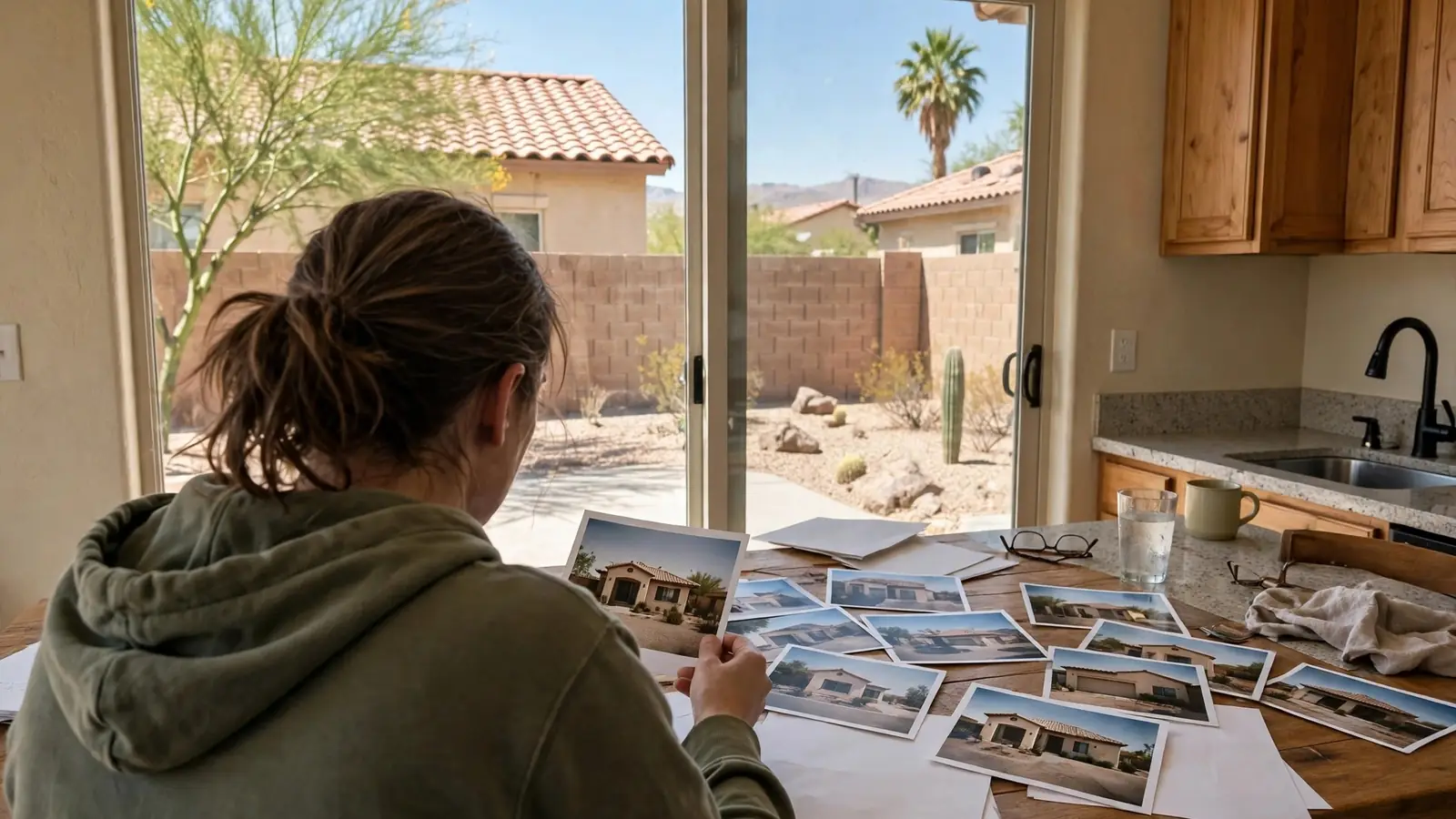
Key facts: Working with your insurance adjuster
- Report the fire to your insurer promptly and keep your claim number with all records.
- Photograph and video damage before anything is moved, cleaned or discarded.
- Many policies require you to take reasonable steps to prevent further damage after a loss.
- Keep receipts for temporary housing, meals and other expenses caused by the fire; many policies include additional living expenses.
- The Arizona Department of Insurance and Financial Institutions takes consumer complaints about insurers.
Who is who
The people involved in a fire claim
Your insurer assigns a claims adjuster, who works for the insurance company, to inspect the damage and assess what the policy covers. Large losses may involve more than one adjuster, for the building and for contents. Some homeowners hire a public adjuster, a licensed professional who represents the policyholder rather than the insurer, usually for a percentage of the settlement.
Restoration contractors document the damage they find and the work they do. Their photos, moisture logs and item lists often become part of the claim. Because the contractor you speak with through this site is independent, discuss directly with them how they document work and communicate with insurers.
Documentation
Building a strong record of the damage
- 1
Walk-through video
Record a slow video of every room, closet and the exterior, narrating what you see.
- 2
Room photos
Take wide shots and close-ups of each wall, ceiling, floor and damaged item.
- 3
Contents list
List damaged items by room with a description, approximate age and where bought if known.
- 4
Keep damaged items
Do not throw items out until the adjuster has seen them or agreed they can go.
- 5
Expense log
Save receipts for hotels, meals, clothing, travel and anything else the fire forced you to spend.
- 6
Communication log
Note the date, person and summary of every call with your insurer.
The inspection
Preparing for the adjuster's visit
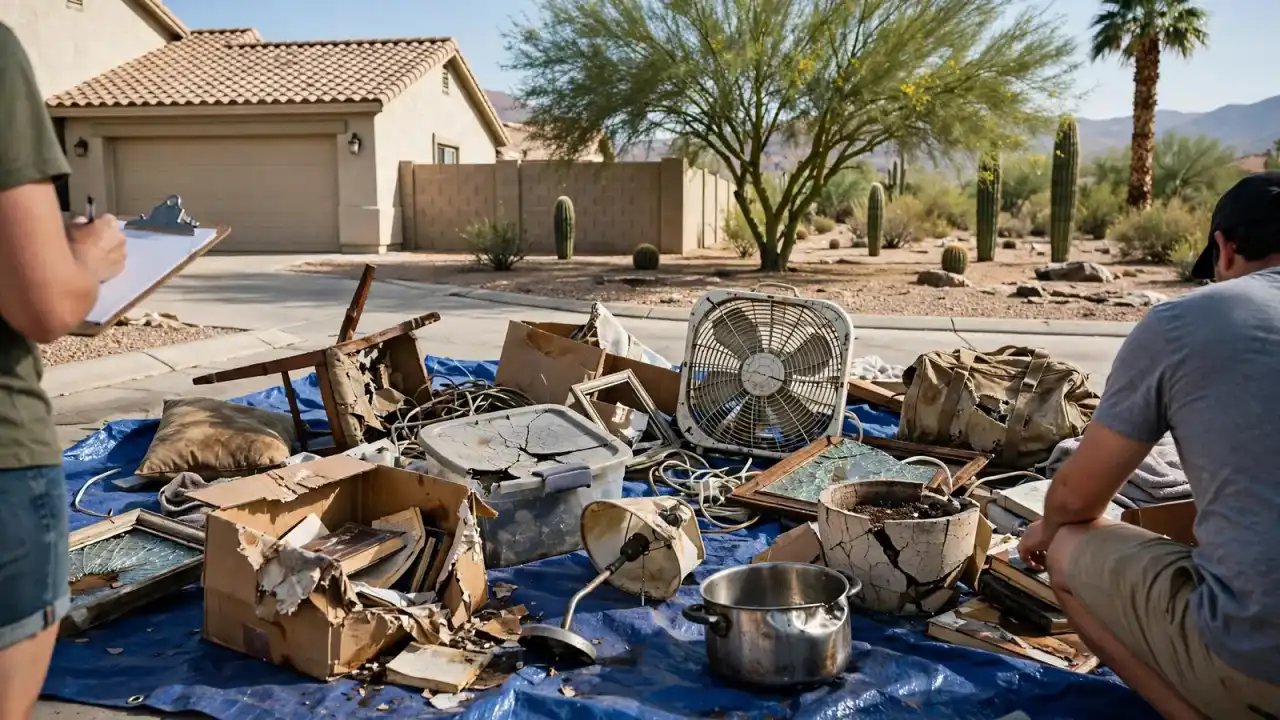
Be present for the inspection if you can. Walk the adjuster through every affected area, including the attic, closets and rooms that only have smoke or water damage. Point out odor, soot inside cabinets and wet areas. Smoke damage in rooms far from the fire is easy to overlook if no one mentions it.
Have your documentation ready: photos, your contents list, receipts and any reports from the fire department or contractors. Ask the adjuster what happens next, when to expect a written estimate, and who to contact with questions. If you disagree with an estimate, ask for an explanation in writing and provide your own documentation.
Coverage
Common parts of a homeowner fire claim
| Part | What it generally addresses |
|---|---|
| Dwelling | The structure of the home |
| Other structures | Detached garages, sheds, fences |
| Personal property | Your belongings and contents |
| Additional living expenses | Extra living expenses while you cannot live at home |
| Debris removal | Clearing fire debris, subject to policy terms |
Arizona
Help for Arizona policyholders
The Arizona Department of Insurance and Financial Institutions regulates insurance companies in the state and accepts consumer complaints if you believe a claim is being handled unfairly. [2] The Insurance Information Institute publishes general guidance on filing a fire claim and making a home inventory.
When hiring contractors for repair and rebuilding, check that they hold the appropriate licence with the Arizona Registrar of Contractors. [3] Read any contract before signing, and be cautious of anyone pressuring you to sign immediately or to assign your insurance benefits.
Contents list
Building a contents inventory when everything is a mess
Listing everything in a home is hard even on a calm day. After a fire, approach it one room at a time. Stand in the doorway, start on one wall and work around the room, listing furniture, items on shelves, contents of drawers and closets. Photos taken before the fire, from phones, social media or previous insurance inventories, help jog memory and show the condition of items.
For each item, note what it is, the brand or description if known, roughly when you got it, and where it was in the house. Receipts, bank statements and online order histories can help confirm details. Family members often remember items others forget, so share the list.
Do not rush to throw damaged items away. The adjuster may want to see them, and a damaged item is evidence of the loss. If an item must go, for example spoiled food or soaked carpet, photograph it first and note it on the list.
Contractors
Contractors, contracts and your claim
You choose who works on your home. Your insurer may suggest contractors, but you are generally free to use others. Whoever you choose, read contracts carefully before signing. Make sure the scope of work is clear, ask how changes will be handled, and ask how the contractor communicates with your insurer.
Be cautious of anyone who arrives uninvited soon after a fire pressuring you to sign immediately. Take time to understand what you are agreeing to. For repair and rebuilding work, confirm the contractor's Arizona Registrar of Contractors licence covers the type of work involved.
Timeline
What to expect as the claim moves forward
Fire claims move in stages. Emergency work such as board-up and drying usually happens first. The adjuster inspects, then prepares an estimate for the structure and, separately, works through your contents list. Restoration and rebuilding proceed once scope is agreed. Large claims can take months, and payments may be made in parts. Ask your adjuster to explain each stage and what they need from you to move to the next one, and keep notes of every conversation.
Mistakes
Common mistakes that slow a fire claim
The most common problems are throwing items away before they are documented, waiting too long to secure and dry the house, losing track of receipts, and not mentioning smoke damage in rooms far from the fire. Keep everything in one folder, document before you discard, and walk the adjuster through every room, including closets and the attic.
FAQ
Fire claim questions
Do I need my insurer's approval before cleanup starts?
You are usually expected to prevent further damage, such as board-up and drying, right away. For larger work, check with your insurer first.
What if I disagree with the adjuster?
Ask for the reasoning in writing, provide your documentation, and if needed ask about your policy's appraisal process or contact the Arizona Department of Insurance and Financial Institutions.
Should I hire a public adjuster?
Some people do for large or complex losses. They represent you under a written agreement. Make sure they are licensed in Arizona.
What records matter most?
Photos and video before cleanup, a contents list, receipts for living expenses, and a log of conversations.
Can I record conversations with my adjuster?
Arizona is generally a one-party consent state for recording calls, but it is courteous to say you are taking notes. Written follow-ups summarising each call are often just as useful.