
Key facts: Moon Valley
- Moon Valley is a neighborhood in north-central Phoenix that developed around the Moon Valley Country Club golf course from the late 1950s.
- Many Moon Valley homes are custom or semi-custom single-storey ranch houses from the 1960s and 1970s on larger lots.
- Lookout Mountain and the North Mountain and Shaw Butte preserve areas lie close to Moon Valley neighborhoods.
- Original finishes in Moon Valley homes from the 1960s and 1970s can include asbestos-containing products, so sampling before demolition is a sensible precaution.
- The covered ZIP codes for Moon Valley and nearby North Mountain neighborhoods on this site are 85022, 85023 and 85029.
Covered area
Moon Valley ZIP codes covered by this line
Calls from these north-central Phoenix ZIP codes can be connected to an independent restoration contractor serving the area.
- 85022Moon Valley and the neighborhoods around the golf course and Lookout Mountain.
- 85023Neighborhoods west of Moon Valley toward 19th Avenue and the Interstate 17 corridor.
- 85029North Mountain-area neighborhoods south and west of Moon Valley.
About Moon Valley
A golf course neighborhood beneath Lookout Mountain
Moon Valley took shape from the late 1950s around the Moon Valley Country Club, set in a natural bowl below Lookout Mountain in north-central Phoenix. The area attracted buyers who wanted larger lots and custom homes away from the busier central city. Much of the housing dates from the 1960s and 1970s, with later remodels, additions and rebuilds.
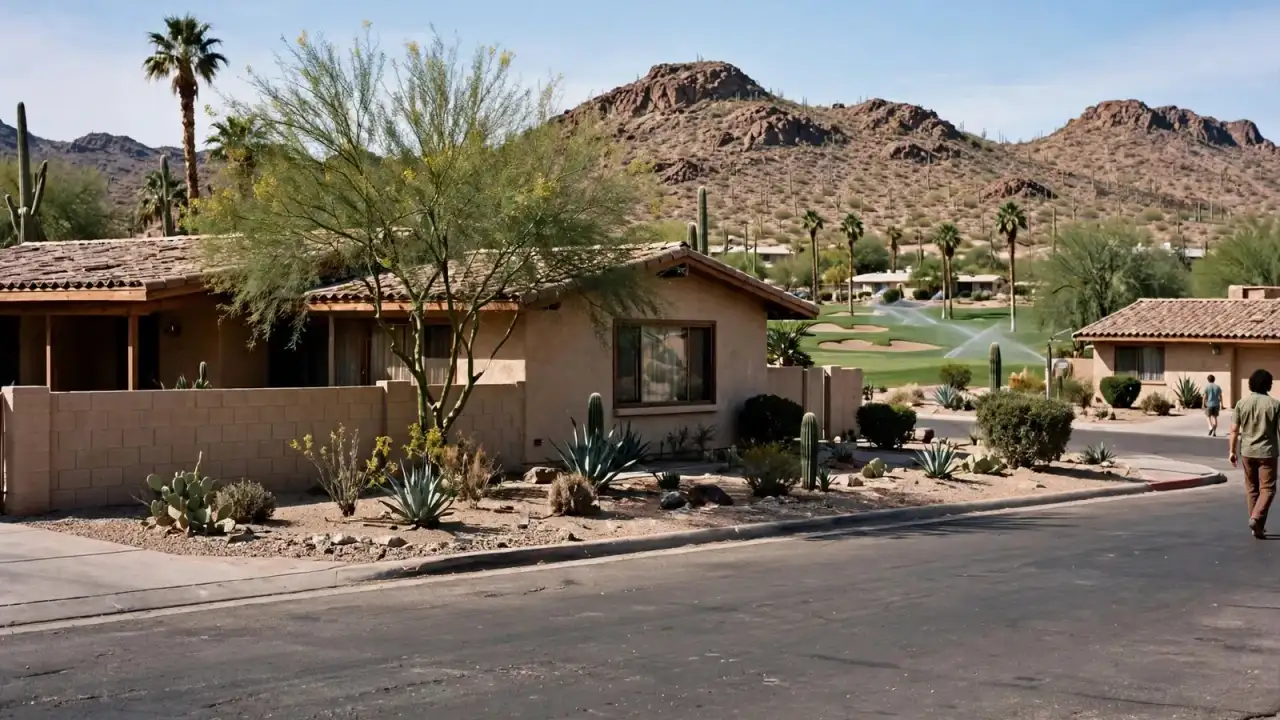
Unlike tract neighborhoods where a few floor plans repeat street after street, Moon Valley has a wide variety of designs. Many homes are long, low ranch houses with deep overhangs, exposed wood beams, brick or slump-block accents, large windows facing views of the mountain or golf course, and roofs ranging from shingle and shake to tile and flat foam sections. Pools, covered patios and mature landscaping are common.
Surrounding the neighborhood are parts of the Phoenix Mountain Preserve system, including Lookout Mountain and the North Mountain and Shaw Butte areas. Those desert slopes bring trails and views, and occasionally brush fire smoke.
Construction
Moon Valley construction details that affect restoration
Custom layouts
Each house is different, so assessment takes longer and assumptions about what is behind walls are riskier.
Exposed wood beams and decks
Beams and tongue-and-groove ceilings absorb smoke and need careful cleaning and sealing.
Mixed roof types
Shingle, older shake, tile and flat sections may all appear on one house, each tarped differently.
Brick and slump block
Porous masonry walls and fireplaces hold soot and odor.
Large view windows
Heat can crack big panes, leaving wide openings to board.
Older materials
Original finishes in 1960s-70s homes may contain asbestos and should be tested first.
Wood ceilings
Smoke on Moon Valley beams and wood ceilings
Exposed beams and wood plank ceilings are a defining feature of many mid-century Moon Valley homes. They look warm and natural, but wood absorbs smoke and odor readily, and soot settles into its grain and along the joints between planks. Unfinished or oil-finished wood takes residue deeper than wood with a sealed finish.
Cleaning wood ceilings starts with dry methods: HEPA vacuuming and dry chemical sponges used along the grain. Mild wood-safe cleaners follow where needed. Where staining or odor remains, a light sanding may be possible on some surfaces, followed by sealing with a clear finish that locks in remaining odor while preserving the wood's look. Painting over beams is a last resort many owners want to avoid.
Charred beams are a different matter. Wood that burned may have lost structural strength. A contractor, and sometimes a structural engineer, needs to decide whether charred structural members can stay, be reinforced or must be replaced.
What you might see
Moon Valley fire damage clues and causes
| What you notice | Likely reason | What to ask |
|---|---|---|
| Dark film along wood ceiling planks | Smoke settled into joints and grain | Can the wood be cleaned and clear-sealed? |
| Soot on brick fireplace wall | Porous masonry holds residue | What method suits the brick? |
| Leaks through a flat roof section | Heat damage to foam or built-up roofing | How will the flat section be covered? |
| Ash on the patio after a hill fire | Brush fire smoke from the preserve | Should filters and ducts be checked? |
| Cracked large window | Heat from the fire | How will the wide opening be boarded? |
| Smell from an addition | Smoke at the seam between old and new | Is the junction cavity affected? |
Roofs
Mixed roofs on Moon Valley houses
Over sixty years, many Moon Valley roofs have been replaced or modified. A single house might have a tile main roof, a flat foam roof over an addition, and shingles over a carport. Older homes may still have, or have had, wood shake roofing, which burns more readily than tile or shingle; many have been replaced for that reason.
Each roof type needs a different temporary covering after a fire. Tile needs careful handling and tarps fastened to the deck. Shingle roofs take tarps and battens screwed through to the deck. Flat roofs need sealed edges so water runs off rather than pooling. A contractor should look at each section rather than treating the whole roof the same way.
If your roof still has wood shake anywhere, mention it on your call. It affects both fire risk and how a damaged section can be repaired.
Preserve edge
Brush fire smoke near Lookout Mountain and North Mountain
Homes along the edges of Lookout Mountain and the North Mountain and Shaw Butte preserve areas sit next to desert slopes with grasses and shrubs that can burn in dry periods. Fires on these slopes are usually controlled before reaching homes, but smoke and ash can drift into neighborhoods, especially downwind.
Smoke from outside enters through open windows, attic vents and gaps, and any cooling system that draws in outside air. Ash settles on pools, patios and roofs. Cleanup after outside smoke typically involves new filters, duct cleaning if smoke was drawn in, laundering fabrics and cleaning surfaces near openings. Embers landing on older roofs or in dry landscaping deserve a close check.
Assessment
What a contractor should check in a Moon Valley home
- 1
Understand the layout
Walk the whole house, including additions, casitas and garages, before deciding on methods.
- 2
Test older materials
Sample suspect ceilings, flooring and other finishes before demolition.
- 3
Check each roof section
Identify tile, shingle, shake and flat areas and their condition.
- 4
Inspect wood ceilings and beams
Separate cleanable residue from structural charring.
- 5
Check fireplaces and masonry
Brick and block hold soot and odor and need suitable methods.
- 6
Inspect electrical
Older circuits in original sections should be checked by an electrician.
Restoration
How restoration usually runs in a Moon Valley house
Securing a Moon Valley home can take longer than a tract house because of large windows, multiple roof types and spread-out layouts. Boarding wide view windows needs sturdy panels and bracing. Each roof section is covered according to its type.
Drying focuses on slab floors, the base of masonry walls and any wet cavities. Cleaning involves careful work on wood ceilings, beams and masonry, and standard methods on drywall and plaster. Odor treatment focuses on the attic where one exists, on wood surfaces and on ducts.
Rebuilding requires City of Phoenix permits, and areas being rebuilt generally must meet current codes. Owners of distinctive mid-century homes often want repairs that respect the original design; say so early so the contractor can plan materials and methods accordingly.
Masonry
Brick fireplaces and block accents in Moon Valley
Large brick or slump-block fireplaces, often spanning a whole wall, are a feature of many Moon Valley living rooms. Masonry does not burn, but it absorbs soot and smoke odor into its pores. Simple washing tends to spread residue rather than remove it.
Contractors typically start with dry cleaning methods, then use masonry-safe detergents, and sometimes gentle media blasting for heavily soiled brick. Mortar joints need attention as well. Once clean, masonry may be sealed with a breathable product to reduce future soiling and lock in faint odor.
- Dry methods first
- Masonry-safe detergents
- Gentle blasting for heavy soot
- Breathable sealer afterwards
Climate
Heat and monsoon in Moon Valley
Moon Valley sits in a bowl beneath the mountains, and summer heat is intense. Older homes may have less insulation and low roofs over living areas, so heat drives smoke odor out of roof decks and ceilings into rooms below. Restoring safe cooling quickly helps both comfort and odor control.
Monsoon storms can bring heavy rain and runoff from the surrounding slopes, along with strong winds. A fire-damaged roof needs covering before afternoon storms, and yard drainage should direct water away from any opened walls.
Prevention
Reducing fire risk in a Moon Valley home
- Replace remaining wood shakeShake roofing is more combustible than tile or modern shingle.
- Have the fireplace inspectedChimneys and fireboxes should be checked and cleaned regularly if used.
- Evaluate older wiringAn electrician can assess original circuits, especially where additions increased load.
- Clear dry vegetation (Moon Valley)Keep dry brush and palm fronds away from the house, especially on lots near the preserve.
- Screen attic and roof ventsFine mesh helps keep embers out.
Week one
The first week after a Moon Valley house fire
- 1
Day 1 (Moon Valley)
Fire department release, insurer notified, large windows boarded, each roof section covered, photos taken.
- 2
Day 1-2 (Moon Valley)
Older materials sampled; water extracted; drying started on slabs and masonry.
- 3
Day 2-3 (Moon Valley)
Contents sorted, including artwork and heirlooms, and packed out with a list.
- 4
Day 3-5 (Moon Valley)
Wood ceilings and masonry test-cleaned; electrician inspects older circuits.
- 5
End of week (Moon Valley)
Scope agreed, including how to preserve original design features.
On your call
Questions to ask about your Moon Valley home
- How will you clean my wood ceilings and beams?Ask about dry methods, wood-safe cleaners and clear sealing.
- How will you cover each roof section?Tile, shingle and flat roofs need different approaches.
- Will you test for asbestos?Testing is sensible in homes from the 1960s and 1970s.
- How will you clean the fireplace wall?Masonry needs specific methods.
- Can you help preserve the original design?Say early if mid-century features matter to you.
Services
Restoration services Moon Valley homeowners ask about
Soot on wood and masonry
Cleaning beams, planks and brick.
Read moreOdor in wood ceilings
Removing smoke smell from roof decks and beams.
Read moreCovering mixed roofs
Tarping tile, shingle and flat sections.
Read morePreserve smoke
Cleaning after brush fire smoke drifts in.
Read more
Contents
Artwork, heirlooms and collections in Moon Valley homes
Long-time Moon Valley households often hold decades of belongings: artwork, books, photographs, furniture passed down through families and collections of all kinds. Smoke and soot affect these items in ways that need specialist handling. Oil paintings, framed prints, antique wood furniture, textiles and paper all respond differently to cleaning.
Before anything is cleaned, items should be photographed and listed. Valuable or irreplaceable pieces may need a conservator rather than a general restoration crew. Restoration contractors can usually arrange to pack these items carefully and send them to appropriate specialists. Avoid wiping soot from artwork or photographs yourself; it can smear permanently.
Tell the contractor on your call if you have items of particular value or sentimental importance, so they can be prioritised and handled with extra care during pack-out.
Golf course lots
Homes on the Moon Valley golf course
Houses backing onto the golf course have open views, but that openness also exposes them. Wind can carry smoke across the course from a fire elsewhere, and large rear windows facing the course can crack from heat if the fire is inside the house. Irrigation on the course and in yards adds moisture near foundations, which matters when walls are opened for drying.
Access can be a consideration as well. Equipment and debris removal usually go through the front of the property; crews need to avoid damaging course landscaping behind the house. If a fire affected the rear of a golf course home, ask the contractor how they plan to reach it and protect the surroundings.
Clean or replace
What usually happens to Moon Valley materials
| Material | Usual outcome | Note |
|---|---|---|
| Exposed wood beams, not charred | Cleaned and clear-sealed | Charred beams need structural review |
| Tongue-and-groove ceiling | Cleaned, sanded where possible, sealed | Joints collect soot |
| Brick or block fireplace | Cleaned and sealed | Porous masonry holds odor |
| Older textured ceilings | Tested, then cleaned or removed | May contain asbestos |
| Large view windows | Replaced if cracked | Board-up needs bracing |
| Flat foam roof section | Repaired or recoated | Heat can blister foam |
Neighbors
Fires next door in Moon Valley
Moon Valley lots are larger than in many Phoenix neighborhoods, but houses are still close enough that a fire next door can send smoke into your home, crack facing windows with heat and drop embers on your roof. Mature trees and dry landscaping between houses can carry fire if not maintained.
After a neighbor's fire, check the side of your house that faced it, look in your attic for smoke smell, replace filters, and clean outdoor surfaces. Photograph any damage and contact your insurer; your policy may cover smoke and heat damage from a fire on a neighboring property.
Kitchens
Remodeled kitchens in older Moon Valley houses
Many Moon Valley homes have had kitchens opened up and modernised, sometimes by removing walls between the kitchen and family room. That makes a cooking fire's smoke spread across a larger area than the original floor plan intended, reaching wood ceilings and fireplace walls in the adjoining room.
Where a modern kitchen meets original construction, the materials change: new cabinets and drywall next to older plaster, beams and masonry. Each needs its own cleaning approach. Range hoods in remodeled kitchens may vent through older roof sections, and their ducts should be checked for grease and smoke after a kitchen fire.
Casitas and pools
Guest houses, pool rooms and patios on Moon Valley lots
Larger Moon Valley lots often include a guest house, pool house or detached studio, along with covered patios and outdoor kitchens. These structures may have their own electrical circuits, gas lines and cooling, and they are sometimes used less often, which means a problem can go unnoticed longer.
After a fire on the property, every structure should be checked for smoke and heat damage, not only the main house. Pool equipment, propane tanks for outdoor kitchens and stored pool chemicals need careful handling. Tell the fire department and the contractor about any gas or chemicals stored outside the main house, and do not move damaged containers yourself.
If the main house is unlivable during restoration, a guest house might seem like a convenient place to stay. Before moving in, make sure it had no smoke damage, that its utilities are safe and that its cooling works, especially in summer.
FAQ
Moon Valley fire restoration questions
Does this line cover Moon Valley?
Yes. Calls from ZIP codes 85022, 85023 and 85029 can be connected to an independent restoration contractor serving the area.
Can smoky wood beams be saved?
If they are not charred, usually yes. They are cleaned with wood-safe methods and often clear-sealed to lock in odor while keeping their appearance.
Is my brick fireplace damaged by smoke?
Masonry rarely fails from smoke, but it holds soot and odor. It can be cleaned with suitable methods and sealed.
My roof has several types. Does that matter?
Yes. Tile, shingle, shake and flat roofs are each covered and repaired differently.
Should I worry about asbestos in Moon Valley?
In homes from the 1960s and 1970s, some materials may contain it. Ask for testing before anything is disturbed.
Smoke from a mountain fire came into my house. What should I do?
Close up, replace filters, run a HEPA air cleaner and clean surfaces. If odor lingers, have ducts and fabrics cleaned.
Will repairs match my mid-century design?
That depends on materials and choices made with your contractor. Raise it early so they can plan.
Do I need permits to rebuild in Moon Valley?
Yes, regulated repair work in Moon Valley needs City of Phoenix permits.
Can a contractor clean my oil paintings?
Valuable artwork is best handled by a conservator. Restoration contractors can pack it carefully and arrange specialist cleaning.
My house backs onto the golf course. Does that change anything?
It can affect access for equipment and debris removal, and irrigation nearby adds moisture. Mention it on your call.
Can we stay in our guest house during repairs?
Possibly, if it had no smoke damage, its utilities are safe and its cooling works. Ask the contractor to check it first.
Do wood shake roofs make fire damage worse?
Shake is more combustible than tile or modern shingle, so it can let a fire spread across the roof faster. Many owners replace it during repairs.
How do I protect my belongings while the house is open?
Ask the contractor to pack out valuables and salvageable contents to secure storage, with a written list, until the house is restored.
Is it safe to use my fireplace after a house fire?
Only after the chimney and firebox have been inspected and cleaned, since heat and debris can damage liners and flues.