
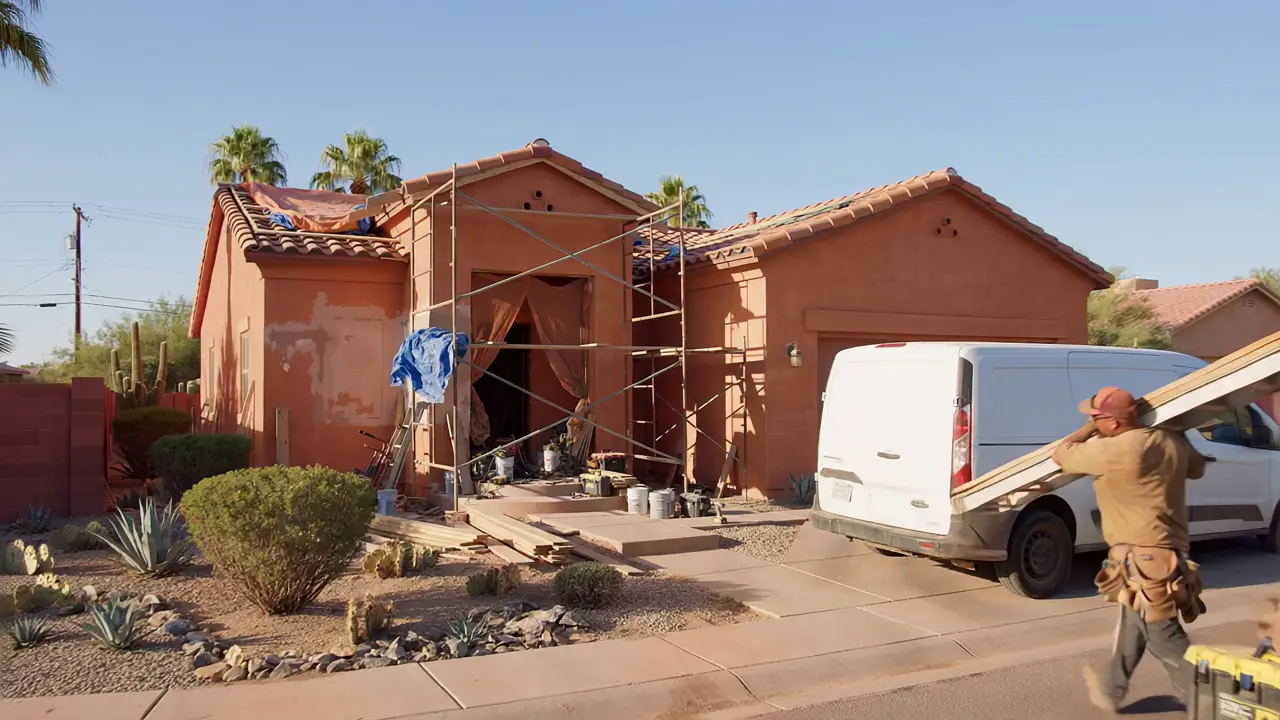
Fire damage restoration in Phoenix, AZ
Phoenix Fire Damage Restorationsmoke, soot, water and odor handled in order
After a house fire, the damage keeps spreading if nothing is done: soot sets into paint, firefighting water soaks into walls, and smoke smell settles into everything that can hold it. One call connects you with an independent local restoration contractor who speaks with you on that call about securing, drying and cleaning your Phoenix home.
Call-in only. Your call is connected to an independent restoration contractor.
- Board-up and roof tarping
- Water extraction and drying
- Soot and smoke cleanup
- Odor removal at the source
- Talk to a contractor directlyYour call connects to an independent restoration contractor. You speak with them on that call.
- No forms, no follow-upWe do not collect your details or contact you later. The call is the whole service.
- Phoenix-specific guidanceOur guides cover monsoon tarping, attic odor in summer heat and drying slab homes.
- Every part of fire damageBoard-up, drying, soot, smoke and odor are explained so you know what to ask for.
Key facts: Phoenix Fire Damage Restoration
- Fire restoration usually follows a set order: secure the building, remove water, clean soot and smoke, deodorise, then rebuild.
- Smoke travels far beyond the burned room, through hallways, the attic and the air ducts.
- The U.S. EPA advises drying water-damaged materials within 24 to 48 hours to help prevent mould.
- Phoenix heat makes smoke odor stronger and speeds up how residue sets into surfaces.
- This site connects callers with independent contractors; it does not perform restoration work itself.
What you are dealing with
What a Phoenix house fire leaves behind
Most fire-damaged homes have several problems at once. Recognising each one helps you explain your situation on the call.
Openings in the house
Broken windows, forced doors and roof vents cut by firefighters let in dust, rain and intruders.
Read moreSoaked floors and walls
Firefighting water spreads well past the fire and starts mould growth quickly in a hot, closed house.
Read moreBlack residue on surfaces
Soot coats ceilings, walls and belongings; the wrong cleaning method smears it deeper.
Read moreSmoke in rooms the fire missed
Grey haze, yellowed plastics and dark rings around vents show smoke travelled through the house.
Read moreA smell that keeps coming back
Smoke odor hides in insulation, pad and cabinets and returns every hot afternoon.
Read moreUncertainty about safety
Sagging ceilings, damaged wiring and soot exposure all matter before you move back in.
Read more
Restoration services
Fire restoration services explained
Each page explains how the work is done, what can be saved and what to ask the contractor you speak with.
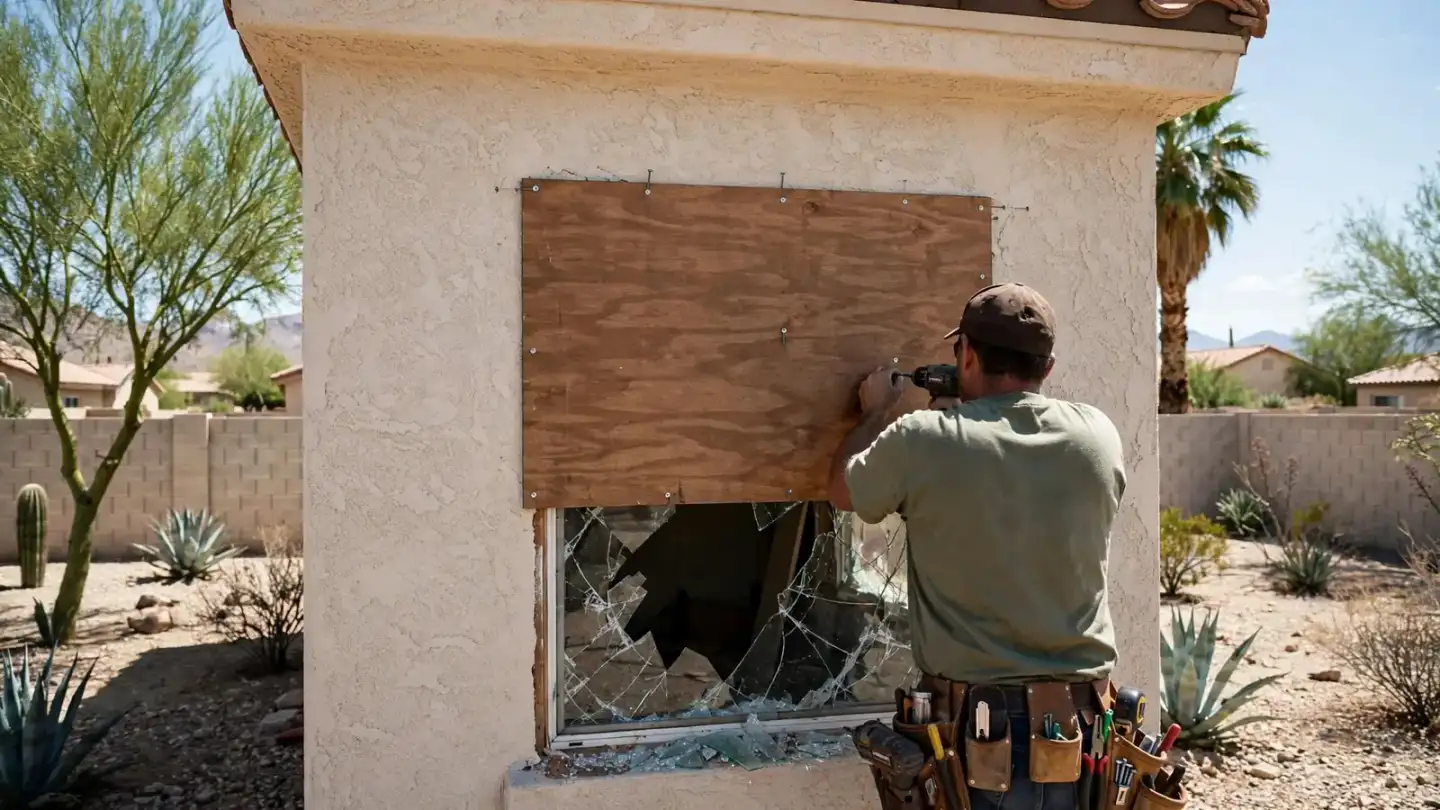
Board-Up and Tarping
Broken windows, forced doors and holes cut in the roof leave a burned house open. Learn how it is secured against weather, dust and intruders.
Explore service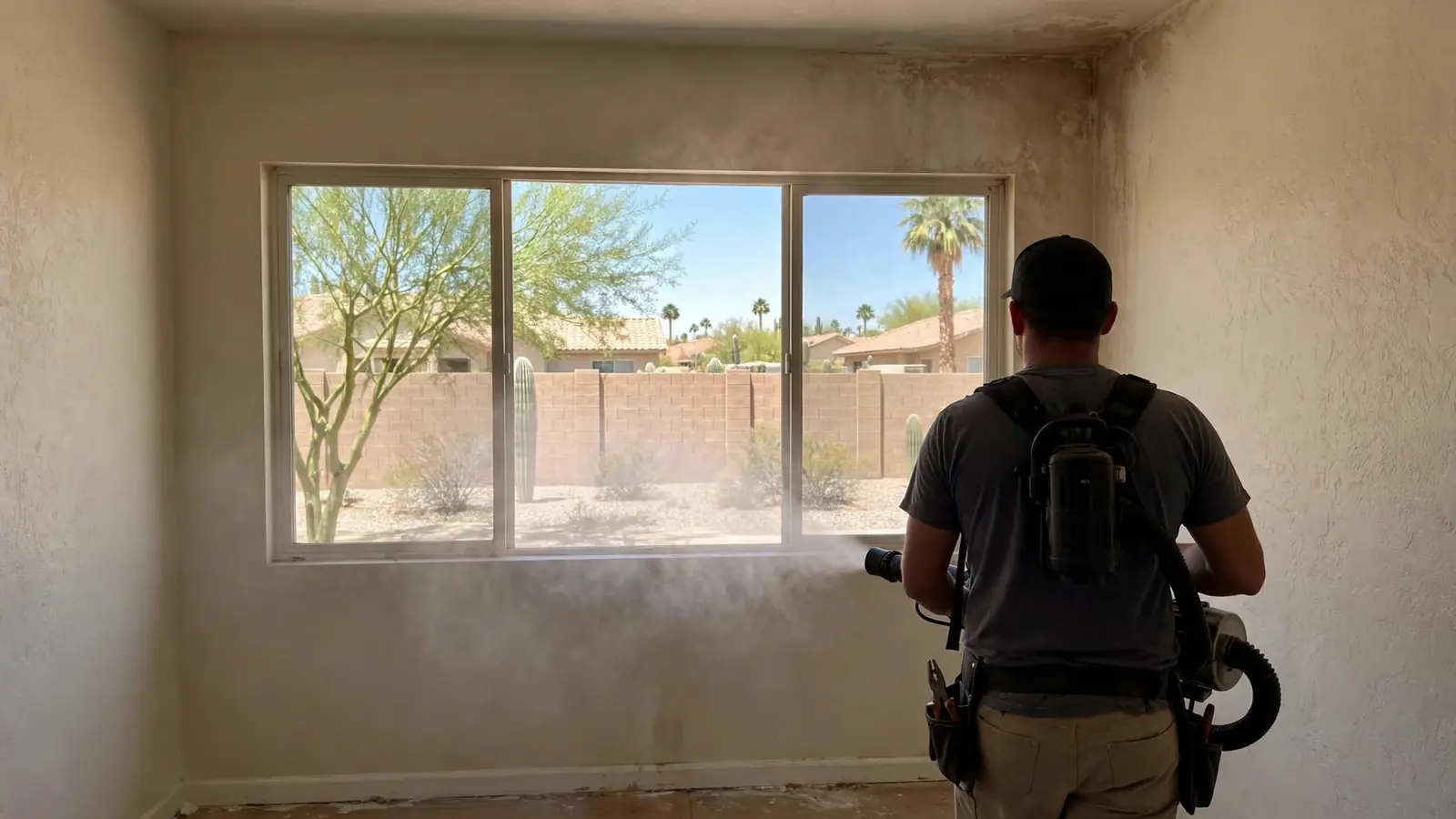
Odor Removal
Smoke smell lives inside materials, not in the air. Learn how odor is traced, removed and sealed so it does not return on hot days.
Explore service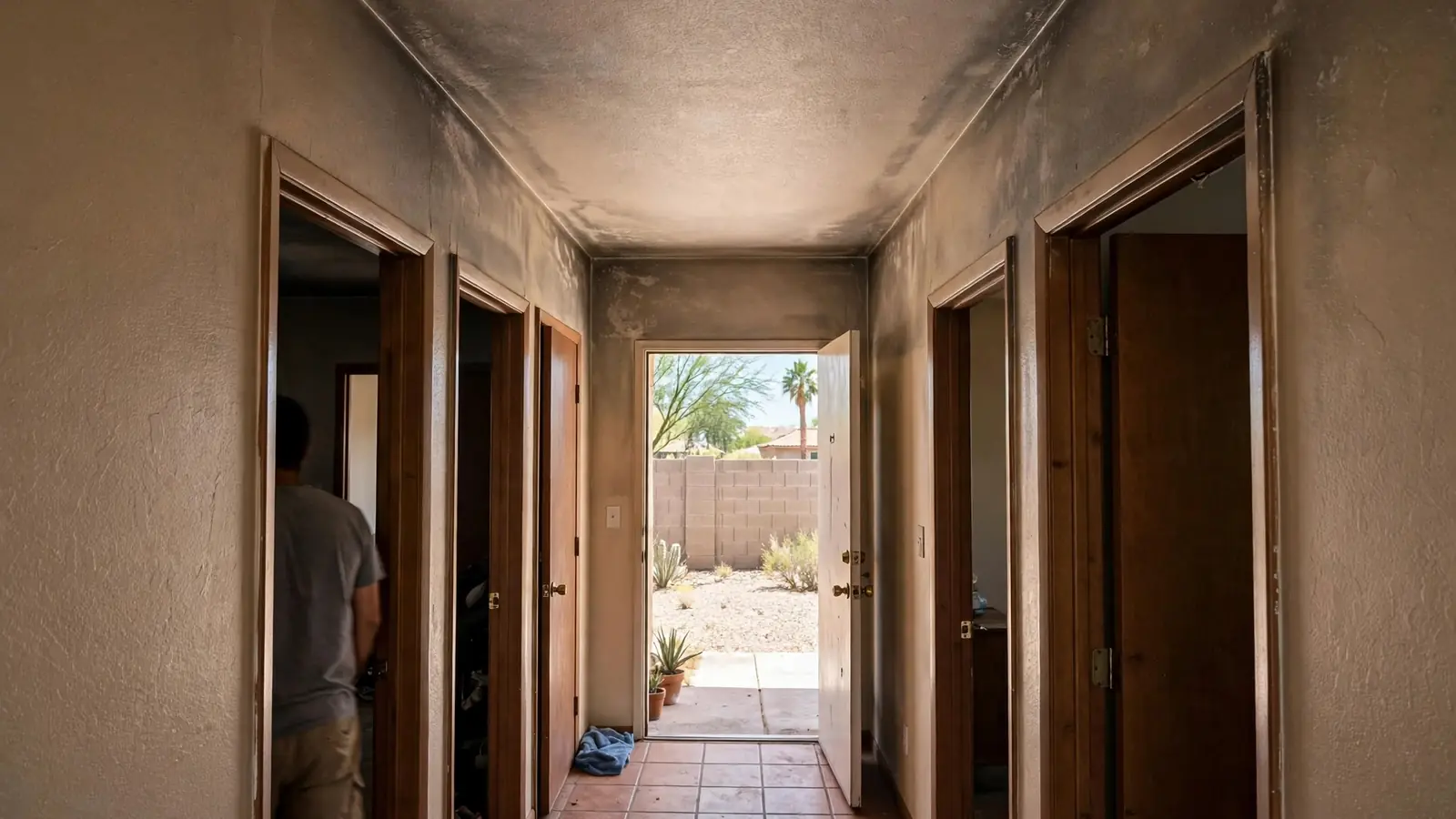
Smoke Damage Cleanup
Smoke reaches rooms, ducts and belongings the fire never touched. See how smoke damage is traced, cleaned and documented.
Explore service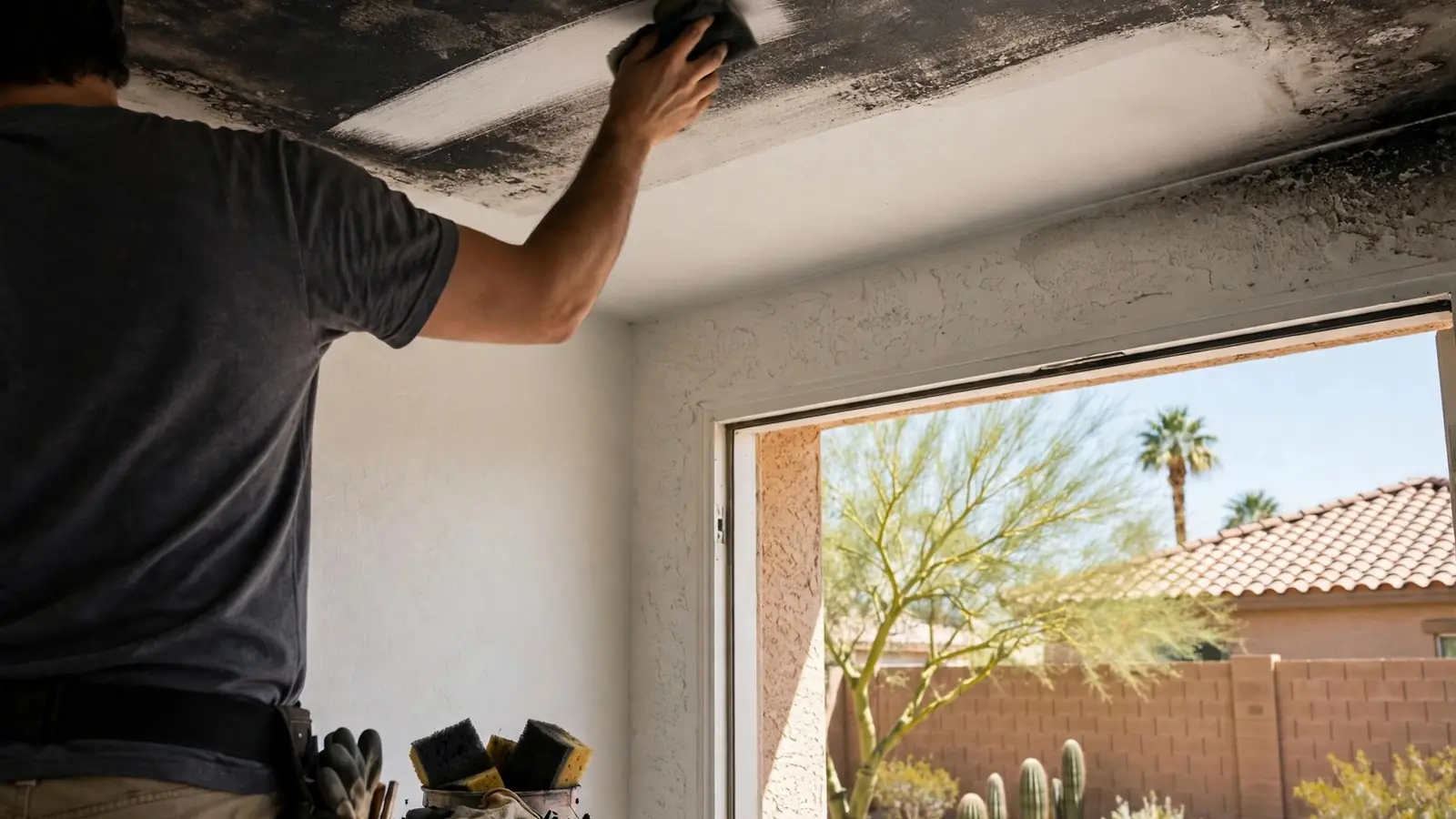
Soot Removal
Dry, oily and protein soot each need a different cleaning method. Learn what the residue on your walls is and how it is removed.
Explore service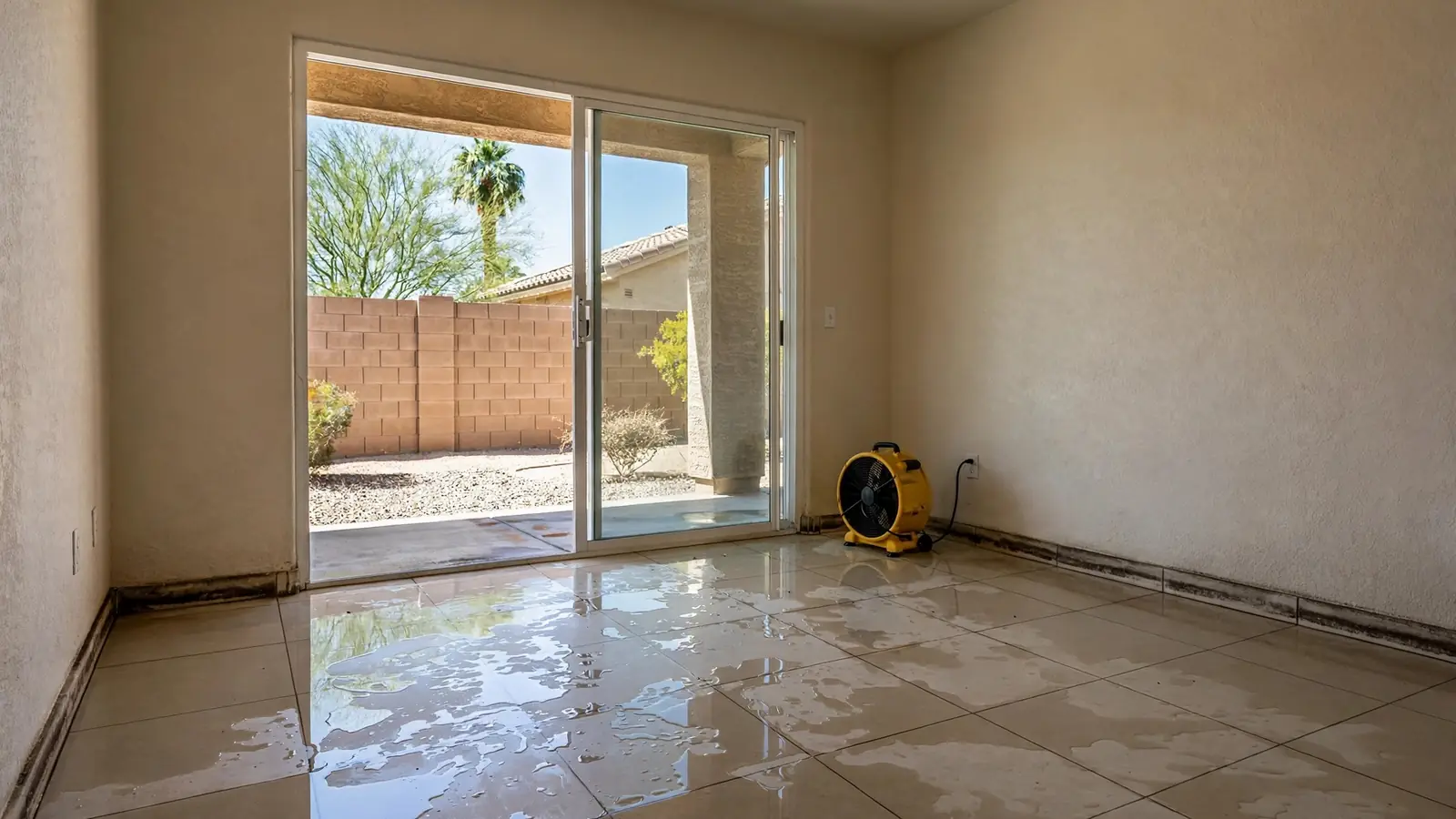
Firefighting Water Damage
Hose lines and sprinklers leave thousands of gallons behind. See how wet drywall, insulation and floors are dried after a Phoenix fire.
Explore service
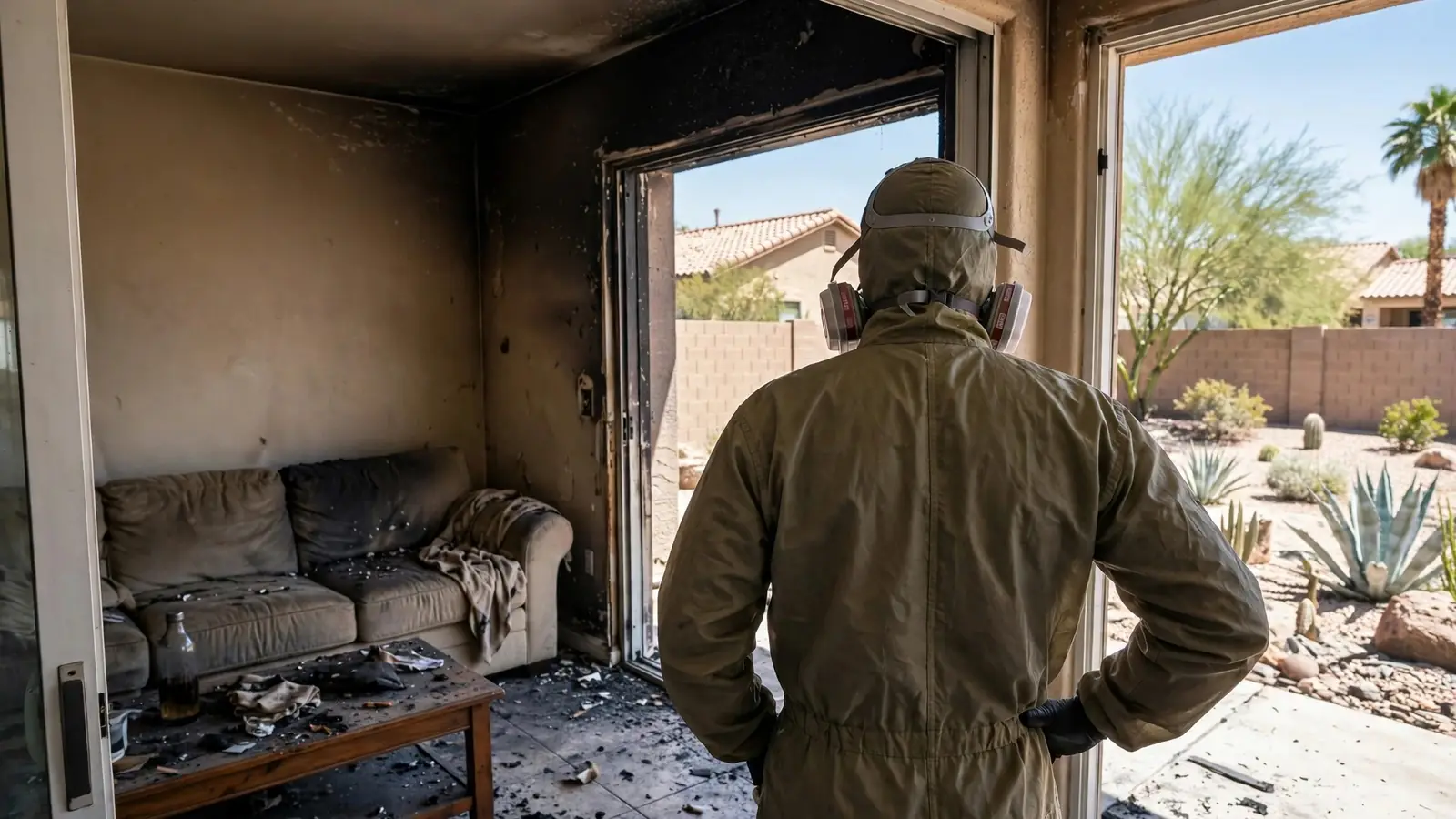
Before you go back inside
Do not re-enter a fire-damaged home until the fire department tells you it is safe. Fire can weaken floors, ceilings and roofs, and utilities may be damaged. Smoke residue is a health concern, especially for children, older adults and anyone with asthma or heart conditions.
- Wait for the fire department's all-clear
- Keep out from under sagging ceilings
- Leave the HVAC system off
- Wear an N95 respirator and gloves if you must go in
- Throw out food exposed to heat or smoke
How restoration works
Why fire restoration follows a strict order
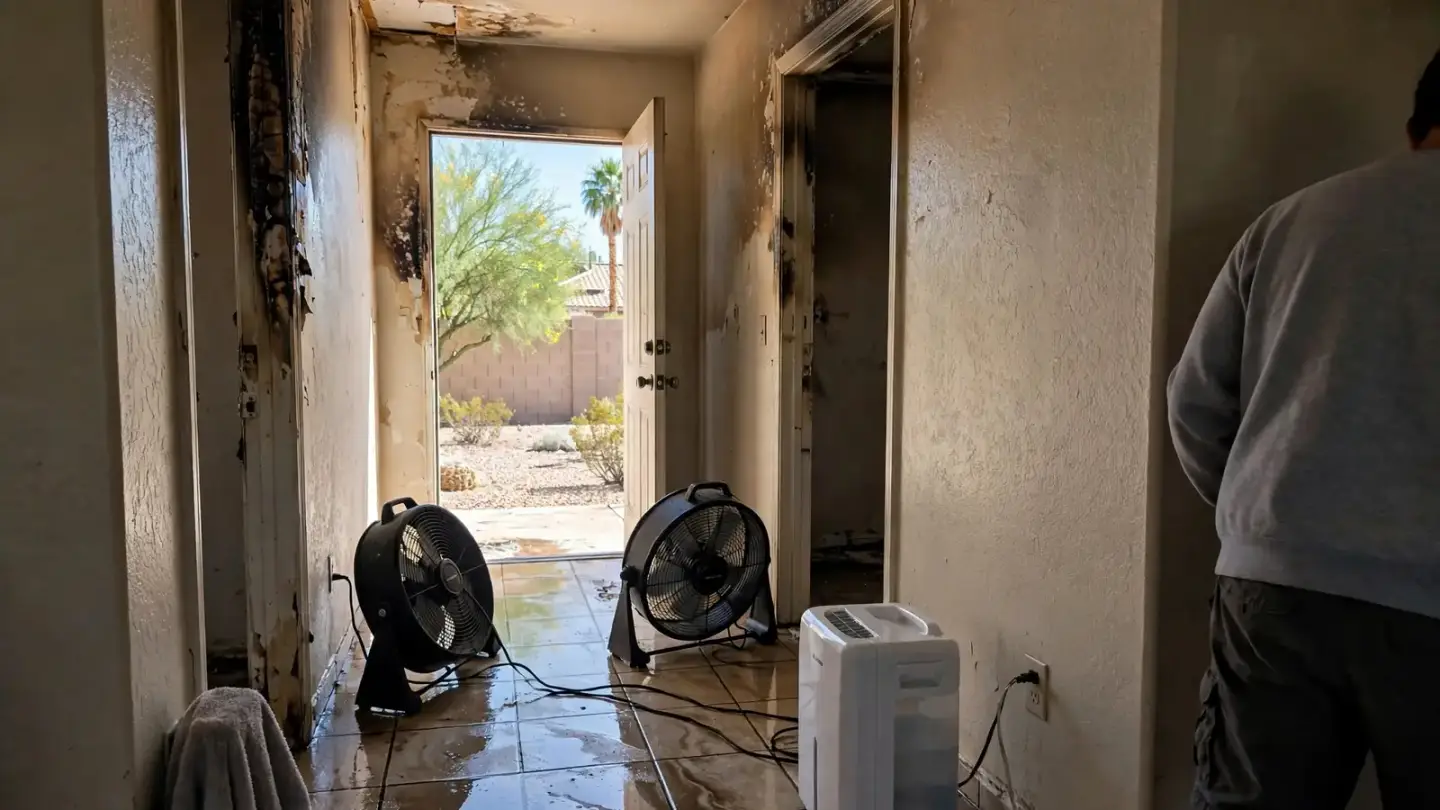
Fire restoration is a sequence, and doing things out of order wastes time and makes damage worse. The house is secured first, because every hour an opening stays uncovered lets in dust and, in monsoon season, rain. Water comes next, since soot cannot be properly cleaned from wet materials and mould can start in a few days.
Only once materials are dry does the main soot and smoke cleaning begin, working top-down and dry-to-wet. Odor treatment follows cleaning, not the other way round, because deodorisers cannot reach odor buried under residue. Sealing, painting and rebuilding finish the job.
Knowing this order helps you judge the advice you receive. A contractor who suggests painting over soot or running the air conditioning before the ducts are checked is skipping steps.
- 1. Secure the property
- 2. Remove water and dry
- 3. Clean soot and smoke
- 4. Remove odor at the source
- 5. Seal, repair and rebuild
The Phoenix factor
What the desert climate changes about fire damage
Phoenix homes face conditions that restoration guides written for other climates miss. A house without power after a summer fire can get extremely hot inside, which softens residue and drives smoke odor deeper into materials. Odor that seems faint in the morning can be strong by late afternoon.
Monsoon storms from roughly mid-June to late September bring sudden rain, high wind and dust, so roof openings need covering quickly. [3] Many homes have ductwork running through hot attics, slab floors under tile, and stucco walls over wood framing, each of which affects how drying, cleaning and board-up are done.
- Attic heat drives odor into living space
- Monsoon rain through open roofs
- Ducts in hot attics hold smoke
- Slab floors slow drying under tile
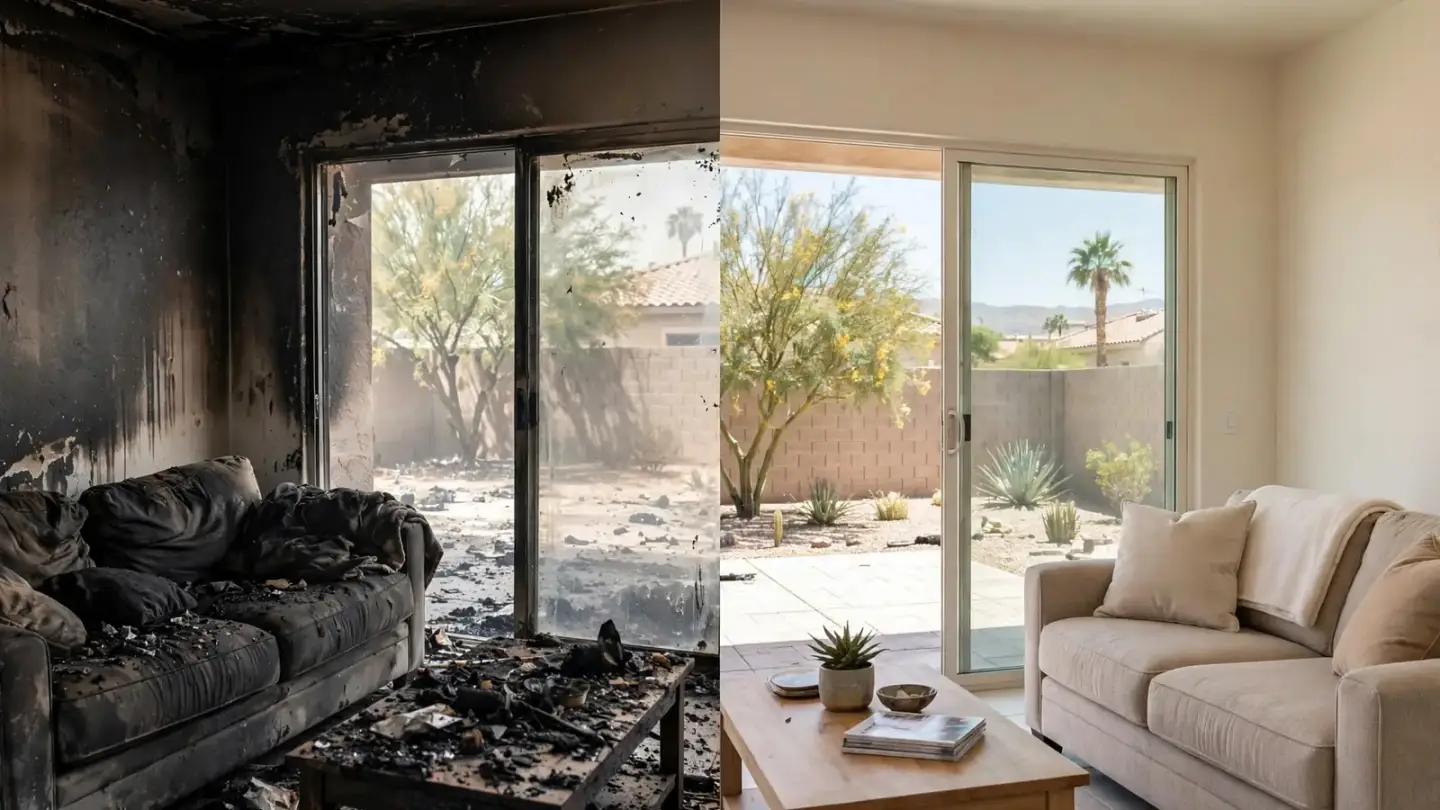
Before and after
What thorough cleaning can recover
Many rooms that look ruined after a fire can be cleaned, sealed and repainted rather than rebuilt.
 BeforeAfter
What happens when you call
From your call to a restored home
- 1
You call
Your call connects directly to an independent restoration contractor serving Phoenix.
- 2
You talk it through
Explain what happened, what you see, and whether the fire department has cleared the house. Ask any questions you have.
- 3
You agree next steps on the call
Anything arranged, such as a visit or board-up, is agreed between you and the contractor during that call.
- 4
The contractor assesses
If you arrange a visit, the contractor inspects every room, the attic and the HVAC system and documents the damage.
- 5
Restoration proceeds in order
Securing, drying, cleaning, deodorising and repair follow the sequence described on this site.
Phoenix neighborhoods
Fire restoration across Phoenix neighborhoods
Housing age, roof type and nearby desert all change what a fire leaves behind. Read about your part of Phoenix.
 Service area
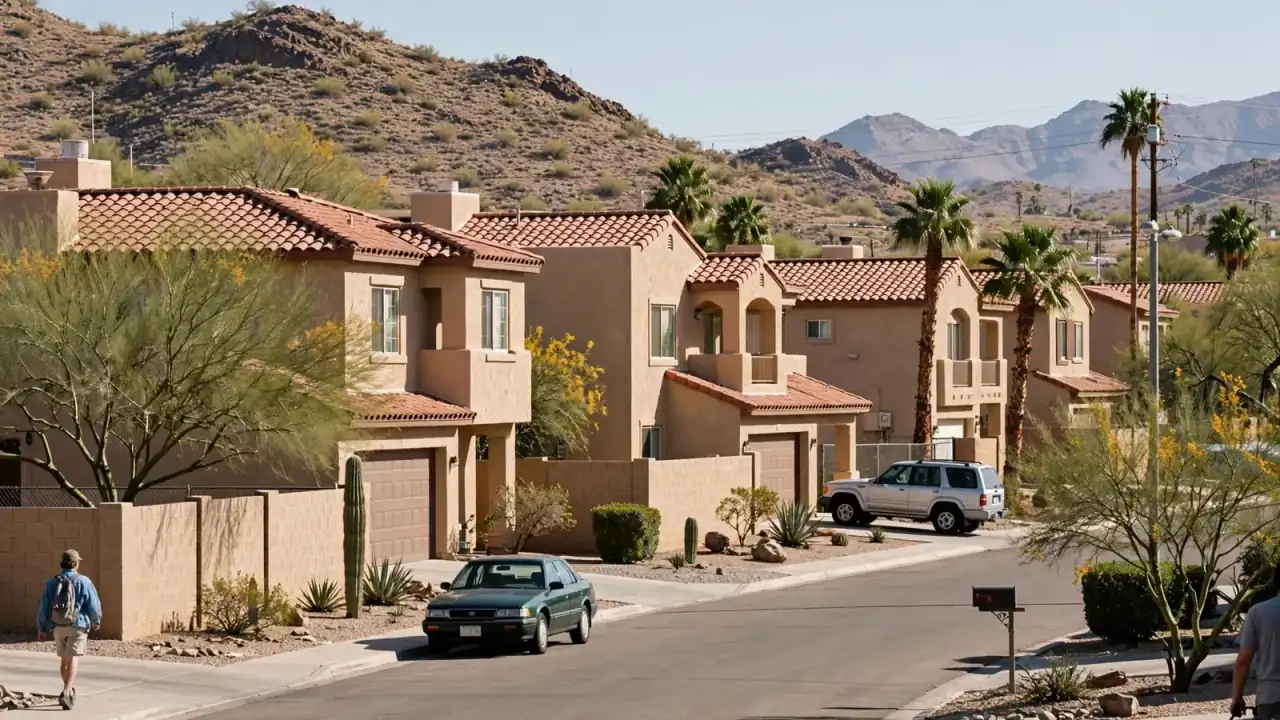
Ahwatukee
Stucco tract homes against South Mountain Preserve, strict HOAs and brush-fire smoke shape fire restoration in Ahwatukee Foothills.
Learn more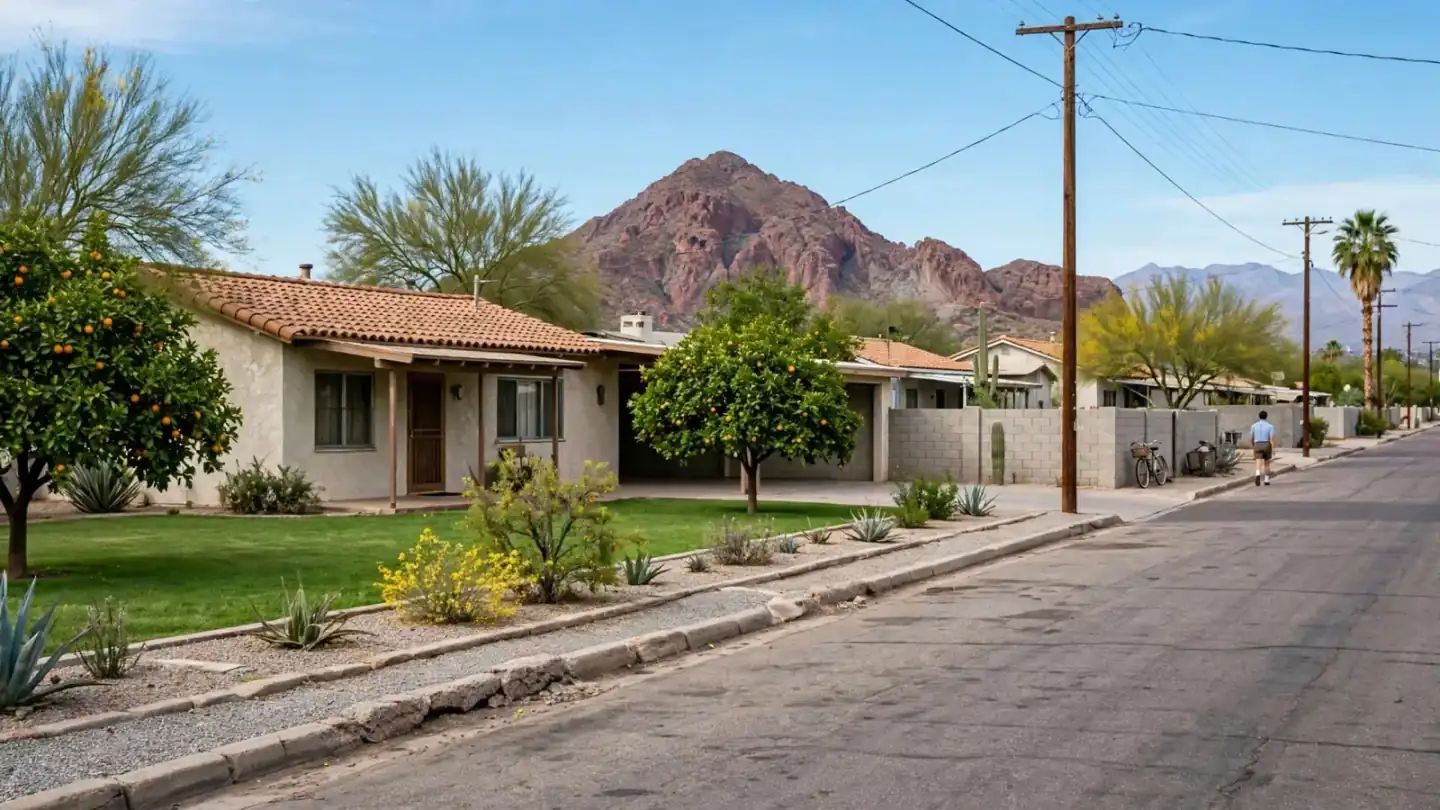 Service area
Arcadia
Mid-century ranch homes, big irrigated lots and constant remodeling make fire restoration in Arcadia its own job.
Learn more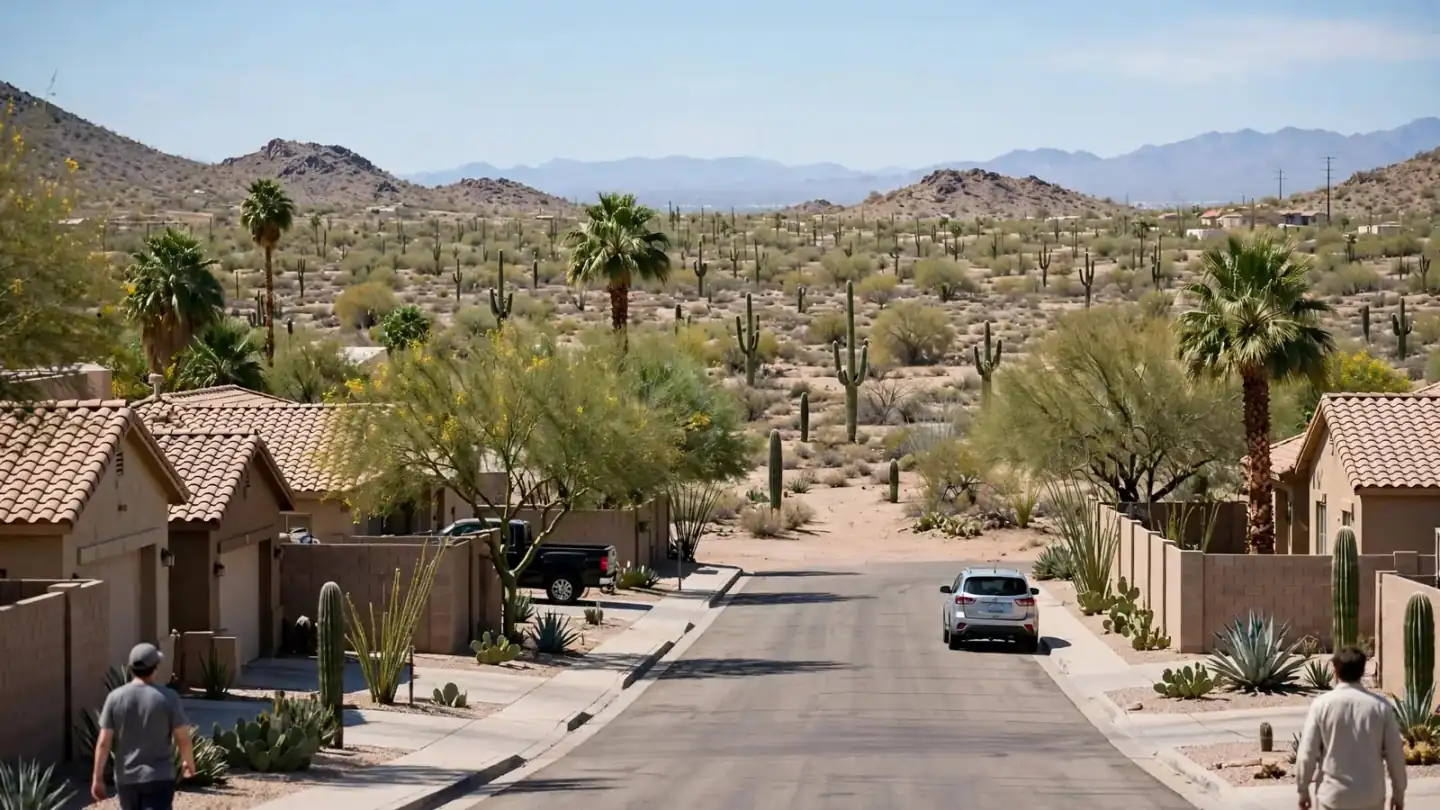 Service area
Deer Valley
North Phoenix homes at the edge of the Sonoran Preserve, with newer construction, desert brush and wildland smoke. Here is how fire restoration works there.
Learn more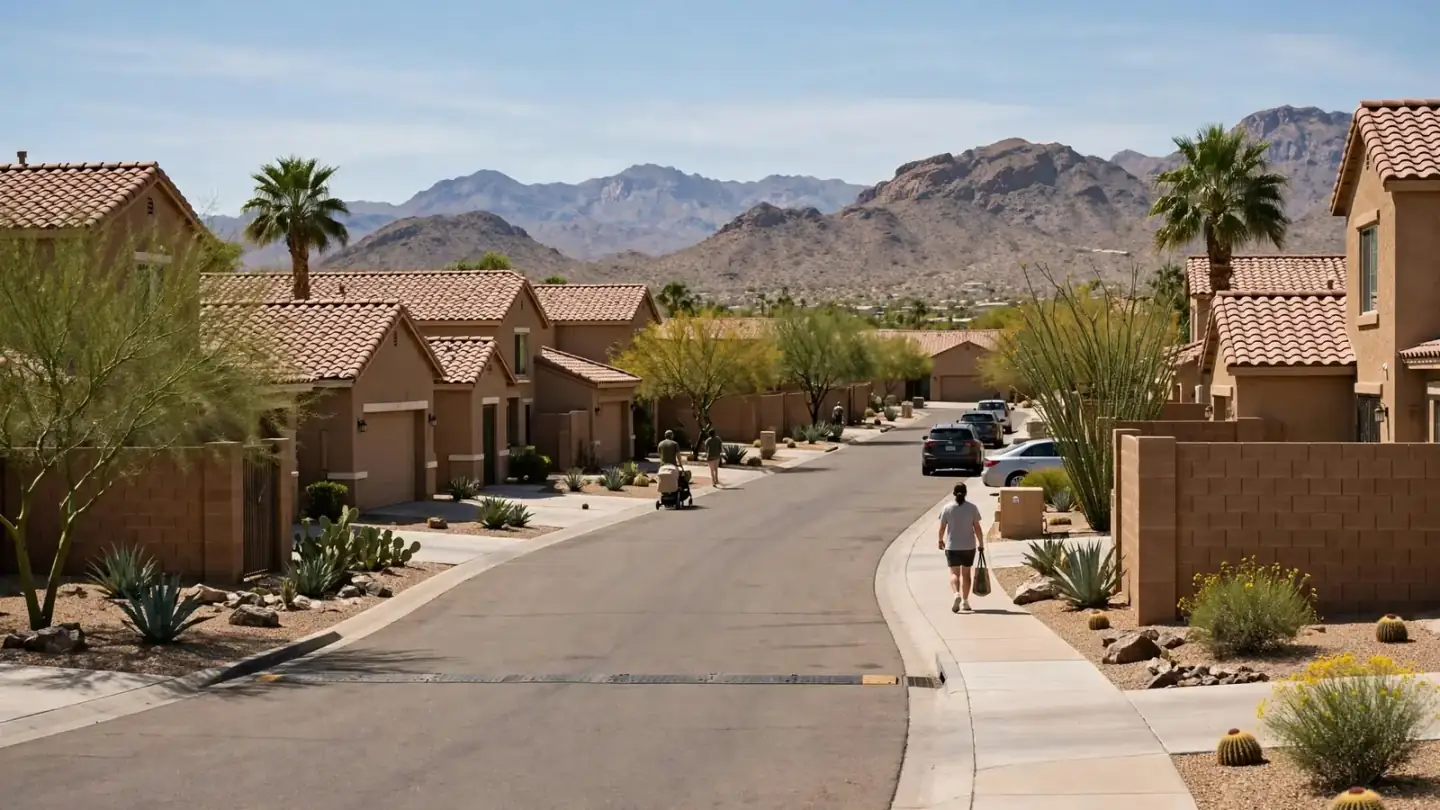 Service area
Desert Ridge
A 1990s–2000s master-planned community with strict design rules, tile roofs and open desert to the north. Here is how fire restoration works there.
Learn more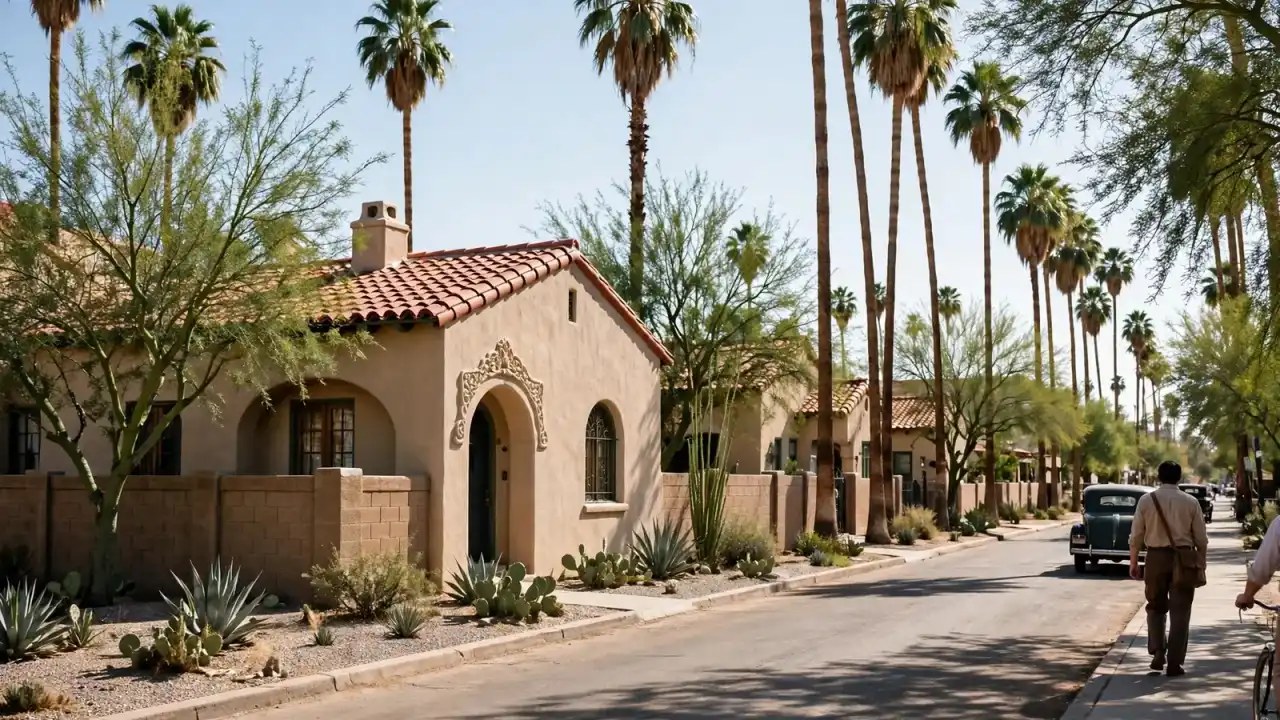 Service area
Encanto
Historic 1920s–40s homes with plaster walls, wood floors and old wiring, many in designated historic districts. Fire restoration here needs extra care.
Learn more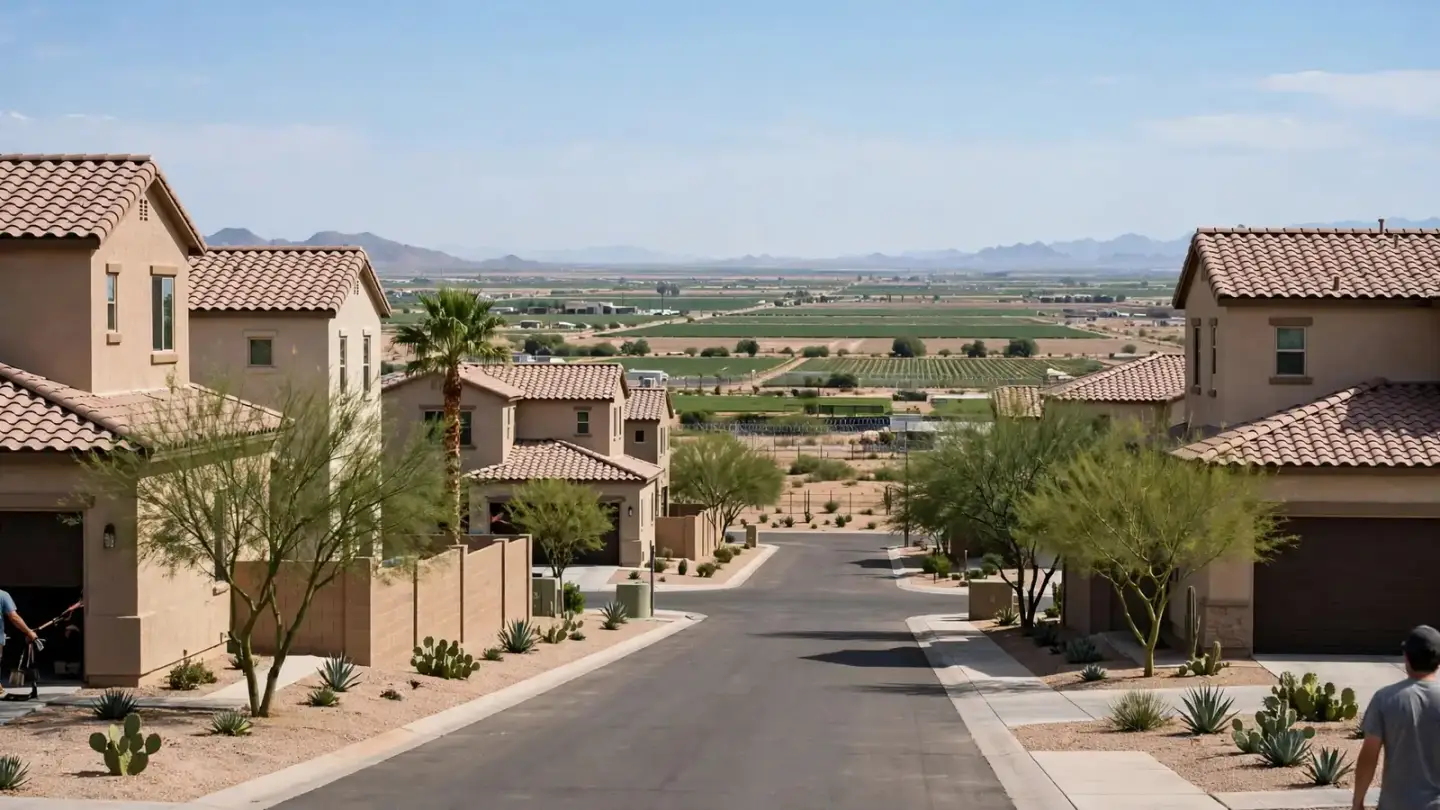 Service area
Laveen
New subdivisions beside old farmland, big attached garages and two-storey frame homes define fire restoration in Laveen Village.
Learn more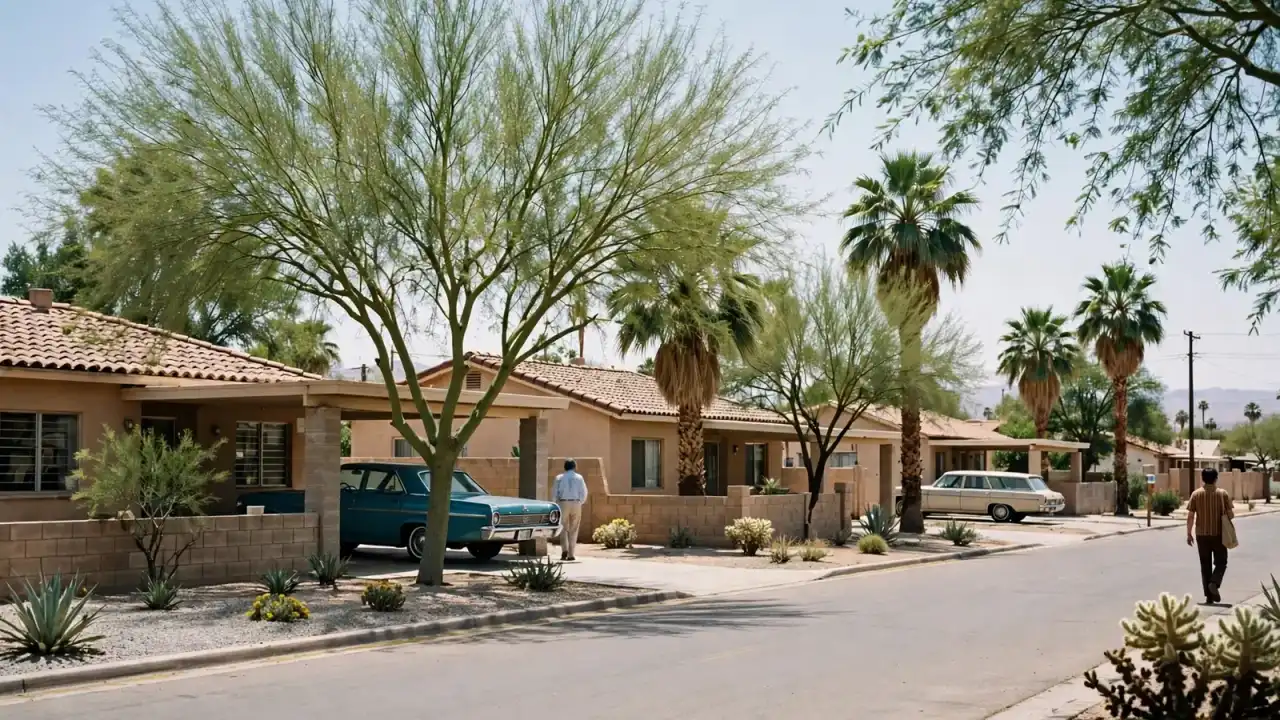 Service area
Maryvale
Mid-century block homes, converted carports and rooftop coolers make fire restoration in Maryvale different from newer suburbs.
Learn more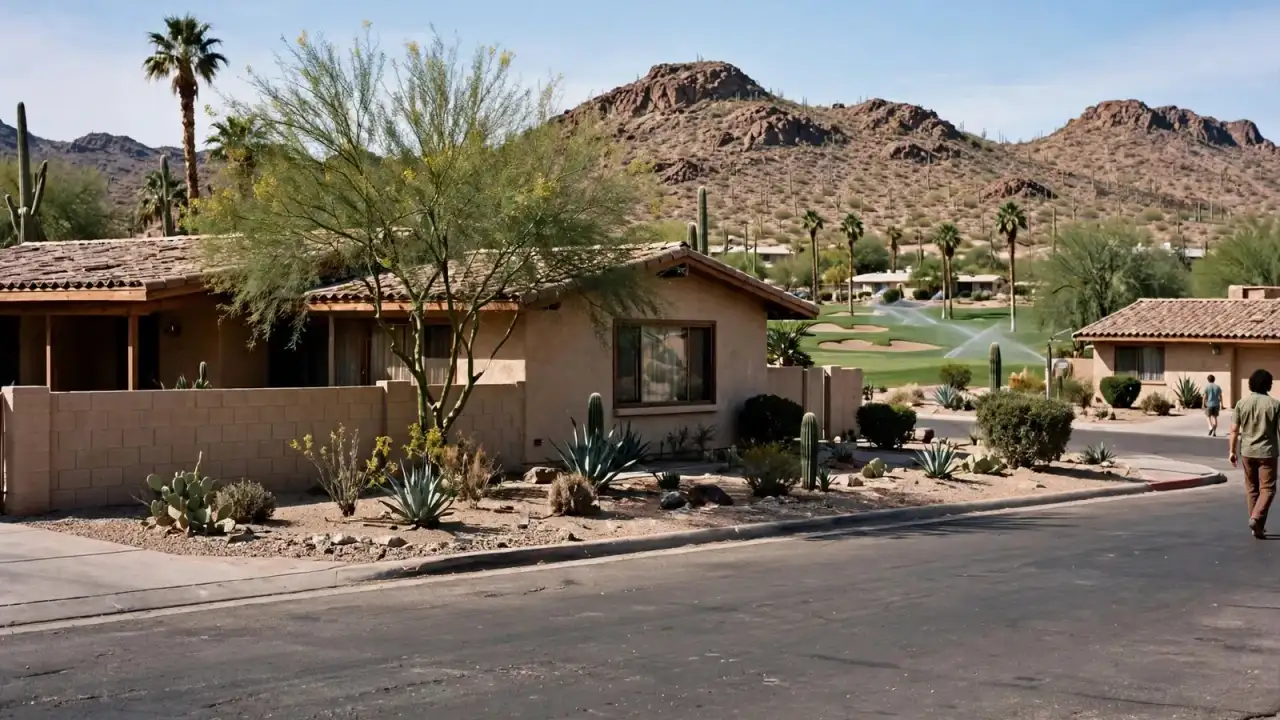 Service area
Moon Valley
Custom 1960s–70s ranch homes around a golf course, below Lookout Mountain and Shaw Butte. Fire restoration here means older custom construction and preserve-edge smoke.
Learn more
Clean or replace
Which fire-damaged materials can usually be saved
| Material | Usually | Depends on |
|---|---|---|
| Painted drywall with light soot | Cleaned, sealed, repainted | Depth of staining and odor |
| Charred or blistered drywall | Replaced | Extent of heat damage |
| Attic insulation with smoke | Replaced | Amount of smoke and odor |
| Solid wood framing | Cleaned and sealed | Whether it is charred structurally |
| Particleboard cabinets | Replaced if wet | Water exposure |
| Tile, glass and metal | Cleaned | Etching from acidic residue |
| Clothing and linens | Professionally cleaned | Scorching or melting |
| Food and medicines | Discarded | Any heat or smoke exposure |
About this site
How this Phoenix referral line works
Fire Damage Restoration Phoenix is a call-in referral service. When you call the number on this site, your call is connected to an independent restoration contractor serving Phoenix, and you speak with them directly on that call. We do not perform restoration work, send crews, or employ technicians.
We do not use forms, collect your contact details, or call, text or email you afterward. Anything you arrange happens between you and the contractor during your call. Because contractors are independent businesses, ask them about their licensing, insurance, methods and schedule before agreeing to any work. Arizona's Registrar of Contractors lets you look up a contractor's licence. [4]
The information on this site is general guidance written for Phoenix homeowners. It draws on public sources such as the U.S. Environmental Protection Agency, the American Red Cross, the National Weather Service and industry restoration standards, which are listed on each page. It is not a substitute for advice from the fire department, your insurer or a qualified professional who has seen your home.
For an overview of every step, see our fire restoration services, and for short answers to common questions, read the Phoenix fire damage FAQ.
Guides
Help for the days after a fire
Plain answers to the questions Phoenix homeowners ask most after a fire.
 Guide
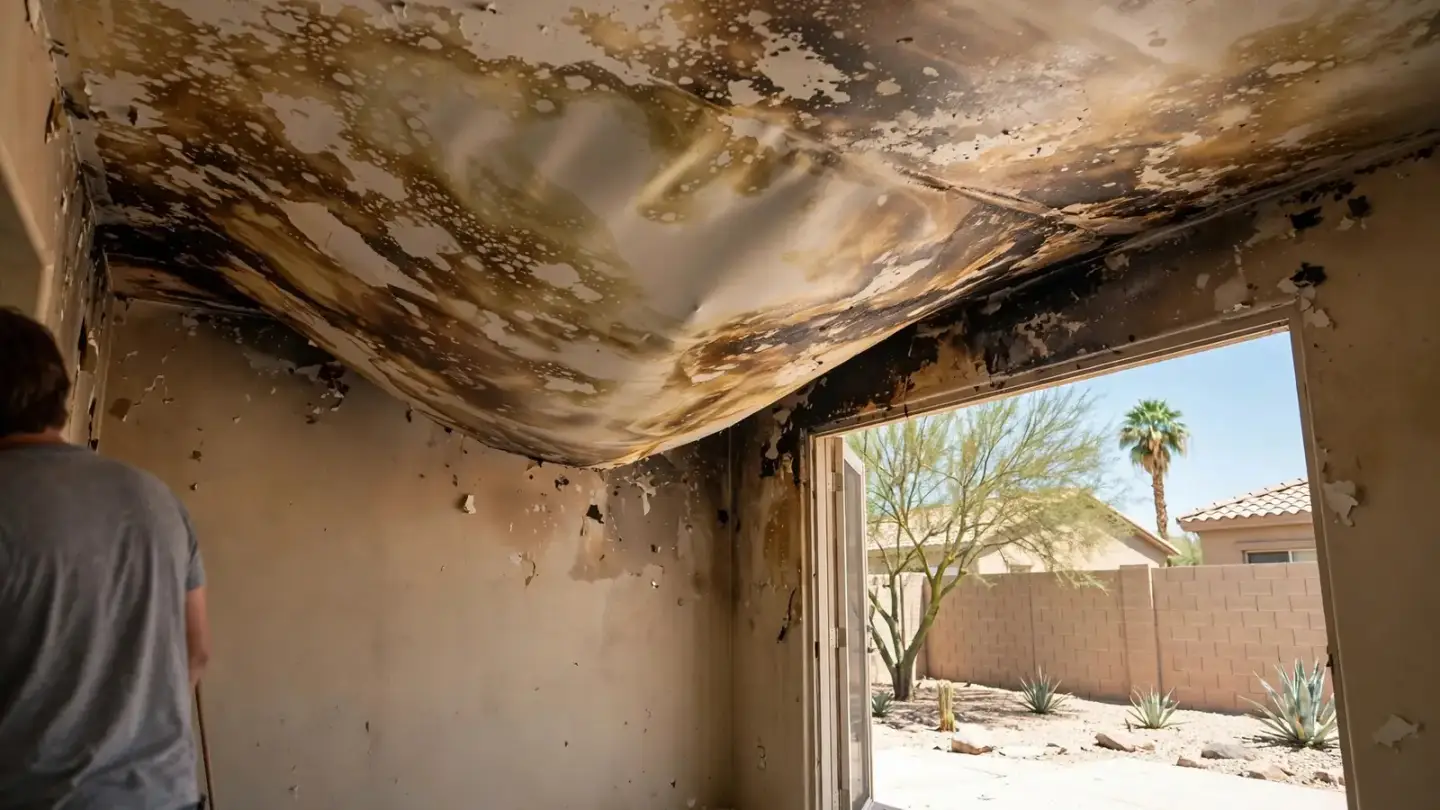
Is it safe to stay after a fire?
How to judge whether your Phoenix home is safe to live in after a fire, and who to ask.
Read the guide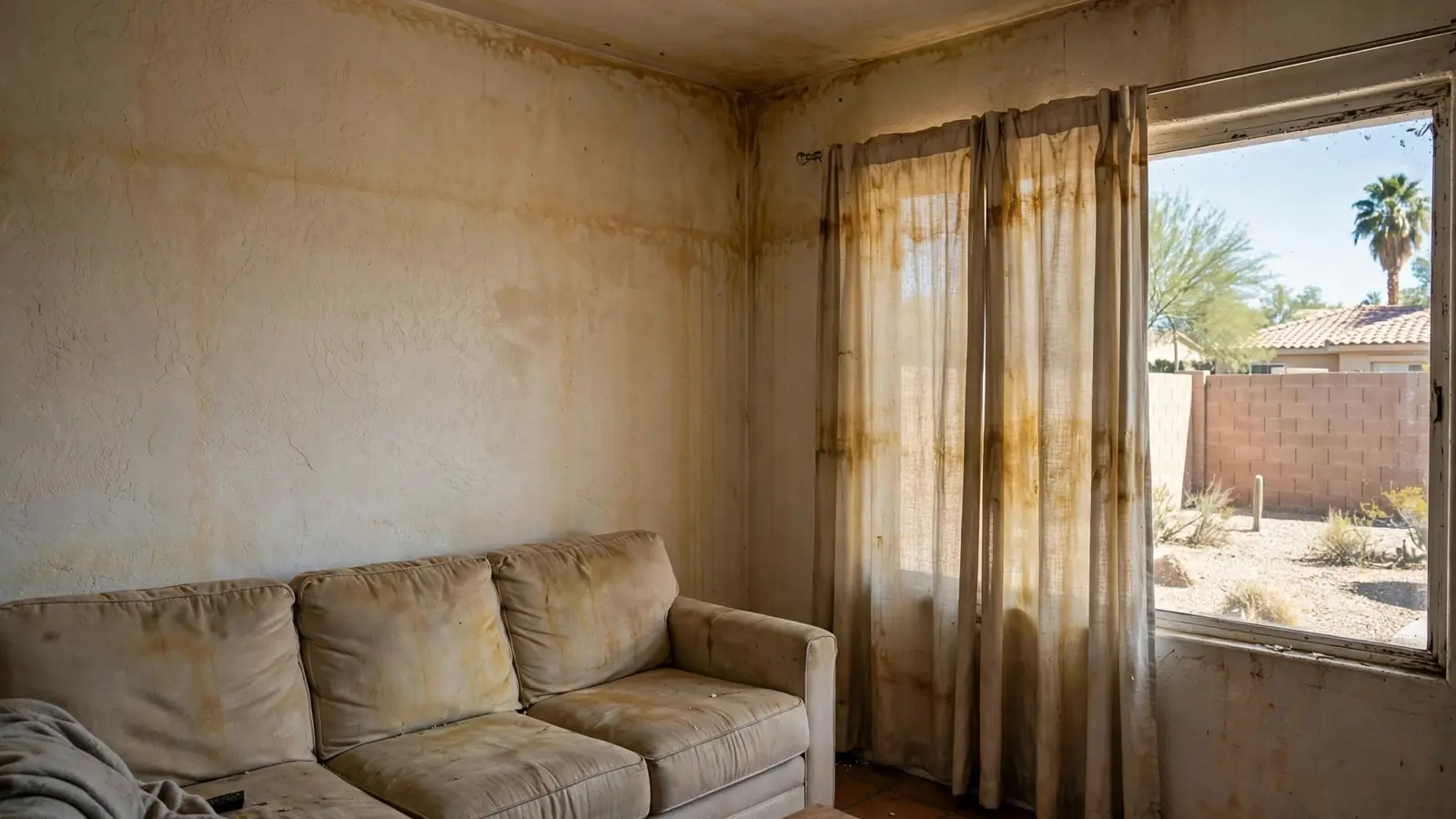 Guide
Smoke odor that won't go away
Why smoke smell lingers for months in some Phoenix homes and how to find where it is coming from.
Read the guide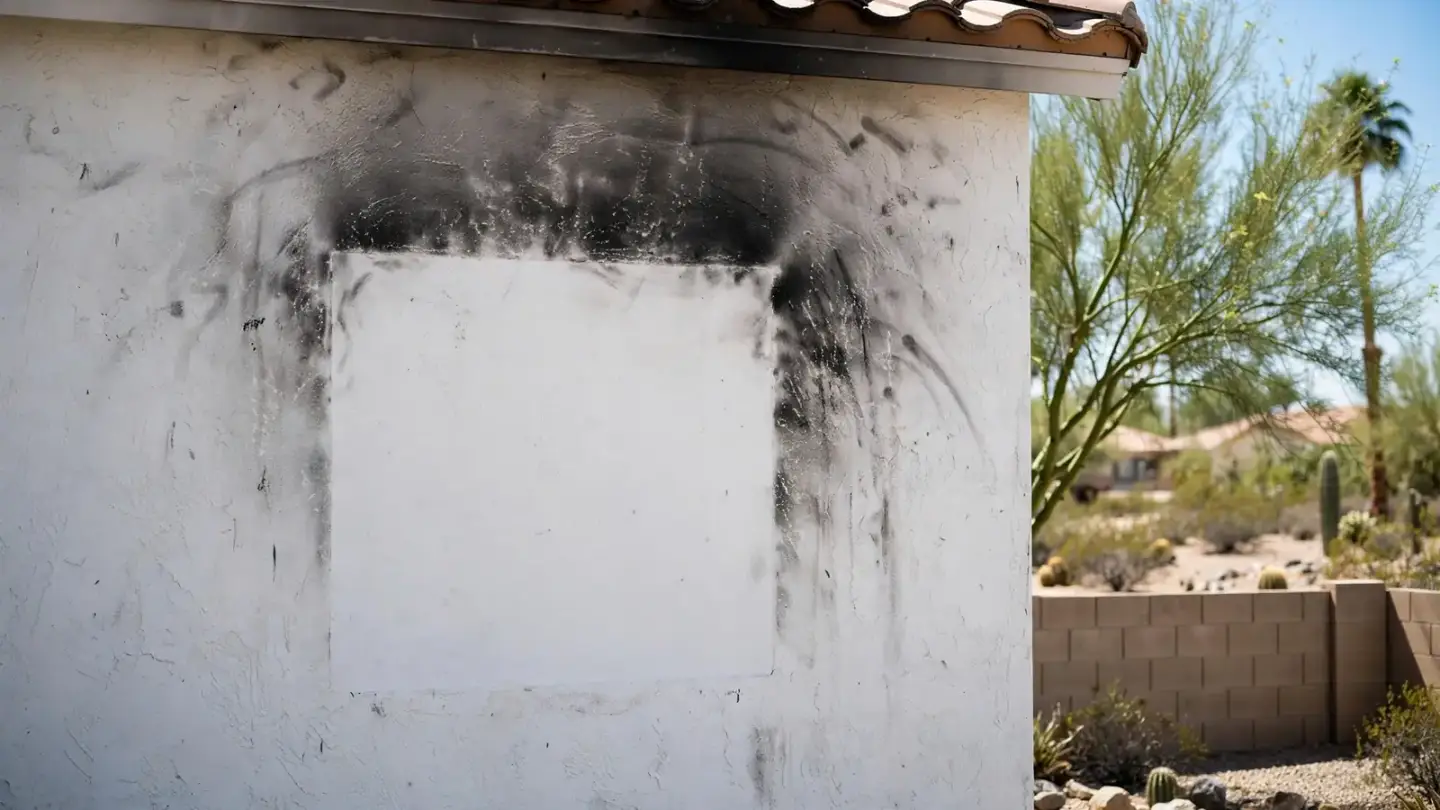 Guide
Soot on walls and ceilings
What causes soot marks on walls and ceilings, including when there was no fire, and how to clean them without making it worse.
Read the guide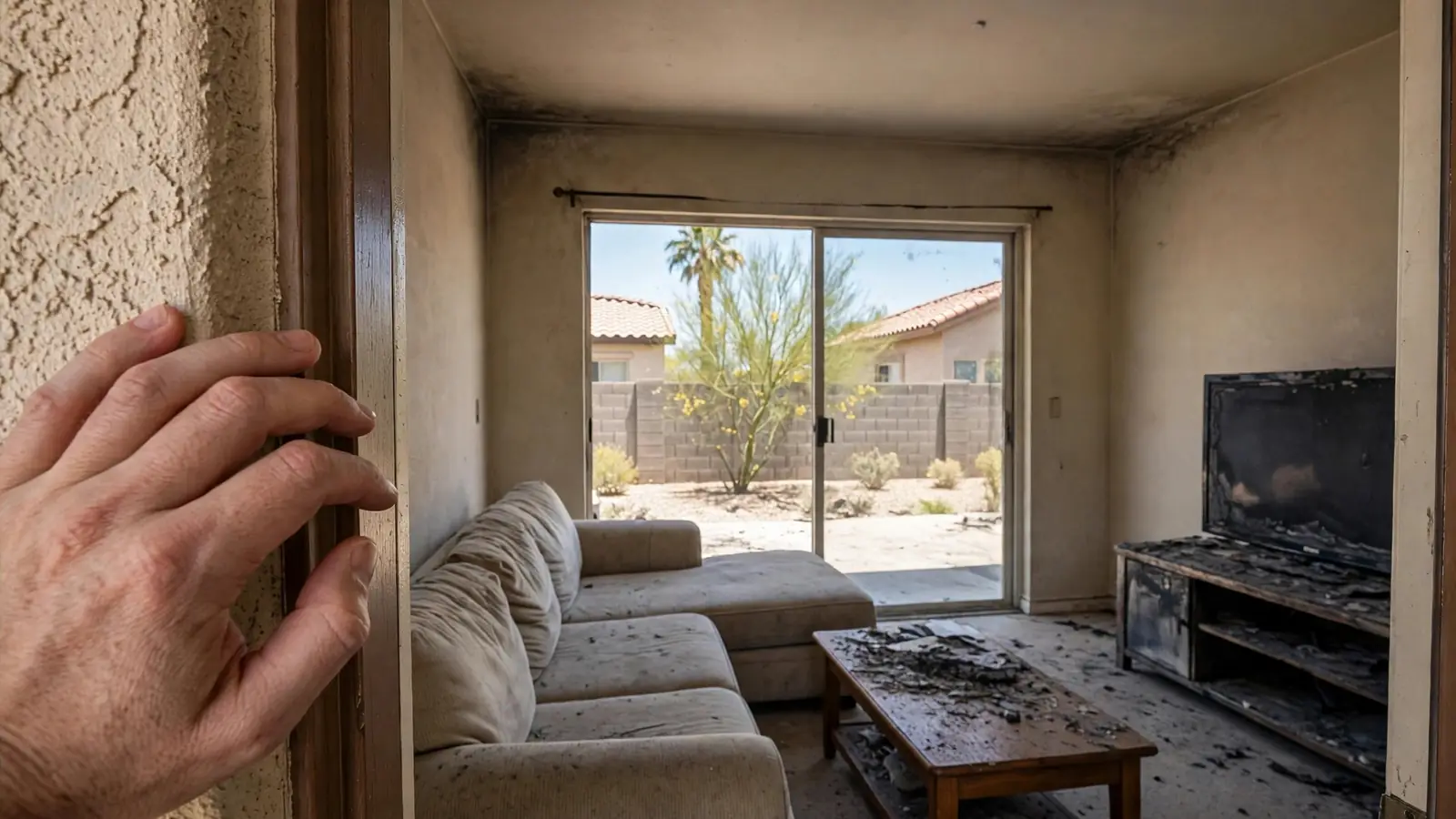 Guide
What to do after a house fire
A practical checklist for the first hours, days and weeks after a fire in a Phoenix home.
Read the guide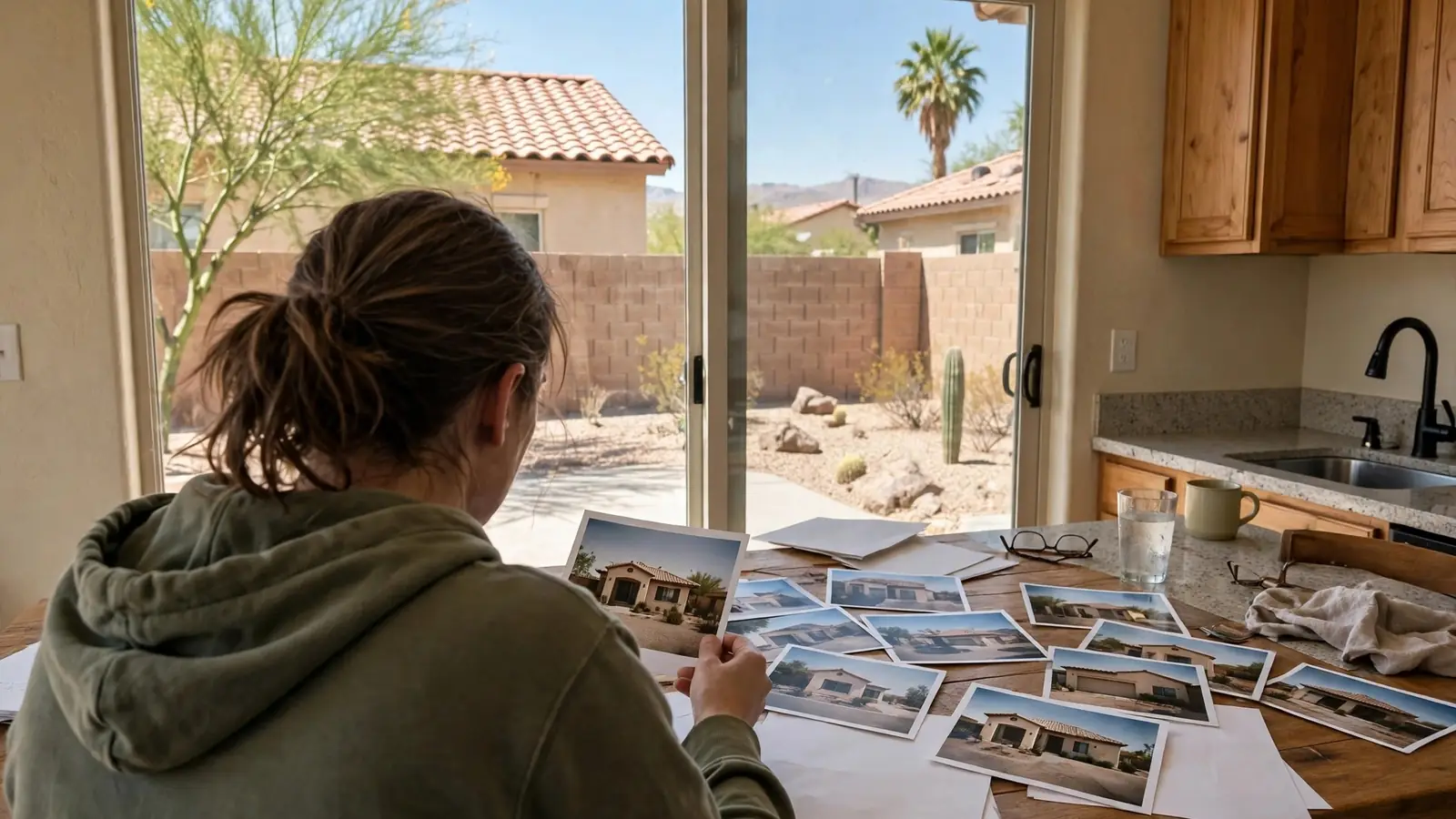 Guide
Working with your insurance adjuster
How to document fire damage, prepare for the adjuster's visit and keep your claim organised in Arizona.
Read the guide
FAQ
Common Phoenix fire damage questions
Still have a question?
Send us the details and we'll point you the right way.
Call NowNumber coming soonWhat should I do first after a house fire in Phoenix?
Make sure everyone is safe, wait for the fire department to say the house can be entered, contact your insurer, and get the property secured against weather and intruders. Our first-steps guide has a full checklist.
Who do I speak with when I call?
Your call connects to an independent restoration contractor serving Phoenix. You speak with them on that call. This site does not do the work itself.
Will you call me back or send me emails?
No. There are no forms and we do not collect your details for later contact. Anything you arrange is agreed with the contractor during your call.
Can smoke damage be cleaned or does everything need replacing?
Many surfaces and belongings can be cleaned. Heat-damaged, charred and heavily soaked porous materials are more often replaced. A contractor decides after testing.
Why does my house still smell of smoke after cleaning?
Odor hides in porous materials such as insulation, carpet pad and cabinet interiors, and heat releases it. The source has to be removed or sealed.
Do I need to dry the house even though Phoenix is dry?
Yes. Water inside walls, under cabinets and under flooring does not dry on its own quickly, and mould can grow in a hot, closed house.
Should I run the air conditioning after a fire?
Not until the system is checked. Running a smoke-contaminated system spreads residue and odor through the house.
Does homeowners insurance cover fire restoration?
Many policies cover fire, smoke and firefighting water damage, but coverage varies. Read your policy and talk with your adjuster.
Phoenix fire damage
Speak with a restoration contractor now
Call and your call is connected to an independent local restoration contractor in Phoenix. Talk through what happened and what your home needs on that call.
Sources and citations
Keep reading