
Key facts: Deer Valley
- Deer Valley is an urban village in north Phoenix, and neighborhoods to its north extend toward the Phoenix Sonoran Preserve.
- Many north Phoenix homes were built from the 1990s onward, mostly stucco over wood frame with concrete tile roofs.
- Homes on the wildland-urban edge can be affected by smoke, ash and embers from desert brush fires.
- Embers can enter attics through vents and ignite materials inside even when flames do not reach the house.
- The covered ZIP codes for Deer Valley and north Phoenix on this site are 85027, 85085 and 85086.
Covered area
Deer Valley and north Phoenix ZIP codes covered
Calls from these north Phoenix ZIP codes can be connected to an independent restoration contractor serving the area.
- 85027Deer Valley neighborhoods around the Interstate 17 corridor and the Deer Valley airport area.
- 85085North Phoenix neighborhoods toward the Phoenix Sonoran Preserve, including newer master-planned communities.
- 85086The northernmost Phoenix neighborhoods in this ZIP code along the desert edge.
About Deer Valley
Phoenix's northern edge
Deer Valley takes its name from the broad valley in north Phoenix crossed by Interstate 17. Once mostly open desert and ranch land, it grew through the 1980s and 1990s with neighborhoods, business parks and the Deer Valley airport. Growth continued north through the 2000s and 2010s, with master-planned communities extending toward the Phoenix Sonoran Preserve, a large protected area of desert mountains, washes and saguaro forest.
Most homes here are relatively new: stucco over wood frame, concrete tile roofs, attached garages, open floor plans and a mix of one- and two-storey designs. Many neighborhoods have homeowners associations. Desert landscaping, block walls and view lots facing the preserve or open washes are common.
The defining feature for fire restoration is the desert edge. Homes that back onto preserve land, washes or vacant desert face brush fire smoke, ash and occasionally embers, in addition to the everyday risks of kitchen, garage and electrical fires.
Construction
North Phoenix construction details that matter after a fire
Concrete tile roofs (Deer Valley)
Tile resists embers well but needs careful handling when tarping a fire opening.
Attic vents
Vents let embers and smoke into attics during nearby brush fires unless screened finely.
Stucco exteriors
Smoke and heat stain stucco; matching repairs may need HOA approval.
Large attached garages
Garage fires reach living space through shared walls and attics.
Two-storey plans
Smoke rises upstairs; firefighting water falls downstairs.
View walls and wrought iron fences
Lots open to the desert let smoke and ash in more easily than solid walls.
Desert edge
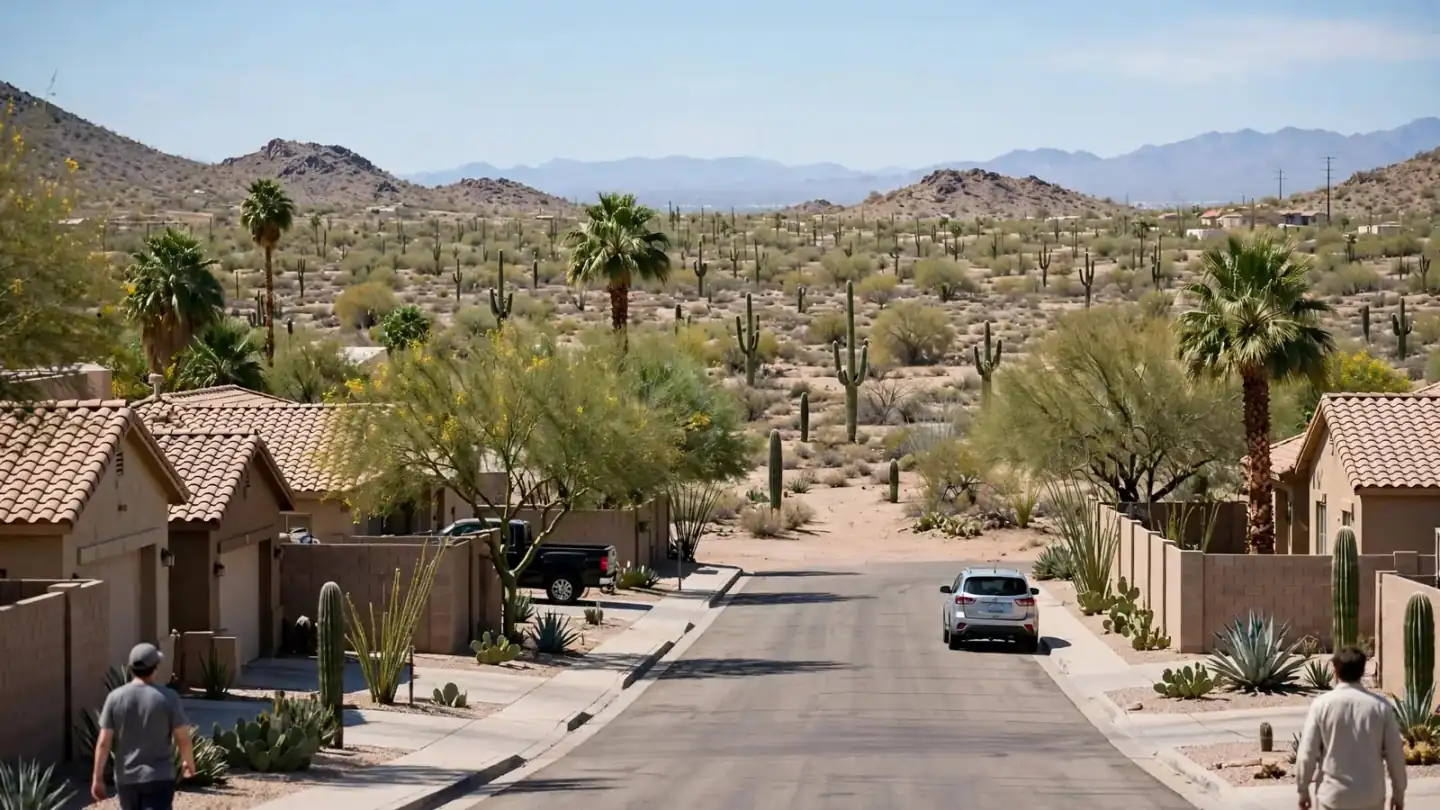
Brush fires on the north Phoenix desert edge
The Sonoran Desert is not usually thought of as fire country, but non-native grasses such as red brome and buffelgrass have changed that in many areas. After wet winters these grasses grow thick, then dry out in late spring and early summer, providing fuel that carries fire across desert that once rarely burned. Brush fires in and around preserve land, washes and vacant lots are a recurring concern in north Phoenix.
Most of these fires are kept away from homes, but smoke and ash spread widely with the wind. Embers can travel ahead of a fire and land on roofs, in yards and in attic vents. An ember entering an attic can ignite dust, debris or insulation, starting a fire inside a house that flames never reached from outside.
After a nearby brush fire, check your home even if it looks fine: look in the attic for smoke smell or scorching, check yards and roof edges for burned debris, and replace HVAC filters. Smoke from outside usually leaves lighter damage than an interior fire, but it can still require cleaning of ducts, fabrics and surfaces.
What you might see
Deer Valley fire damage clues and causes
| What you notice | Likely reason | What to ask |
|---|---|---|
| Ash on patio and pool | Brush fire on nearby desert | Should filters and ducts be cleaned? |
| Smoke smell in the attic | Smoke or embers entered through vents | Is there any scorching or ember damage? |
| Scorched wrought iron fence or wall | Fire reached the property line | Is the house exterior affected? |
| Soot upstairs after a downstairs fire | Smoke rose through the open stairwell | Will upstairs rooms be cleaned? |
| Smoke in rooms beside the garage | Garage fire smoke through shared wall | Has the wall cavity been checked? |
| Dust mixed with soot | Desert dust on top of residue | How will surfaces be vacuumed first? |
Embers
How embers threaten north Phoenix homes
Fire safety research from organisations such as the NFPA's Firewise USA program emphasises that embers, not walls of flame, ignite many homes in wildland fires. Embers are small burning pieces of vegetation carried by wind. They collect in corners, gutters, under eaves, against fences and in vents.
Concrete tile roofs resist embers well, but the gaps at the ends of tile rows, called bird stops when they are fitted, can let embers and debris under the tiles if they are missing. Attic vents without fine mesh screens can let embers into the attic. Dry plants, mulch, palm fronds and stored items against the house or wall provide places for embers to catch.
After an ember-driven fire, or a near miss, contractors check under eaves, in attic spaces, along fence lines and in corners where debris collects. Even small scorch marks are worth noting, as they show where the home is vulnerable.
Assessment
What a contractor should check in a Deer Valley home
- 1
The attic (Deer Valley)
Smoke smell, scorching, ember damage and insulation along the smoke path.
- 2
Roof edges and tiles
Gaps at tile ends, broken tiles and any openings.
- 3
Eaves and vents
Screen condition and any ember entry.
- 4
Garage connections (Deer Valley)
If the garage was involved, the shared wall, door and attic.
- 5
Both floors (Deer Valley)
Upstairs for smoke, downstairs for water in two-storey homes.
- 6
Yard and fencing
Scorched walls, fences, patio covers and outdoor equipment.
Restoration
How restoration usually runs in north Phoenix
Securing a north Phoenix home after a fire usually means boarding broken windows and sliders and tarping tile roof openings, with tiles removed around the opening and the tarp fastened to the deck. Because monsoon storms and dust can arrive quickly, crews try to close openings fast.
Drying covers slab floors, floor cavities in two-storey homes and cabinets. Cleaning addresses soot from interior fires and fine ash and residue from exterior smoke, with thorough HEPA vacuuming first because desert dust is everywhere. Odor work focuses on the attic and ducts.
Rebuilding needs City of Phoenix permits. Exterior repairs in HOA communities typically need association approval. Many owners use the opportunity to upgrade ember resistance, for example adding fine vent screens and bird stops. [2]
Outside smoke
Cleaning up after wildland smoke in north Phoenix
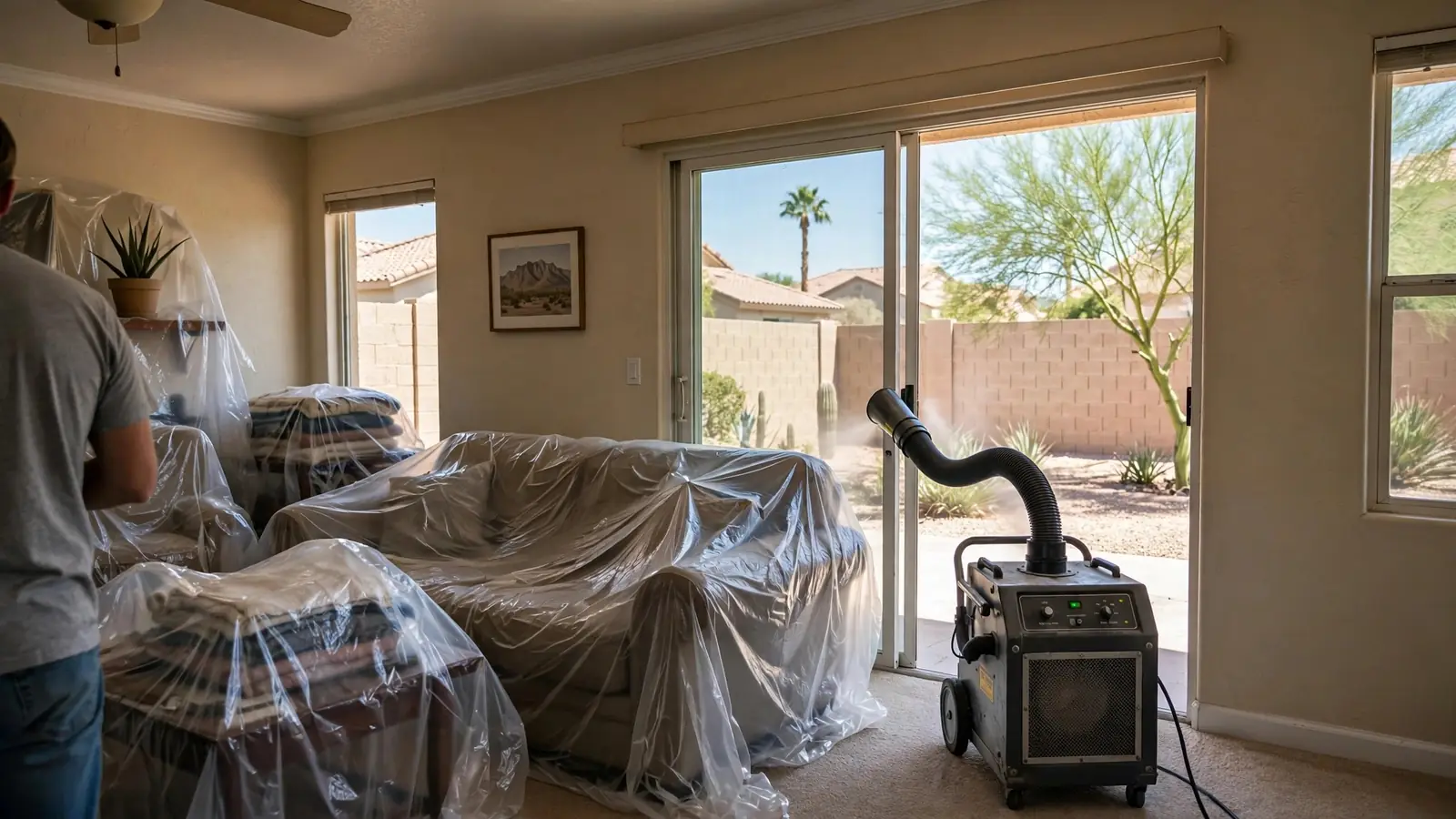
When a desert fire burns near your neighborhood, smoke may fill the house even with windows closed. Afterwards, replace HVAC filters, wipe hard surfaces with damp cloths after vacuuming loose ash, launder curtains and bedding, and run HEPA air cleaners. If odor lingers, ducts may need cleaning and the attic should be checked.
Clean ash from patios, pools and outdoor furniture with care. Wear gloves and an N95 respirator, mist ash lightly to keep it down, and avoid leaf blowers. Health agencies advise that ash can irritate skin, eyes and lungs.
- Replace HVAC filters
- Vacuum before wiping
- Launder fabrics
- Avoid leaf blowers on ash
- Check the attic
Garages
Garage fires in north Phoenix homes
Newer north Phoenix homes often have two- or three-car garages, sometimes with extra storage, workshops, golf carts, off-road vehicles, electric vehicle chargers and battery equipment. Garage fires burn hot and produce dark, oily smoke. The fire-rated wall and door slow fire spread into the house, but smoke still reaches the laundry, kitchen and rooms above.
After a garage fire, damaged batteries, fuel and chemicals should be handled only by professionals. Contractors check the shared wall and ceiling, the attic above both garage and house, and every room adjoining the garage. Burned garage doors need temporary closure until replacements are installed.
Two storeys
Two-storey homes in Deer Valley and beyond
Two-storey plans with open stairwells and lofts are common in north Phoenix. Smoke from a downstairs fire rises quickly to the upper floor, and bedrooms there can be more heavily affected than rooms near the fire. When a fire upstairs is put out, water flows down into the floor cavity and the ceiling below, which may sag and need to be opened for drying.
Tell the contractor which floor the fire was on and whether you see ceiling stains or bulges below, so they can plan for both smoke cleaning and drying.
Climate
Heat, monsoon and dust in north Phoenix
North Phoenix summers are extremely hot, and attics in tile-roofed homes get far hotter than living spaces. Smoke in attic insulation releases odor in that heat, so afternoon smell often signals an attic source.
Monsoon storms bring strong winds, dust storms and sudden heavy rain, and washes near homes can run quickly. Fire openings must be covered securely before storms. Dust storms can coat interiors through any opening, adding grit to soot cleanup.
Prevention
Making a north Phoenix home more ember resistant
- Fine mesh on ventsScreens on attic and soffit vents reduce ember entry.
- Bird stops on tile roofsClosures at tile ends keep embers and debris from collecting under tiles.
- A clear zone around the houseKeep dry plants, mulch and stored items away from walls, within HOA rules.
- Clean roofs and guttersRemove leaves and debris where embers could land.
- Store garage flammables safelyFuel and chemicals in proper containers away from heat.
Week one
The first week after a fire in a north Phoenix home
- 1
Day 1 (Deer Valley)
Fire department release, insurer and HOA notified, windows boarded, tile roof tarped, photos taken.
- 2
Day 1-2 (Deer Valley)
Water extracted, wet materials removed, drying started; garage contents sorted safely.
- 3
Day 2-3 (Deer Valley)
Attic and vents inspected for smoke and ember damage; contents packed out.
- 4
Day 3-5 (Deer Valley)
Drying monitored; exterior and yard assessed.
- 5
End of week (Deer Valley)
Scope agreed, including any ember-resistance upgrades.
On your call
Questions to ask about your Deer Valley home
- Will you check the attic for ember damage?Especially after a nearby brush fire.
- How will you tarp my tile roof in Deer Valley?Ask how tiles will be removed, stored and reused.
- How will you clean ash and dust?Thorough vacuuming before wiping avoids scratches.
- Can you recommend ember upgrades?Vent screens and bird stops can be added during repair.
- Will you replace attic ducts?Heavily smoked flexible ducts are often replaced.
Services
Restoration services north Phoenix homeowners ask about
Wildland smoke cleanup
Cleaning after brush fire smoke and ash.
Read moreTile roof tarping (Deer Valley)
Covering fire openings before monsoon storms.
Read moreAttic odor (Deer Valley)
Removing smoke smell from hot attics.
Read moreSoot and dust (Deer Valley)
Removing soot mixed with desert dust.
Read more
Kitchens
Cooking fires in north Phoenix open-plan kitchens
Newer north Phoenix homes are built around large open kitchens with islands facing family rooms. Cooking fires remain the most common cause of home fires, and in an open plan their smoke spreads across the whole main living area and up any open stairwell. Burned-food residue is thin and sticky, hard to see, and carries a lingering sour odor that clings to cabinets, light fixtures, window coverings and ceilings well away from the stove.
Builder kitchens often use recirculating microwave hoods over the range. These trap grease and smoke inside the house rather than venting them, and after a cooking fire they are usually replaced. Cabinets above the range may warp from heat. Stone and quartz counters clean well if residue is removed promptly.
Pools and yards
Pools, patios and desert yards after a fire
Back yards in north Phoenix often combine pools, covered patios, outdoor kitchens and desert landscaping with view fencing facing open land. After a nearby brush fire, ash and burned debris land in pools and on patios. Run pool filters, empty skimmer baskets often and ask a pool service for advice if ash is heavy.
Desert landscaping is usually less flammable than lawns and hedges, but dry grasses, dead shrubs, palm skirts and wood mulch can catch embers. After a fire, remove burned debris and dead material near the house. Outdoor furniture cushions absorb smoke and may need cleaning or replacement.
Propane tanks for grills and fire pits should be checked by a qualified person if they were exposed to heat.
Season by season
North Phoenix fire concerns through the year
| Season | Concern | Helpful step |
|---|---|---|
| Winter | Rain grows grasses that dry later | Plan spring clearing of dry growth near the home |
| Spring | Grasses curing in washes and preserve edges | Remove dry growth near walls within HOA rules |
| Early summer | Peak brush fire risk and extreme heat | Keep vents screened and yards clear |
| Monsoon | Lightning, wind and dust storms | Secure tarps; check after storms |
| Autumn | Holiday cooking and decorations | Stay with the stove; keep decorations clear of heat |
Neighbors
When a neighboring north Phoenix home burns
North Phoenix subdivisions place houses close together, often with only side yards between them. A fire next door can crack facing windows, scorch stucco and eaves, damage shared walls and send smoke into your attic through vents. Embers can land on your roof and in your yard.
After a neighbor's fire, walk around your house, photograph damage on the side facing the fire, check the attic for smoke, and replace filters. Contact your insurer; your policy may cover smoke and heat damage from a fire next door. Keep your HOA informed if exterior repairs are needed.
Electrical
Solar, chargers and added equipment in north Phoenix
Solar panels, electric vehicle chargers, home batteries and upgraded pool equipment are common in newer north Phoenix homes. After a fire, tell the fire department and contractor about any of these. Solar panels can produce power in daylight even when the house is switched off, which matters for anyone working on the roof. Chargers and batteries exposed to heat or water need inspection by a qualified electrician before use.
Washes
Desert washes and drainage near Deer Valley homes
Dry washes wind through many north Phoenix neighborhoods and along the edges of preserve land. Most of the year they are sandy channels lined with brush, which can carry fire through a neighborhood when grasses are dry. During monsoon storms, the same washes can run fast with water and debris.
After a fire, burned vegetation along a wash no longer holds soil as well, so runoff from the next storm may carry more ash and sediment toward nearby homes and yards. If your house backs onto a wash that burned, check drainage around the foundation, keep debris from blocking yard drains, and keep any opened walls or doors protected until the house is repaired.
Washes are often managed by HOAs or the city, so report burned debris or blocked drainage to the responsible party rather than clearing large amounts yourself.
FAQ
Deer Valley fire restoration questions
Does this line cover Deer Valley and north Phoenix?
Yes. Calls from ZIP codes 85027, 85085 and 85086 can be connected to an independent restoration contractor serving the area.
A brush fire burned near my house. Should I check anything?
Yes. Check the attic for smoke or scorching, the roof edges and yard for embers, and replace HVAC filters.
Can embers get into my attic?
Yes, through vents without fine mesh screens and through gaps at tile ends. Embers can ignite debris or insulation inside.
Is ash from a desert fire harmful?
It can irritate skin, eyes and lungs. Wear gloves and an N95 respirator when cleaning, and avoid making it airborne.
Why are there grasses burning in the desert?
Non-native grasses such as red brome and buffelgrass grow after wet winters and dry out, providing fuel that carries fire.
Does my HOA need to approve repairs?
Exterior repairs in most north Phoenix communities need association approval. Notify the HOA early.
Can I add ember protection during repairs?
Often yes. Vent screens and bird stops are common upgrades. Ask your contractor and insurer how they are handled.
Do I need permits to rebuild in Deer Valley?
Homes within the City of Phoenix need City of Phoenix permits for regulated repair work.
Why does my house smell worse in the afternoon in Deer Valley?
Attic heat releases odor from smoky insulation and wood, so the attic is often the remaining source.
Can a damaged golf cart or e-bike battery reignite?
Yes. Damaged lithium-ion batteries can reignite. Leave them for professionals and tell the fire department.
The wash behind my house burned. Is flooding more likely?
Burned areas can shed more water and ash in the next storm. Check yard drainage and keep openings in the house protected.
Should I tell the fire department about my solar panels?
Yes. Panels can stay energised in daylight, which matters for anyone working on or near the roof.
Is my propane grill tank safe after a nearby fire?
If it was exposed to heat, have it checked by a qualified person before use, and keep it away from the house until then.
Can I stay elsewhere while my north Phoenix home is restored?
Many homeowner policies include additional living expenses when a home cannot be lived in. Check your policy and keep receipts.