
Key facts: Arcadia
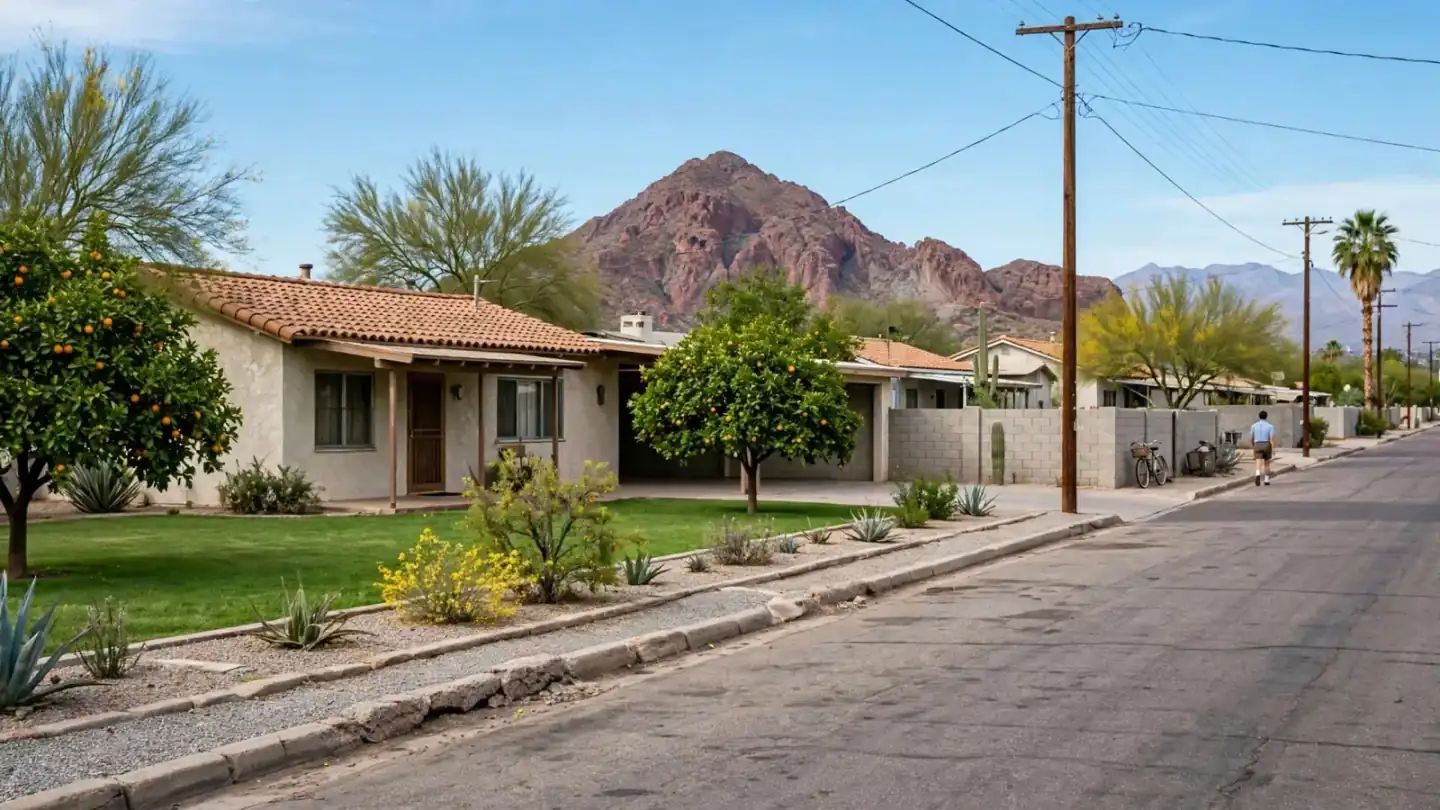
- Arcadia is a neighborhood in east Phoenix, in the Camelback East area, roughly between Camelback Mountain and the Arizona Canal.
- Much of Arcadia was developed on former citrus groves, and many homes date from the 1950s and 1960s.
- Many Arcadia homes have been remodeled or expanded, so original and newer construction often sit side by side.
- Homes built before the 1980s may contain asbestos in some materials, which should be tested before disturbance.
- The covered ZIP code for Arcadia on this site is 85018.
Covered area
Arcadia ZIP code covered by this line
Calls from this part of Phoenix can be connected to an independent restoration contractor serving the area.
- 85018Arcadia and surrounding Camelback East streets, including Arcadia Lite to the west.
About Arcadia
Why Arcadia houses are different after a fire
Arcadia grew on land that was once citrus groves at the foot of Camelback Mountain. Lots are large by Phoenix standards, many trees are decades old, and lawns are often kept green with flood irrigation delivered through the old irrigation network. The original homes were mostly single-storey ranch houses from the 1950s and 1960s, typically long and low with shallow-pitched roofs and wide eaves.
Over the decades, a large share of those houses have been remodeled, extended or replaced. It is common to find a house where one wing is original 1950s construction, another is a 1990s addition, and the kitchen was gutted and rebuilt in the 2010s. Some lots now hold large new custom homes. This mix matters after a fire, because each section of a house can be built with different materials and methods, and they respond differently to heat, smoke and water.
For a homeowner, the practical result is that a fire in Arcadia often needs a more careful assessment than a fire in a uniform subdivision. A restoration contractor has to work out where the original structure ends and the remodel begins, what is behind each wall, and whether older materials need testing before they are disturbed.
Construction
Arcadia construction details that affect restoration
Mixed-era structure
Original framing, plaster or drywall sits next to newer additions. Smoke and water move through the seams between them.
Low-slope roofs (Arcadia)
Long, low roofs over original sections leave shallow attics that are hard to access and trap smoke above ceilings.
Older electrical in original wings
Original sections may still have older wiring that should be checked by an electrician after heat or water exposure.
Wood and slump block
Some original homes used slump block or brick; these absorb smoke differently from stucco over frame.
Large windows and sliders
Mid-century designs and modern remodels both favour big glass, which heat can crack, leaving large openings to board.
Mature trees close to roofs
Old citrus, palms and shade trees overhang many roofs and can complicate roof tarping.
How fires spread here
How smoke moves through a remodeled Arcadia ranch
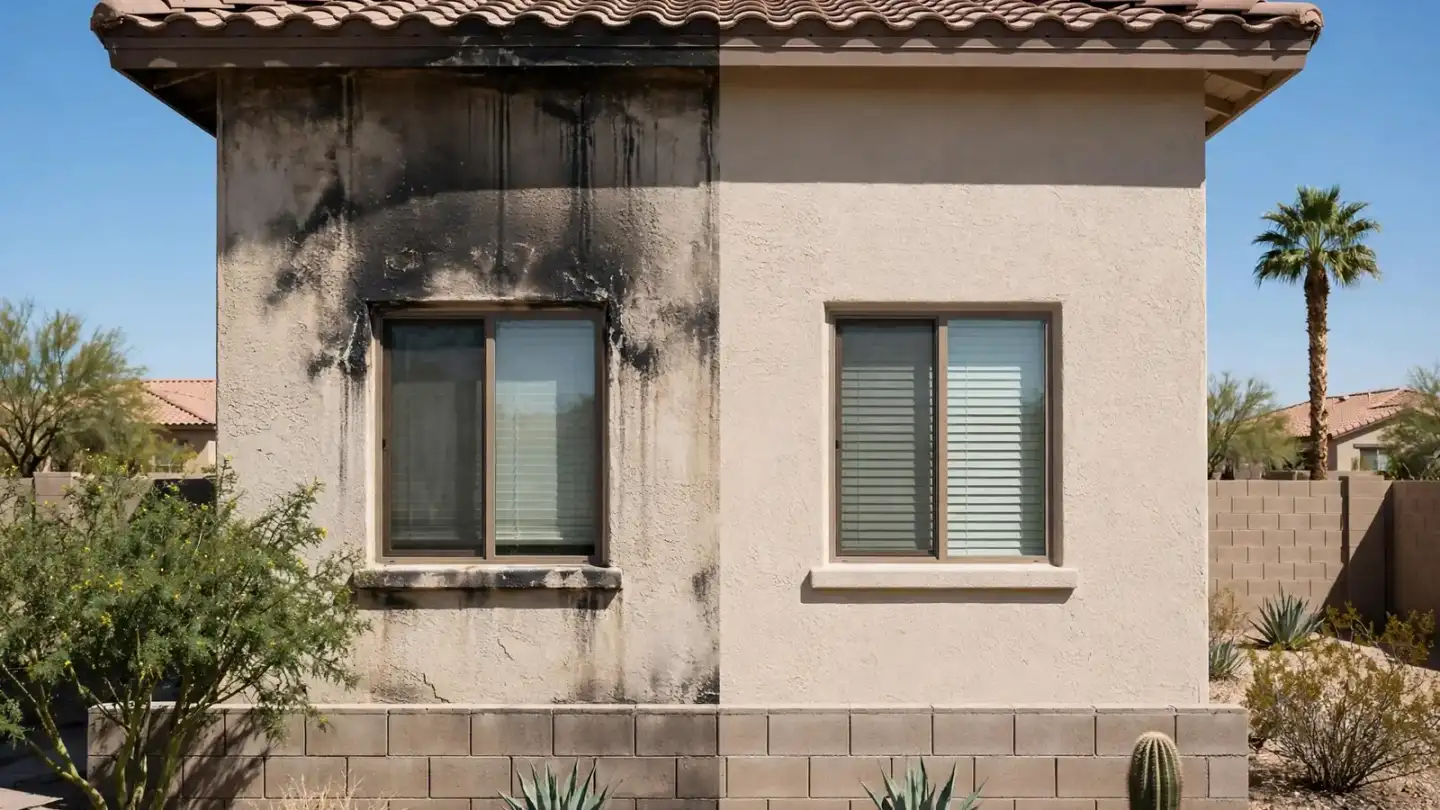
In a long, single-storey ranch house, smoke spreads mainly sideways along the ceiling plane and through the attic. Shallow attics over original sections connect the length of the house, so smoke from a kitchen fire can drift above the ceiling to bedrooms at the far end. Where an addition was framed onto the original house, the junction is often imperfectly sealed, and smoke finds that gap.
Many remodeled Arcadia homes have new HVAC systems that serve both old and new sections through long duct runs in the attic. If the system was running when the fire started, those ducts may carry residue to every room. Older homes that still have evaporative coolers or a combination of cooling systems can pull smoke in from outside or push it around in unexpected directions.
Detached guest houses, casitas and garages are common on large Arcadia lots. A fire in one structure can send smoke into another through open windows or shared airflow, so contractors should check all buildings on the property.
Assessment
What a contractor should check in an Arcadia home
- 1
Map the house by era
Identify the original structure and each addition, because construction and materials differ.
- 2
Inspect the attic over each section
Low attics over original wings may need careful access to check insulation and roof wood for smoke.
- 3
Test before disturbing older materials
Original textured ceilings, flooring and some other materials in older homes may contain asbestos and should be sampled first.
- 4
Check wiring in original sections
Older circuits exposed to heat or water should be checked by a licensed electrician.
- 5
Check casitas and garages
Separate buildings on the lot may also have smoke damage.
- 6
Check irrigation and drainage
Flood irrigation and blocked drainage near a burned area can add water to a damaged structure.
What you might see
Arcadia fire damage clues and causes
| What you notice | Likely reason | What to ask |
|---|---|---|
| Smoke smell in far bedrooms | Shared shallow attic over the original wing | Has the attic insulation been checked? |
| Staining at a wall seam | Junction between original house and addition | Is the cavity at the seam affected? |
| Odor when cooling runs | Long attic duct runs carried smoke | Will the ducts be cleaned or replaced? |
| Cracked old popcorn ceiling | Heat and water on original texture | Has the texture been tested? |
| Smoke in the casita | Airflow between buildings | Will the casita be inspected? |
| Water pooling by foundation | Irrigation near damaged area | Can irrigation be paused? |
Restoration
How fire restoration works in an Arcadia house
Restoration follows the same order everywhere: secure, dry, clean, deodorise, repair. In Arcadia, each step needs attention to the house's layers. Board-up can be extensive, because mid-century and modern designs often feature large windows and multi-panel sliders. Covering big openings securely takes more material and bracing.
Drying is usually straightforward on slab-on-grade ranch homes but can be slow under tile or older floor finishes. If flood irrigation is scheduled near the house, pausing it while the structure dries avoids adding moisture. Where firefighting water ran into the junction between an addition and the original house, the cavities there need opening and drying.
Cleaning and odor work focus heavily on the attic. Insulation over the fire area and along the smoke path is frequently replaced. Roof sheathing and framing that took smoke are cleaned and sealed. Ducts are cleaned or replaced. In older sections, any material that might contain asbestos is tested before it is cut, scraped or removed, and if positive it must be handled according to the rules for asbestos work.
Rebuilding in Arcadia often turns into a design decision. Some homeowners use the opportunity to bring an original section up to the standard of the remodeled parts. Any rebuilding needs City of Phoenix permits, and the contractor you hire for that work should hold the appropriate Arizona Registrar of Contractors licence. [5]
Arcadia lots
Large lots, trees and access in Arcadia
Arcadia's big lots and mature landscaping are part of its appeal, but they shape the restoration logistics. Long driveways and gated properties affect where equipment and dumpsters go. Overhanging trees can make roof work slower and may need trimming before a tarp can be secured. Citrus and palms close to a burned section can themselves be scorched and may drop debris.
Flood irrigation is another local factor. Properties on the irrigation schedule receive water at set times. After a fire, ask whether irrigation water could reach any damaged part of the structure or pool around foundations near opened walls, and arrange to skip a delivery if needed.
- Plan equipment access early
- Trim branches over roof openings
- Check scorched trees for falling limbs
- Pause irrigation near damaged areas
Seasonal factors
Monsoon and summer heat in Arcadia
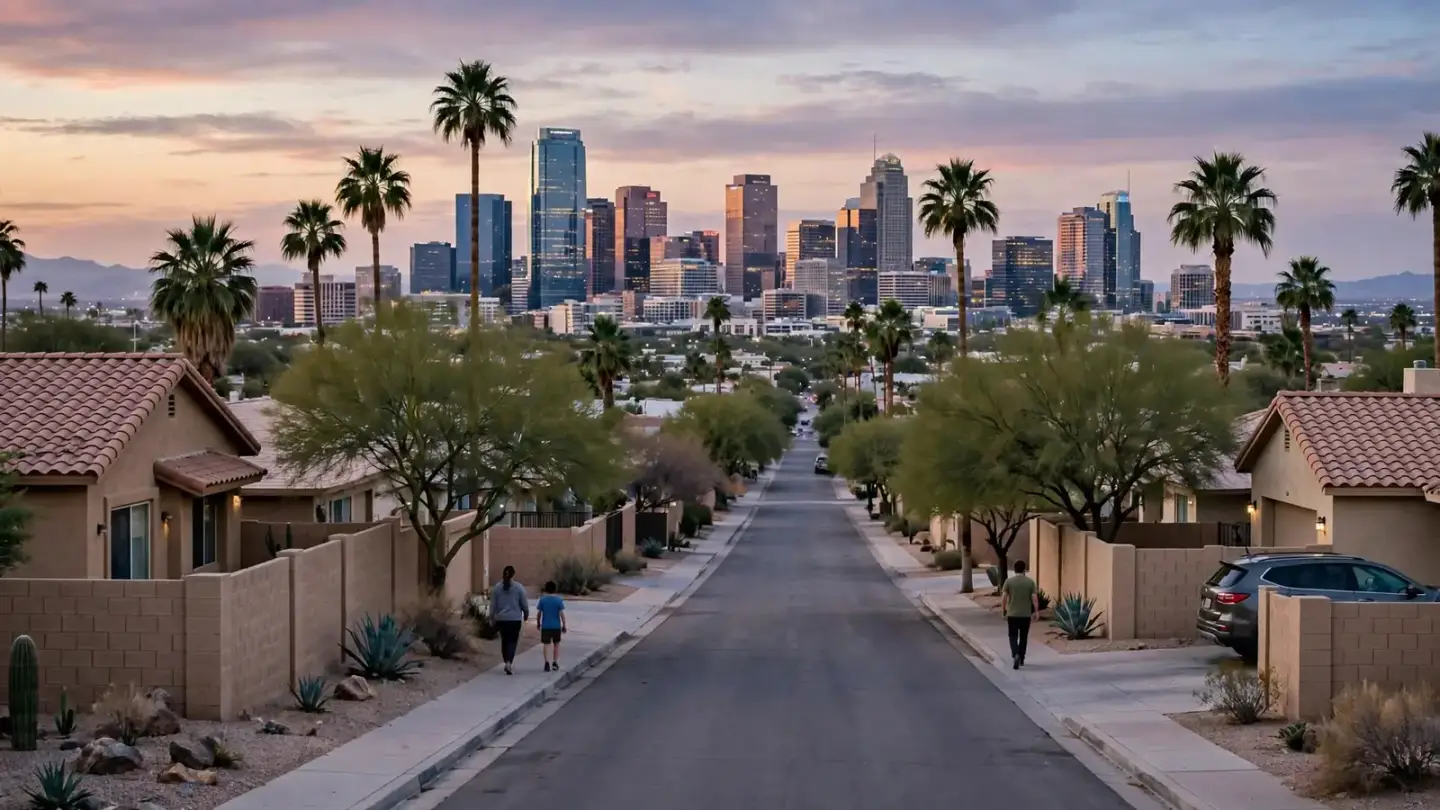
Sitting at the base of Camelback Mountain, Arcadia can see heavy rain and strong winds during monsoon storms. Water running off higher ground and through yards can reach a burned house quickly, and a fire-damaged roof needs tarping before afternoon storms in July, August and September.
Summer heat drives smoke odor out of attic materials and into rooms below, particularly in older homes with less insulation and low ceilings. Owners often notice smell returning weeks after cleaning on the hottest afternoons, which usually means attic insulation or roof wood still holds odor.
Prevention
Reducing fire risk in an Arcadia home
- Have older wiring evaluatedAn electrician can check original circuits in mid-century sections, especially where additions increased load.
- Keep dry palm fronds trimmedDead fronds and dry debris near the house can catch embers.
- Maintain smoke alarms in every wingLong ranch layouts need alarms in each sleeping area and on the path between them.
- Clear around casitas and garagesSeparate structures often store flammable items and may be checked less often.
Services
Restoration services Arcadia homeowners ask about
Board-up for large openings
Securing wide windows and sliders after heat damage.
Read moreAttic and whole-house odor
Finding and removing smoke smell in low attics and long duct runs.
Read moreSoot cleaning
Cleaning soot from mixed-era walls and ceilings.
Read moreDrying after firefighting
Drying slabs, seams between additions and wet cavities.
Read more
Kitchen and remodel fires
Fires in remodeled Arcadia kitchens
Kitchen remodels are among the most common upgrades in Arcadia, and many now feature open layouts that join kitchen, dining and family rooms into one large space with high or vaulted ceilings. An open plan changes how a cooking fire's smoke behaves. Without walls to contain it, smoke spreads across the whole great room quickly and collects in the highest part of the ceiling, where it is hard to reach and clean.
Modern kitchens also contain a lot of materials that respond badly to heat and smoke: lacquered cabinetry, quartz and stone counters that can be stained by acidic residue, stainless appliances that discolour, large range hoods with ducts running through the attic, and integrated electronics. Range hoods and their ducts deserve particular attention, since grease and smoke collect inside and can keep releasing odor.
Where a remodeled kitchen meets the original part of the house, smoke frequently crosses into older rooms with lower ceilings, plaster or older drywall, and original wood trim. Those materials may need a different cleaning approach from the new kitchen finishes. Ask the contractor to explain how they will treat each part of the house rather than applying one method everywhere.
Original features
Protecting original details in older Arcadia homes
Some Arcadia owners prize original mid-century features: wood beam ceilings, built-in cabinetry, brick or slump-block fireplaces, terrazzo or original wood floors, and period light fixtures. Fire, smoke and water all threaten these details, and replacing them exactly can be difficult or impossible.
Exposed wood beams absorb smoke and odor and may need careful cleaning, light sanding where appropriate, and sealing with a clear product to preserve their appearance. Brick and block absorb soot into their pores and are usually cleaned with specialised methods rather than simple washing. Original built-ins can often be cleaned and refinished rather than replaced if they did not take heat damage.
If original features matter to you, say so at the start of your call and during the walk-through. A contractor can then prioritise cleaning and restoration of those items, photograph them carefully, and consult specialists where needed before anything is removed.
Seasonal timing
How the season changes an Arcadia fire job
| Season | Main concern | What helps |
|---|---|---|
| Winter (Dec-Feb) | Fireplace and heater fires | Mild weather makes ventilation and drying easier |
| Spring (Mar-May) | Dry palm fronds and yard debris | Clearing debris near the house |
| Early summer (Jun) | Extreme heat in a closed house | Restoring cooling safely and quickly |
| Monsoon (Jul-Sep) | Storms through roof openings | Tarping before afternoon storms |
| Autumn (Oct-Nov) | Holiday cooking fires | Attended cooking and working alarms |
Neighbors
When an Arcadia neighbor's fire affects your home
Even with large lots, a house fire next door can affect your home. Smoke enters through open windows, attic vents, evaporative coolers and gaps around doors. Radiant heat from a large fire can crack windows or damage exterior finishes on the side of the house facing it. Embers can land on roofs and in yards with dry vegetation.
If a neighbor's house burned, check your attic for smoke smell, replace your HVAC or cooler filters, look for soot on the exterior and on windows facing the fire, and clean outdoor furniture. Your own homeowner's policy may cover smoke damage from a neighbor's fire; ask your insurer. If smoke smell persists inside, the same cleaning and odor methods described on this site apply.
Week one
A typical first week after an Arcadia house fire
- 1
Day 1: release and securing
The fire department releases the house. Large windows and sliders are boarded, any roof opening is tarped, and one entry is left lockable. Photos are taken of every opening.
- 2
Day 1-2: water out
Standing water is extracted, wet pad and soaked drywall are removed, and drying equipment is set up. Irrigation near the house is paused if needed.
- 3
Day 2-3: testing and contents
Older materials are sampled for asbestos where needed. Contents are sorted, and items to be cleaned off site are packed out and listed.
- 4
Day 3-5: monitoring
Moisture readings are taken daily. The attic over each section of the house is inspected for smoke in insulation.
- 5
End of week: plan agreed
With materials drying and testing results back, the cleaning, odor and repair plan is agreed between you, the contractor and your insurer.
Storage
Garages, sheds and storage on Arcadia lots
Large Arcadia lots often have more storage than a typical Phoenix house: detached garages, workshops, pool equipment rooms and sheds holding years of belongings, garden chemicals and fuel for yard equipment. A fire in one of these buildings can burn intensely because of what is stored there, and the smoke is often oily and chemical.
After a fire in an outbuilding, check the main house for smoke even if the buildings are separate; wind can carry smoke through open windows and vents. Pool chemicals deserve particular caution. Some pool chemicals react dangerously with heat, water or each other, so tell the fire department and contractor if they were stored near the fire, and do not move damaged containers yourself.
On your call
Questions Arcadia owners find useful to ask
These questions help a contractor understand an Arcadia house quickly and help you judge their answers.
- How will you handle the original and remodeled parts differently?A good answer shows they understand that materials, attic access and wiring may differ from one section to the next.
- Will you test older materials before demolition?In homes from the 1950s and 1960s, testing ceilings, flooring and some other materials before disturbing them is a sensible precaution.
- How will you protect landscaping and irrigation?Equipment, dumpsters and foot traffic on large lots can damage lawns and irrigation lines; ask where they plan to stage.
- How do you tarp a tile or low-slope roof?Methods differ by roof type, and a careful answer suggests fewer added leaks.
- What will you do about original features I want to keep?Beams, built-ins and brick need specialised cleaning rather than replacement where they can be saved.
- How will I receive photos and moisture logs?Records matter for your insurance claim, especially on a larger, multi-section house.
FAQ
Arcadia fire restoration questions
Does this line cover Arcadia?
Yes. Calls from ZIP 85018 can be connected to an independent restoration contractor serving the area.
My house has an addition. Does that change restoration?
Often. Original and newer sections may be built differently, and smoke and water tend to collect at the seam between them.
Should I worry about asbestos in Arcadia?
In homes built before the 1980s, some materials may contain asbestos. Ask the contractor to test before anything older is disturbed.
Why does the smell come back in the afternoon in Arcadia?
Heat releases odor from attic insulation and roof wood. In low mid-century attics this is very common.
Do I need to stop irrigation?
If irrigation water could reach damaged areas or opened walls, it is wise to skip a delivery until the structure is dry.
Will my casita need cleaning too?
If smoke reached it, yes. Ask that all buildings on the lot be inspected.
Do I need permits to rebuild in Arcadia?
Rebuilding generally needs City of Phoenix permits. Your rebuilding contractor should handle them and hold an Arizona ROC licence.
Can original wood beams be saved after smoke?
Often, if they did not char. Beams are usually cleaned, sometimes lightly sanded, and sealed with a clear finish to lock in odor while keeping their look.
What if a neighbor's fire left smoke in my home?
Check the attic and filters, clean exterior soot and ask your insurer about coverage. The same cleaning and odor methods apply as for an interior fire.
Are pool chemicals a concern after a fire?
They can be. Some react dangerously with heat or water. Tell the fire department and contractor if pool chemicals were near the fire and do not handle damaged containers yourself.
Can my family stay in the casita during restoration?
Possibly, if the casita had no smoke damage, has its own cooling system, and its utilities are safe. Ask the contractor to check it before anyone moves in.