
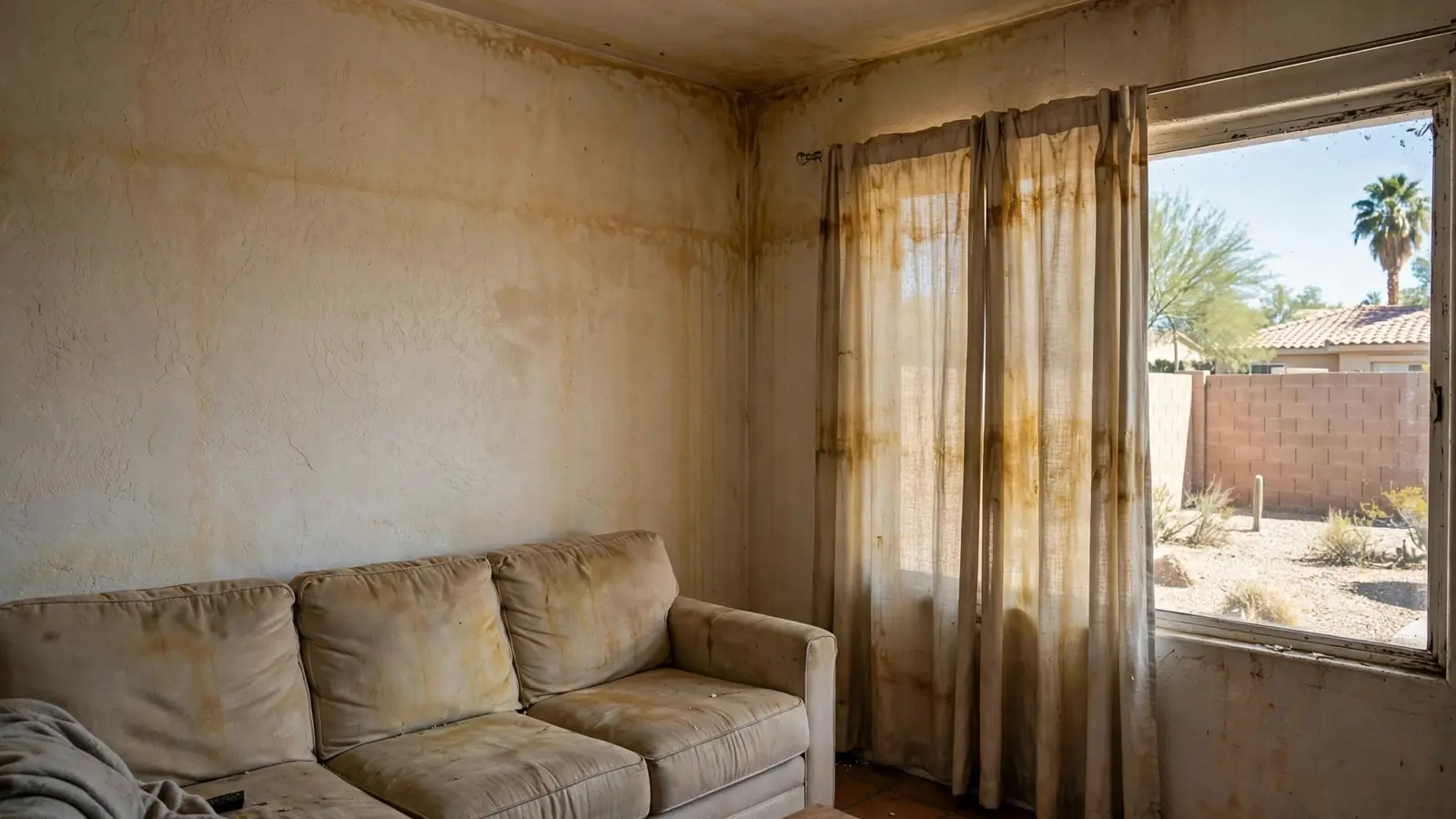
Key facts: Smoke odor that won't go away
- Lingering smoke odor comes from residue absorbed into porous materials, not from the air itself.
- Heat increases the release of odor, so smoke smell is often strongest on hot Phoenix afternoons.
- Common hidden sources are attic insulation, carpet pad, cabinet interiors and ductwork.
- Air fresheners mask odor temporarily but do not remove the source.
- Ozone generators can harm the lungs and are not recommended for occupied homes by the U.S. EPA.
Why it persists
Why the smell outlasts your cleaning
Smoke odor is carried by compounds that soak into anything porous: drywall paper, wood, foam, fabric, insulation. Cleaning a surface removes what sits on top but not what has been absorbed. Those materials then release the odor slowly, sometimes for months.
In Phoenix, temperature makes this very noticeable. Odor compounds are released faster as materials warm. A home that smells fine at 7 a.m. can smell strongly of smoke at 4 p.m., especially in rooms under the attic or with west-facing walls. That pattern is a strong clue that the source is inside the structure.
Clues
Where to sniff first
Under the attic hatch
Smell stronger near the hatch or ceiling lights points to attic insulation or roof wood.
At the vents
Odor that surges when the AC starts points to the ducts, the air handler or the filter.
At floor level
Carpet pad and subfloor hold odor, particularly if they got wet during firefighting.
Inside cabinets
The unfinished wood inside kitchen and bathroom cabinets absorbs smoke easily.
In closets
Clothing, linens and stored boxes act like sponges for smoke.
In soft furniture
Foam cushions and mattresses hold odor deep inside.
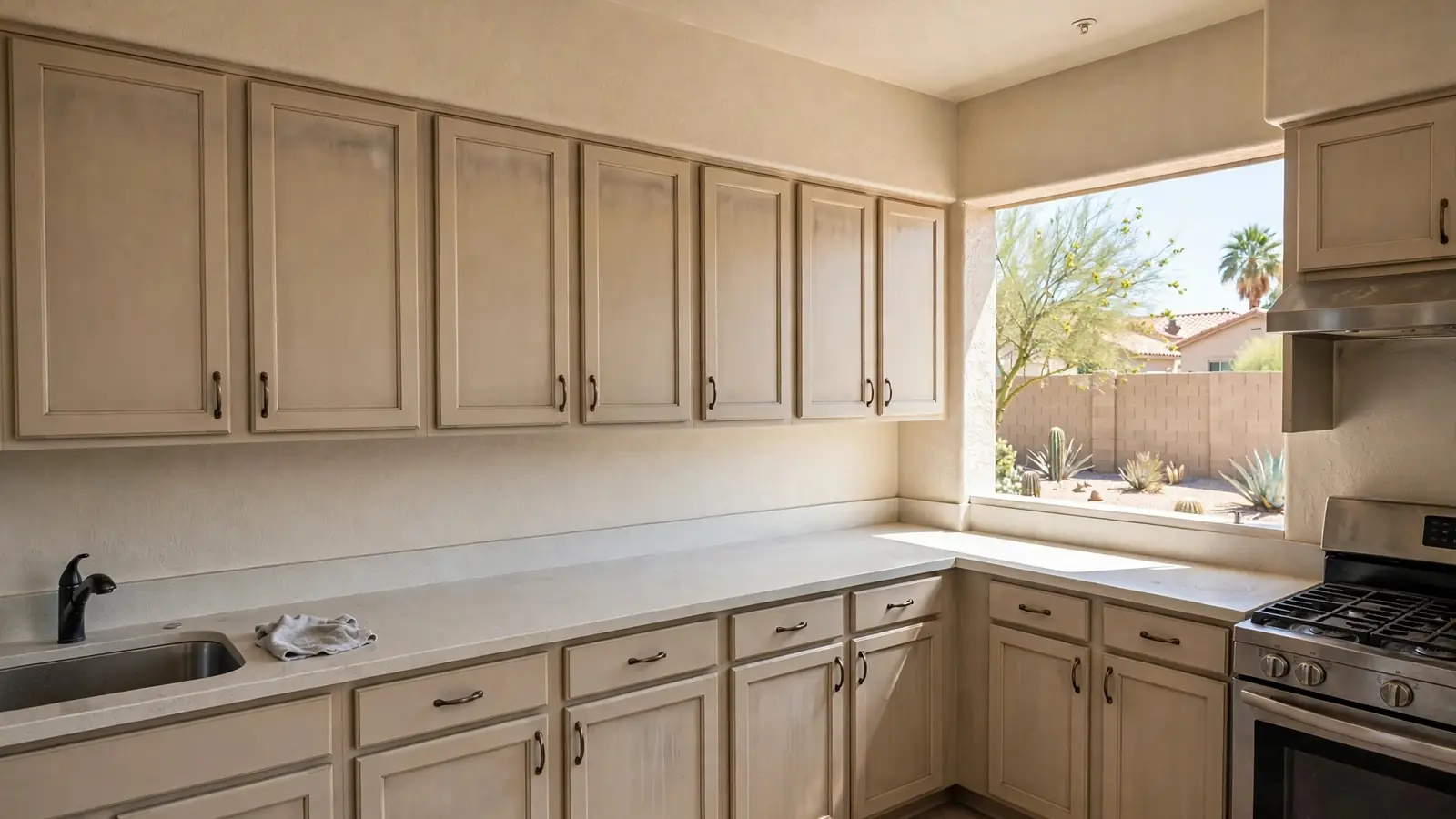
Self-check
A simple test to locate the source
- 1
Pick a hot afternoon
Close the house for a few hours on a warm day so odor builds up.
- 2
Walk room by room
Enter each room from fresh air outside and note how strong the smell is.
- 3
Open everything
Open cabinets, closets and drawers and smell inside each.
- 4
Run the system briefly
If the HVAC has been cleared, switch it on with a new filter and smell at the vents.
- 5
Write it down
Rank areas from strongest to weakest and share the list with a restoration contractor.
Fixes
Typical sources and what deals with them
| Source | Usual fix |
|---|---|
| Attic insulation | Remove and replace; seal roof wood if needed |
| Flexible ductwork | Clean or replace |
| Carpet pad | Replace pad; clean and seal subfloor |
| Cabinet interiors | Clean and seal with an odor-blocking primer |
| Drywall | Clean and seal; replace if heavily affected |
| Mattresses and cushions | Professional cleaning or replacement |
What not to rely on
Why sprays and rental machines disappoint
Scented sprays, candles and plug-ins layer fragrance over the smell and fade within hours. Bowls of baking soda or coffee grounds absorb a little odor from the air but cannot reach what is in the walls. Painting with ordinary paint traps nothing; smell bleeds through.
Ozone machines are often rented for smoke smell. Ozone is a lung irritant, and the U.S. Environmental Protection Agency warns that ozone generators sold as air cleaners can reach harmful levels indoors and do not remove the particles that cause odor. [1] Professional odor work relies on removing sources, cleaning, and sealing, with deodorising treatments used under controlled conditions.
Phoenix attics
The attic: the most common culprit in Phoenix
In Phoenix homes, the attic is behind a large share of persistent smoke odor complaints. Smoke from an interior fire rises through gaps around light fixtures, the attic hatch and wall top plates, and settles into blown-in insulation, which acts like a giant filter. The roof deck and trusses above can also absorb residue.
Summer attic temperatures in Phoenix get very high, far hotter than the living space. That heat drives odor out of the insulation and wood, and it drifts down into rooms below through every ceiling penetration. The result is a smell that seems to come from nowhere and is worst on the hottest afternoons.
If your house smells of smoke mainly in the afternoon, ask a contractor to inspect the attic first. Removing affected insulation, cleaning and sealing the wood, and sealing ceiling penetrations often solves odor that months of air fresheners did not.
Outside smoke
When the smoke came from outside
Not every lingering smoke smell comes from a fire in your own home. A neighbouring house fire, a brush fire on a mountain preserve edge, or regional wildfire smoke can push smoke into a home through open windows, gaps and especially evaporative coolers, which draw large volumes of outdoor air through the house.
Odor from outside smoke usually settles in fabrics, filters and ducts rather than deep in the structure. Replacing HVAC and cooler pads and filters, cleaning ducts, laundering fabrics and running HEPA and carbon air cleaners often solves it. If smell persists after those steps, an inspection can check for residue in the attic or wall cavities.
Sealing
Why sealing finishes the job
Once sources are removed and surfaces cleaned, a small amount of odor can remain in the materials that stay, such as framing, subfloor and cabinet boxes. Professionals lock it in with sealing primers before new paint or flooring goes on. Shellac-based primers are a common choice because they block both stains and odor well. Sealing is not a substitute for cleaning; it is the final layer that keeps whatever traces remain from escaping into the room on hot afternoons.
Calling for help
When to call a professional about lingering smoke
If the smell persists after you have replaced filters, cleaned fabrics and ventilated, the source is almost certainly in the structure or the duct system. Odor that is strongest in the afternoon, near ceiling fixtures or at the vents points to the attic or ducts, which need inspection by someone with the right equipment and access. Describe on your call when the smell is strongest and where, as that helps narrow down the source quickly.
FAQ
Lingering smoke smell questions
Will smoke smell eventually fade on its own?
It may weaken over a long time, but in many homes it persists for months or years, especially in heat. Removing the source is far more reliable.
Why is the smell worse in summer?
Heat increases the release of odor compounds from materials, and Phoenix attics get very hot, pushing odor into the rooms below.
Can a contractor guarantee the smell will go?
Ask how they will confirm success. A sensible test is a closed house on a hot afternoon.
Could the smell be something other than smoke?
Yes. A musty note suggests damp or mould from firefighting water. A chemical smell may be burned plastics. Mention what you notice on the call.
Can I sell a house that still smells of smoke?
A lingering smell usually affects buyers' impressions. Dealing with the source before listing is generally the better path; ask your agent about disclosure rules.