
Key facts: Is it safe to stay after a fire
- The fire department decides whether a fire-damaged building may be entered.
- Electrical systems and gas lines exposed to fire should be checked by qualified professionals before use.
- Smoke residue contains fine particles that can affect people with asthma, heart or lung conditions.
- Wet ceilings can be heavy enough to collapse.
- Mould can grow on materials that stay wet after firefighting.
Who decides
The fire department makes the first call
No one should re-enter a fire-damaged home until the fire department has released it. Fire crews check for hot spots, structural danger and utility hazards before they leave. If they say part or all of the house is unsafe, respect that even if it looks fine to you. Fire can weaken roof trusses and floor joists from inside.
Even after the fire department releases the building, being allowed in is not the same as it being fit to live in. That second question depends on utilities, air quality and the condition of the rooms you would use.
Red flags
Signs the house is not ready for you yet
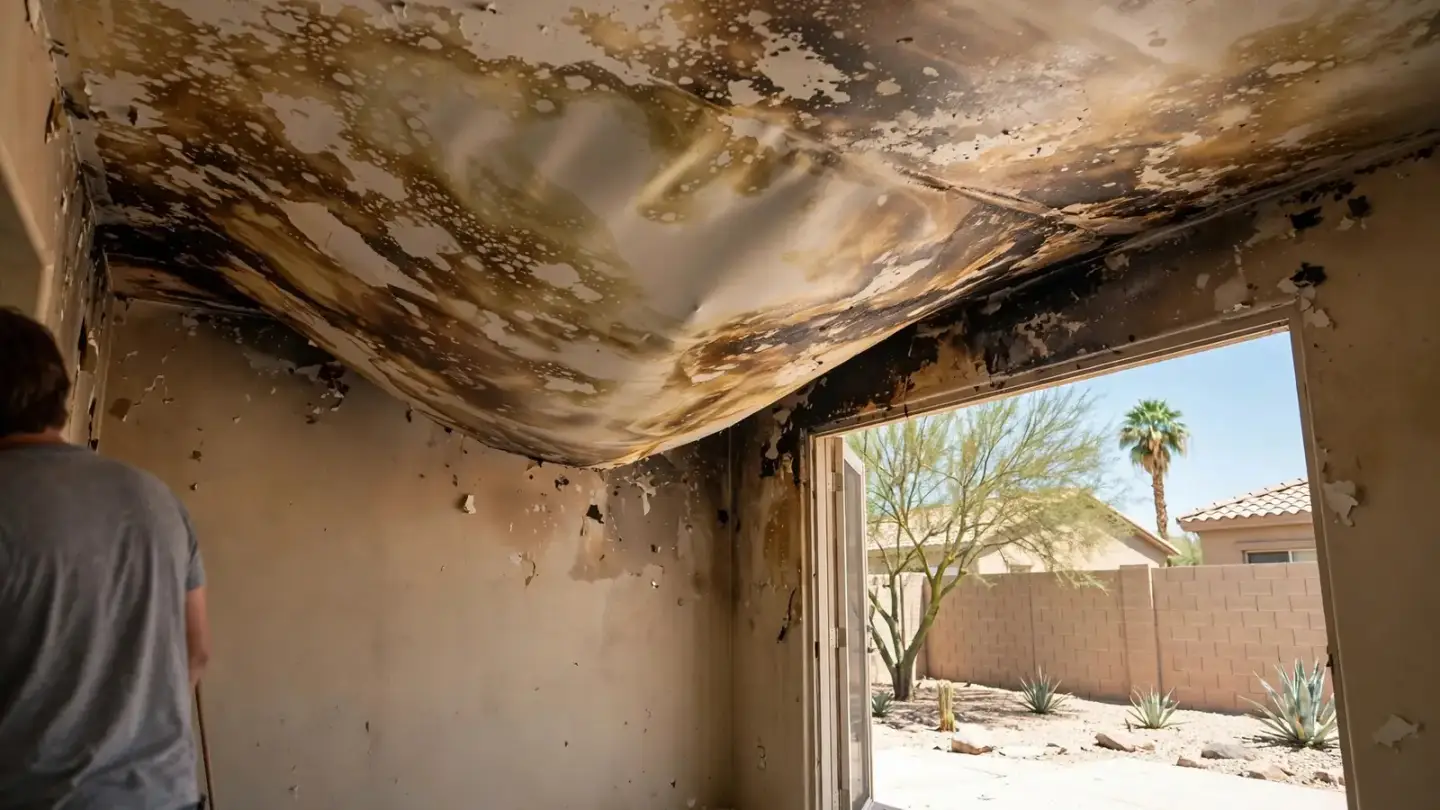
Sagging or bulging ceilings
Water or fire damage above can bring a ceiling down. Stay out from under it.
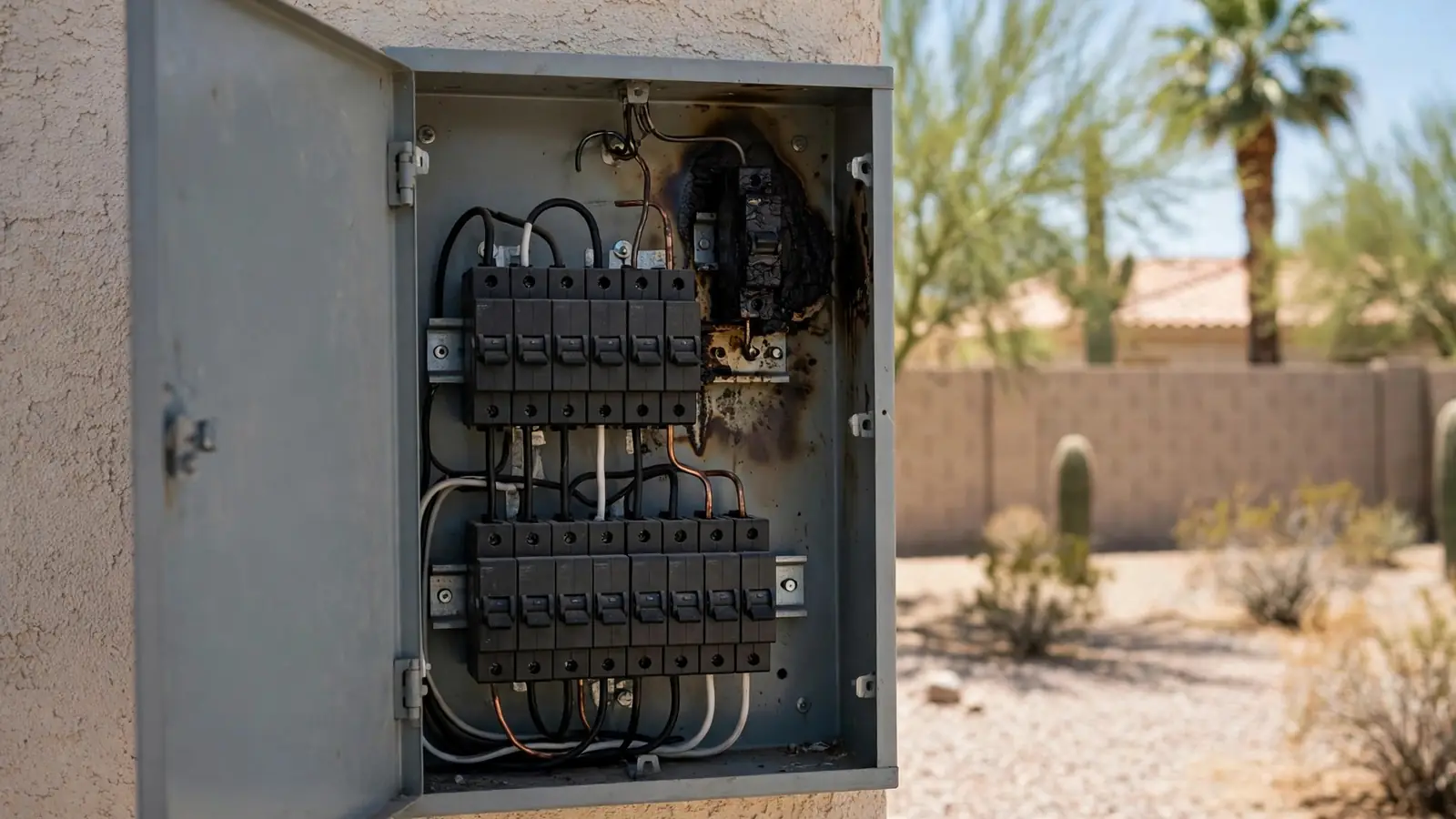
Scorched outlets or panel
Burn marks around outlets, switches or the electrical panel need an electrician before power is restored.
Gas smell
Leave immediately and call the gas utility or 911 from outside.
Heavy soot in living areas
Rooms you sleep and eat in should be cleaned before use, especially for sensitive people.
Wet floors and walls
Moisture invites mould and makes electrical hazards worse.
No working smoke alarms
Alarms damaged by the fire must be replaced before anyone sleeps there.
Checks
Who checks what before you move back
| System | Who should check | Why |
|---|---|---|
| Structure | Fire department, then a contractor or engineer | Weakened roof, floors or walls |
| Electrical | Licensed electrician | Heat-damaged wiring can start new fires |
| Gas | Gas utility or licensed plumber | Damaged lines or appliances can leak |
| Air quality | Restoration contractor | Soot and smoke residue in living areas |
| Water and moisture | Restoration contractor | Mould risk and hidden wet materials |
| Smoke and CO alarms | You | Replace any damaged alarms |
Health
Smoke residue and who is most at risk
Smoke residue includes fine particles that can be stirred back into the air as people move around. [3] Health agencies note that fine particle exposure can irritate the eyes and airways and aggravate asthma and heart and lung disease. Children, older adults, pregnant people and anyone with those conditions are most at risk.
If you stay in a partly damaged home, close off affected rooms, keep the HVAC off until it is cleaned, run a portable HEPA air cleaner in the rooms you use, and avoid sweeping or dusting soot yourself. If anyone develops breathing problems, chest pain or persistent headaches, leave and seek medical advice.
Phoenix note
Heat and power after a summer fire
In a Phoenix summer, a house without working air conditioning can become dangerously hot. If power or cooling cannot be restored safely, staying in the home may not be an option, particularly for older adults, young children and pets. Many homeowner policies include additional living expenses for temporary housing; check yours. The American Red Cross can help with immediate shelter needs.
Partial damage
Living in one part of a damaged house
When damage is limited to one end of the house, families sometimes stay in the unaffected rooms during restoration. This can work, but it needs planning. The damaged area should be sealed off with plastic sheeting and, ideally, kept under slight negative air pressure with an air scrubber so dust and soot are drawn away from the living space rather than toward it.
The heating and cooling system is the main risk. If one system serves the whole house and its ducts are contaminated, running it spreads residue into the rooms you are using. Some families use portable air conditioners or fans in the clean rooms until the system is cleaned. Others decide that temporary housing is simpler, especially in summer.
Children, older adults, pregnant people and anyone with asthma, heart or lung disease are better off out of the house while soot cleaning, demolition and odor treatment are going on. Those stages stir up the most particles.
Pets and food
Pets, food and water after a fire
Pets are more sensitive to smoke and residues than people, and birds especially so. Keep pets out of damaged areas, wipe their paws if they walk through soot, and watch for coughing or lethargy. A veterinarian can advise if a pet was exposed to heavy smoke.
Food, drinks and medicines exposed to heat, smoke or soot should be thrown away, even if sealed. Heat can damage contents of cans and jars, and smoke residue can contaminate packaging. If power was off for a long time, refrigerated and frozen food should also go.
If the fire damaged plumbing or if firefighting affected your water supply, check with your water utility before drinking tap water.
Children
Keeping children safe around fire damage
Children are naturally curious about a burned room and are more sensitive to smoke particles than adults. Keep them out of damaged areas entirely, including the garage and yard where debris and glass may be scattered. Wash toys that were in the house before they are used again, and set aside soft toys that smell of smoke for cleaning or replacement. If a child seems anxious after the fire, the American Red Cross and paediatricians can suggest ways to help them process the experience.
Alarms
Replace smoke and carbon monoxide alarms
Smoke alarms exposed to heat and heavy smoke may no longer work reliably, and some will have been removed or damaged during firefighting. Before anyone sleeps in the house, test every alarm and replace any that were near the fire. If the home has gas appliances, make sure carbon monoxide alarms are working too. The NFPA recommends smoke alarms inside each bedroom, outside sleeping areas and on every level.
FAQ
Staying in the house: common questions
Can I sleep in an undamaged bedroom?
Possibly, if the fire department has released the house, utilities are safe, the room is free of soot and smoke odor, and alarms work. Sensitive people should be more cautious.
Is it safe to turn the power back on?
Only after an electrician has checked circuits exposed to heat, smoke or water.
Can soot make me sick?
Fine particles in soot can irritate the lungs and worsen existing conditions. Limit exposure and let professionals clean.
How do I know when the house is ready?
When utilities are cleared, living areas are cleaned and dry, the HVAC is clean and the home does not smell of smoke.
Is it safe to cook in the kitchen after a nearby fire?
Only once the appliances, gas and electrical supply have been checked, surfaces cleaned, and exposed food discarded.